Forty-Five Knives and One Very Expensive Mistake.
By Ralf The Grillmeister, Germany.
I like new ideas in the kitchen. But sometimes the best technology is still a sharp knife, a little spoon, and knowing when to leave a good thing alone.
I love cooking. It is a great part of my life. I like recipes, I like new ideas, and I like machines. This combination can become dangerous for the bank account.
A few years ago, I bought one of these very clever kitchen machines. It cost about €1,400. I bought it because, at that moment, I wanted it. We made some aioli with it. It worked. For many people, I am sure it is fantastic.
For me? No.
Two years later, I sold it for €900. So I paid €500 to discover that what I really need in the kitchen is a good sharp knife.
And a little spoon.
The spoon is important. The knife prepares the food. The spoon tells you if what you have done is actually good. You smell, you taste, you think: Does it need salt? Pepper? Garlic? Something else?
That is cooking for me.
The Recipe Is Only the Beginning.
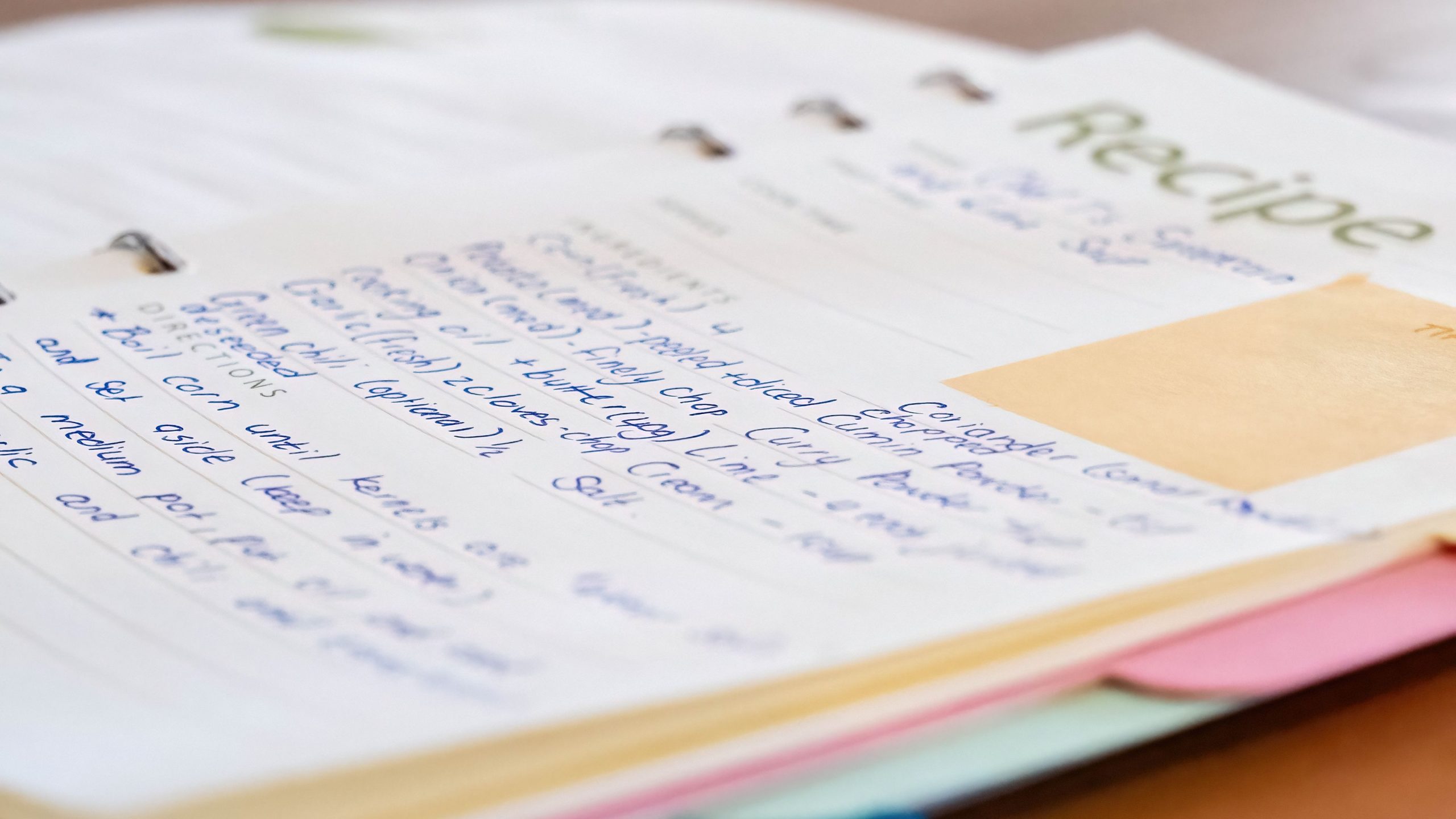
When I start with a recipe, I normally follow it. But I don’t necessarily finish with it. If I taste something and think, no, something is missing, then I change it. Maybe soy sauce. Maybe roasted sesame oil. Maybe oyster sauce. We like our food spicy, and many recipes are simply not spicy enough.
The same goes for cooking times. If a packet of pasta says eight to ten minutes, perhaps I cook it for seven because afterwards the pasta goes into the sauce. It continues cooking there. If I simply obey the packet, I can finish with pasta that is too soft.
So sometimes you have to ask: why should I follow the instruction exactly when experience tells me something different?
But this does not mean everything old should be improved.
My mother has an old black enamel pot. It must be sixty or seventy years old, scratched and worn from many years of cooking. She makes goulash in this pot, and for me it is the best goulash in the world.
I have tried to make it myself. Different pots, different methods, carrots, bay leaves, little changes here and there.
No.
It is not the same.
My mother can explain exactly what she does, but still mine does not smell the same and it does not taste the same. Sometimes a dish belongs to the person who makes it.
My father knew this too. He loved Butterkuchen, and once my mother tried to make one from a recipe somebody had given her. My father came home, tasted it and decided that this was not Butterkuchen.
According to him, it was more suitable as a road for tanks.
So yes, you can try to improve everything.
Good luck.
The Forty-Five-Knife Problem.
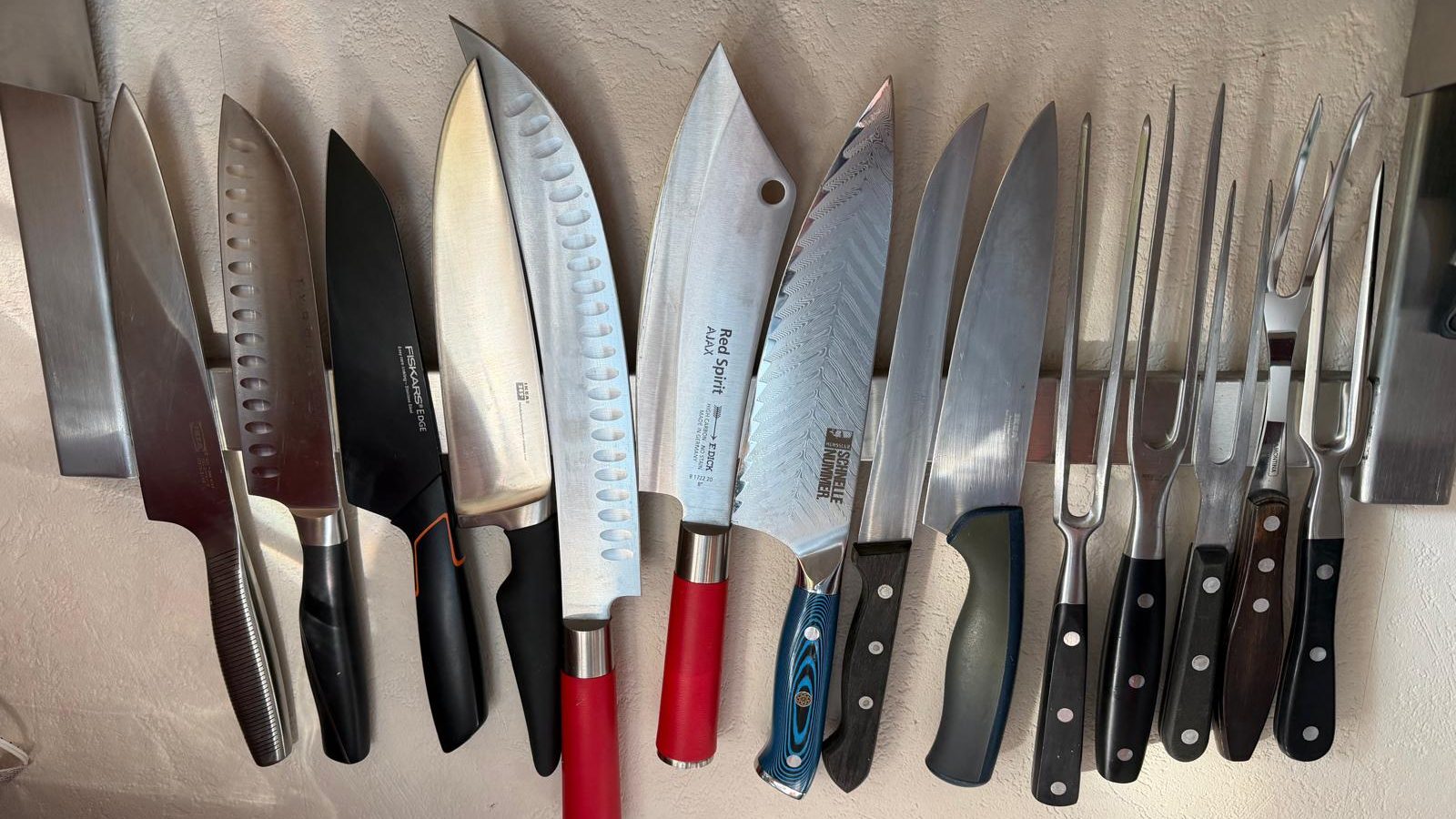
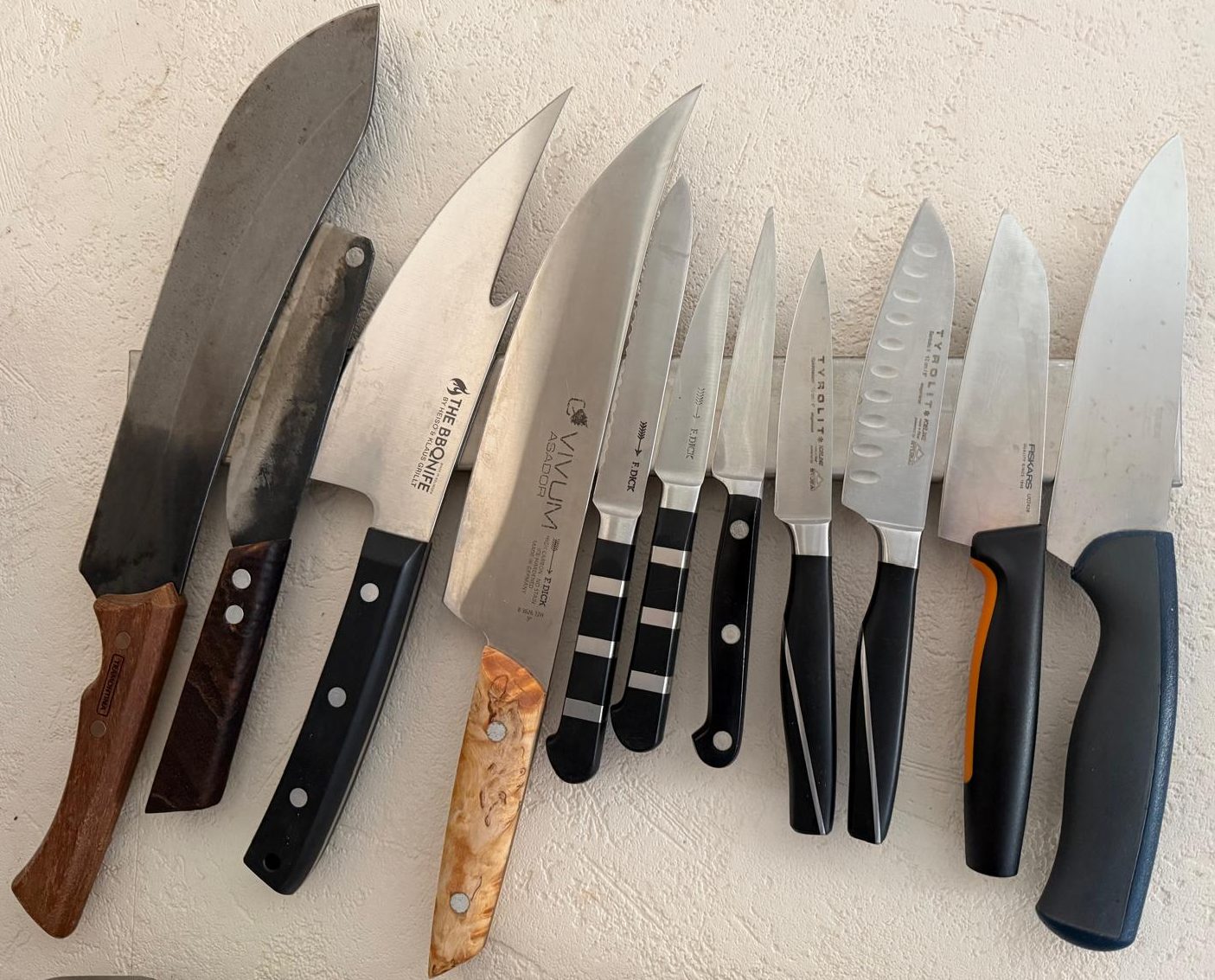
Knives are different. I have around forty-five knives in my kitchen. Perhaps this is slightly more than necessary, but knives are a collecting passion for me. I have the same problem with pencils. If I see a good one in orange or yellow, my favourite colours, something happens in my head: I need this.
The same with knives.
At one point I told my wife I had a serious problem.
She asked, “What problem?”
I said, “I don’t have a Porsche knife.”
This is another danger of curiosity.
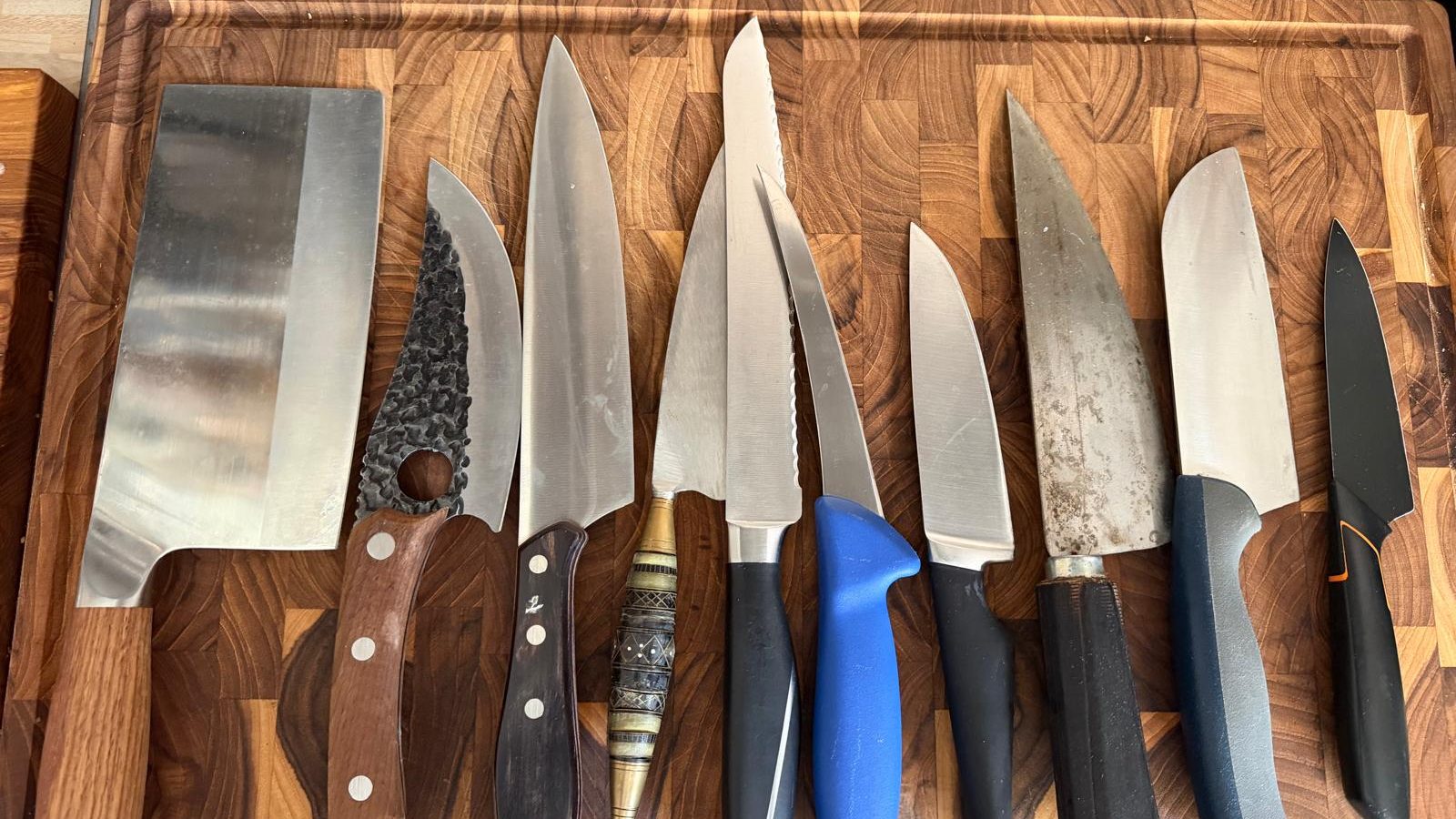
But there is a difference between buying a machine because somebody says it will transform your life and buying a tool that becomes part of your hand. I own an air fryer. I use it mainly for kohlrabi fries. We cut the kohlrabi into strips, season it, leave it for a while so some water comes out, then put it into the air fryer.
For this, fantastic.
I also have sous-vide equipment. I have used it maybe twice. The microwave is useful for reheating meals and warming milk for coffee.
But for cooking?
Give me the knife.
Sometimes Everybody Else Is Right.
Of course, another problem is that sometimes my own judgement is wrong.
Years ago, I made filled pasta with mushrooms for friends. I tasted it and thought it was horrible.
Everybody else said it was fantastic.
I didn’t believe them. I thought they were only being nice. One friend even asked me for the recipe, and still I thought: Why? It isn’t good.
Ten or fifteen years later, I spoke to her again and asked if she had ever made it.
“Yes,” she said. “Many times.”
I had never made it again.
So perhaps curiosity also means questioning yourself.
When a Picture Makes Your Mouth Water.
When I discover a new recipe, very often it begins with a picture. I see something and can almost already imagine the smell and taste. My mouth starts watering, and then I know: I have to cook this.
Once, at the supermarket checkout, I saw a magazine with traditional grandmother-style recipes. There was one picture of a stew that caught me immediately. I bought the magazine, went home, checked the ingredients properly and realised I didn’t have everything.
So I went back to the supermarket.
That recipe became what we call Grandma’s potato soup. A strong broth, potatoes, kohlrabi, Brussels sprouts, carrots and soup vegetables.
And thyme.
Many, many, many thyme.
That is the important part.
It is an autumn or winter dish. Outside it is cold and raining. You come home thinking this is not a very nice day. Then you sit down with this hot stew, perhaps the fire is going, and you hear the rain on the roof of the winter garden.
You eat the soup and suddenly it is summer inside your body.
I don’t particularly love the dark months, but moments like this make them better.
Then Comes the Sizzle.
And then there is the other side of curiosity: when somebody changes something old and makes it genuinely better.
For my fiftieth birthday, my wife gave me a cooking experience in Hamburg. There we made a sea bream dish that was completely different from the way I normally cooked fish: thin slices of sea bream, tomato salsa, lime and ponzu sauce.
Then came the special moment.
You heat olive oil until it is extremely hot, just at the point where it almost begins to smoke. Then, very carefully, you spoon the hot oil over the fish skin.
It sizzles.
The skin curls and becomes crisp while the fish underneath stays almost raw. Then the ponzu and tomato salsa go over the top.
The sound, the smell, the taste — fantastic.
You look at it and think: How can this work?
Then you eat it.
And you think: This is life.
That is experimentation with a reason.
New Is Not the Same as Good.
What I don’t like is changing food simply to show how clever you are. A gigantic plate with a tiny piece of food in the middle, some foam, three flowers and a ridiculous price does not automatically become better cooking.
New is not the same as good.
Old is not the same as good.
You still have to taste it.
And this is why, after all the machines, recipes and experiments, I come back to my two most important kitchen tools.
A sharp knife and a little spoon.
The knife lets you change things.
The spoon tells you whether you should have.