
A Marriage Built Like a House
I was sitting there listening to Frank trying to pin a date on my life, like he is putting a small flag on a map.
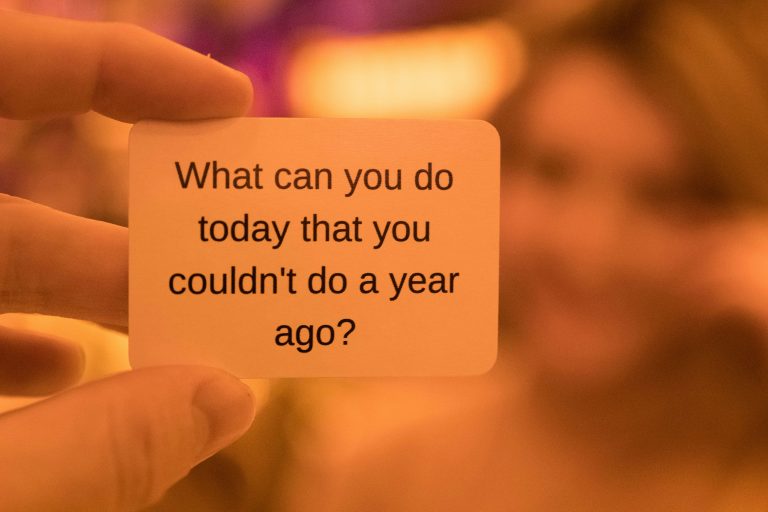
“Monday the 16th of February,” he said, and then he said something that made me laugh inside, because it was so Frank—half teasing, half serious: “A year ago you didn’t do anything significantly important, did you?”
And I wanted to say, brother, in India we can make even an ordinary week feel like a whole season. But I also knew what he meant. He meant: was this week just another week… or was it the week that changed my life?
Because yes—if we are speaking in straight lines—on 18th February 2025 I got married. I “tied the knot,” as Frank said. And now we were sitting again, me in Bengaluru with a stubborn internet connection, Ismar in Campo Grande with his calm, careful sentences, and Frank somewhere in Europe putting our three lives into one sentence:
One man never married.
One man married in a partially arranged way.
One man married twice.
And then he dropped the topic like a stone into water: values in relationships.
The funny part is, when people say “values,” it can become like a corporate PPT. But for me, in that conversation, it was not theory. It was actually very physical. I could feel it in my body—like I’m still learning how to stand inside the word “husband.”
The first thing Ismar said was “respect.” Very direct. No decoration. I liked that. In India also, respect is like the backbone—if it breaks, everything collapses slowly, even if from outside it looks fine. I told them the same: respect, willingness to listen, willingness to change yourself.
But then I pushed a little against something Ismar said—he said people need similar values, otherwise it’s like a football match, one playing against the other. I understood what he meant, but inside me, a small voice was saying: similar values, yes… but not identical minds. Because if you are marrying a mirror, then you are not marrying a person—you are marrying your own ego.
And ego is the silent killer in relationships. In our culture we don’t always say “ego.” We hide it behind duty, behind tradition, behind “this is how it is.” But it is there. And sometimes the modern version is even more dangerous because it comes wearing the costume of freedom. “I’m free.” “I’m independent.” “Don’t tell me what to do.” Okay, fine. But then why enter a relationship at all? A relationship is not a solo trip.
Frank asked me something that I’ve realized Western friends genuinely find upside down: in my case, commitment came first, love came later. In their stories, love is the entry ticket, and commitment is the long-term membership. For me, it was like: the families laid the road, and then we started walking on it, and only after walking, you feel the journey in your heart.
Frank described my whole timeline—picture first, formal meeting, family around, chaperoned moments, phone calls, long distance, marriage, then separation again because of my wife’s father passing away and the rituals and grief. And then only later, finally, we started actually living together properly, building daily life.
When he said it like that, even I felt: wow, it sounds like a movie plot. But for me, it didn’t feel dramatic while living it. It felt… normal. Structured. Like a train route you already know, even if you’ve never been on that train before.
And this is where I always want to be careful. Because Western friends sometimes hear “arranged marriage” and imagine it’s forced. Or they imagine no emotions, no choice, just parents doing business. But that’s not fully true now, at least not in many places. Even in arranged marriages today, people meet, talk, and decide. There is still agency. The main difference is: the search is guided by families and community networks, and it is heavily filtered for “compatibility” before you even enter the room.
This filtering can be shallow sometimes—caste, money, status. I’m not defending that. But sometimes it is also practical: similar family structure, similar expectations, similar understanding of obligations. That part is real.
I explained to Frank that in our case, both families come from joint-family backgrounds. Parents living with children, daughters-in-law joining the home, responsibilities flowing both directions. So when my wife comes into my home, it is not a cultural shock in that dimension. And when I support my parents, or my siblings’ education, she doesn’t see it as “why are you funding your family?” because she has seen that same norm at her side.
So yes—some base-level compatibility was built in.
But then reality enters. Not the big cultural stuff. The small daily stuff. Like YouTube.
I told them honestly: one friction is I come from office, I start watching something, and she wants time. This is not a “value mismatch” like religion or family, but it becomes a value issue because it touches attention, care, priority. It tells the other person: am I important to you, or are you escaping into a screen? These are modern problems. Our parents didn’t have YouTube to compete with their marriage.
And then Frank asked about “love.” He was trying to understand how it grows if it doesn’t start with spark.
I tried to explain it in a way that is not fake-poetic. I said: sometimes what people call love at first sight is actually infatuation—physical attraction, communication style, a fantasy you project. That can be beautiful, but it’s not always stable.
In my case, love felt more like how you love a child. You didn’t “choose” the child after interviewing them. The child arrives. And then love grows because of care, because of responsibility, because of repeated contact. Slowly, your brain and heart reorganize around this person. They become part of your daily inner world.
For me, we were committed, and then the love started developing. It started from care. We met a few times only. But we spoke. And even that distance, strangely, helped in one way: when you can’t rely on physical closeness, you have to rely on intention. You have to show up in words, in consistency, in the small acts.
Of course, this is not romantic like Bollywood. It’s more like building a house brick by brick. But when the house stands, it stands.
Then the conversation moved to Ismar. And this was the part that stayed with me, because I could feel the generational distance and also a kind of shared understanding.
Frank asked him: did you plan to marry when you were young? Ismar said yes—like most people, he assumed marriage and kids. But it didn’t happen. And then he said something that felt both simple and heavy: he is satisfied now, in peace.
He didn’t sound bitter. He sounded… settled. Like someone who made a separate treaty with life.
And I noticed something about Ismar’s way: he doesn’t dramatize. He doesn’t perform sadness. But there is a quiet loneliness under his words, like a background sound you can’t switch off. When he spoke about his cousins—one 38, still living with mother, married but not independent—it wasn’t gossip. It was almost like he was pointing at a social pattern: marriage does not automatically produce maturity.
And that made me reflect on another thing: in India, we sometimes treat marriage as a solution. Like: “He is not settled, get him married.” “She is too independent, get her married.” But marriage is not a medicine. It amplifies what is already there.
Frank asked me a tough thing: is too much freedom bad for relationships?
I said it goes both ways. In India, divorce rates are lower, but not always because marriages are better. Sometimes it’s because of dependence—financial, social, especially for women. Sometimes it’s because of pressure: “for the kids,” “for society,” “what will people say.” Sometimes it’s because leaving is not practically easy. So we should not romanticize low divorce rates like they are automatic proof of success.
At the same time, I also believe a relationship needs constraints—not only from society, but from vows. If you say “we are for each other,” then yes, you give up some freedoms. Not in a prison way, but in a choice way. Like you choose one lane, so you stop driving on all lanes.
And then Frank asked the classic question that always makes men uncomfortable: who is the boss at home?
I answered honestly, and maybe it sounded funny: right now, I can command and she will do. But I also said what I’ve observed in my parents and grandparents—initially it feels like the man is boss, but down the line, the wife becomes the manager of the whole emotional and practical world. The man becomes dependent in invisible ways. So even if he has “final say,” he is not always the one holding the real control.
Ismar said in his parents’ marriage, the father had final word, though he listened sometimes. And then Ismar said something surprising: if his father always had final word, their lives would have been easier, because his father was too sociable, giving things away to people around.
This is where I felt that balance I always search for: authority can protect, and authority can harm. Freedom can liberate, and freedom can destroy. There is no pure solution. Only trade-offs.
Toward the end, Frank asked me about the future: will arranged marriages survive for my children?
I laughed, because first, let us have children. But I told him something I truly believe: my kids won’t give me even a slight chance to decide like my parents decided for me. The world is shifting. Even now, many people meet, love, live together, marry. In metro cities like Bengaluru, it’s becoming normal. In smaller towns, it’s still difficult—landlords ask “are you married?” and society still polices couples. But the direction is clear.
And then, after all this heavy discussion, what did my wife want?
A trip.
She saw snow in Kashmir, now she wants the sea. So we are going to Kerala. Four days. Not a surprise, because wives know everything before you know it. But still, it’s a celebration. Not only of an anniversary date, but of something more ordinary and more meaningful: we are learning how to be together.
Ismar ended with “honesty” as the single most important value. I liked that. Because honesty is linked with respect. If you are honest, you don’t manipulate. If you are honest, you don’t pretend to be someone else until marriage and then reveal your real self later like a plot twist.
When I look back at this conversation, I don’t feel like we solved anything. That’s not the point.
What I felt was: three men from three worlds, trying to understand what makes a bond hold.
One man found peace without marriage.
One man is still trying to make round two work.
And I am in year one, still learning that love is not only a feeling—it’s a practice.
And honestly, that gives me hope.