
Knowing What Is Good Enough.
For me, choosing the better version is rarely about buying something expensive. It is about knowing what I want, recognising what is worth the effort, and leaving the rest alone.
By Geneviève L., France
When I go shopping, I take a list. I know what I need, and I am not particularly interested in being persuaded to buy something else.
It was not always like that. Years ago, I was less organised. Now I write things down and generally buy what is on my list. Of course, if I see something that I really need, I might make an exception. But I do not go shopping to find surprises.
Food is where I am most particular. I prefer organic shops and farmers’ markets because I care about how food is produced and what I bring home. I also grow vegetables in my own garden.
I have my standards, but that does not mean I need the most expensive version of everything.
I simply want to know what I am buying.
The cheese behind the glass.
Every week, I usually choose three cheeses. I like variety, so I do not always buy the same ones.
I look at what is available and how mature the cheese is. Some people prefer a cheese when it is very ripe. Others like it younger. I know how I prefer mine.
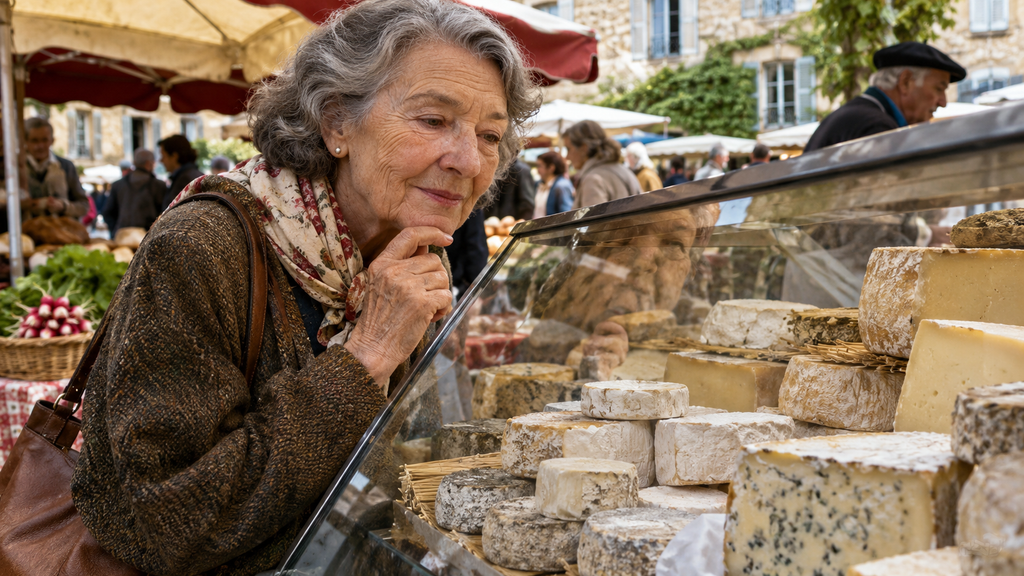
Recently, I saw a cheese that I would normally have bought. But when I looked at it behind the counter, I decided against it. It was too mature for my taste.
Someone else might have enjoyed it very much. That is fine. We do not all have to like the same things.
I cannot touch the cheese because it is behind the glass, so I must judge it by what I can see. I certainly do not like the idea of customers squeezing food in a supermarket and then leaving it for the next person.
There are things you learn through experience. After buying cheese for many years, you begin to recognise what you like.
It is the same with other products. Sometimes the packaging looks wonderful, but you cannot properly see what is inside.
Why should I trust a beautiful photograph on a package more than the food itself?
I would rather see what I am buying.
What the garden knows.
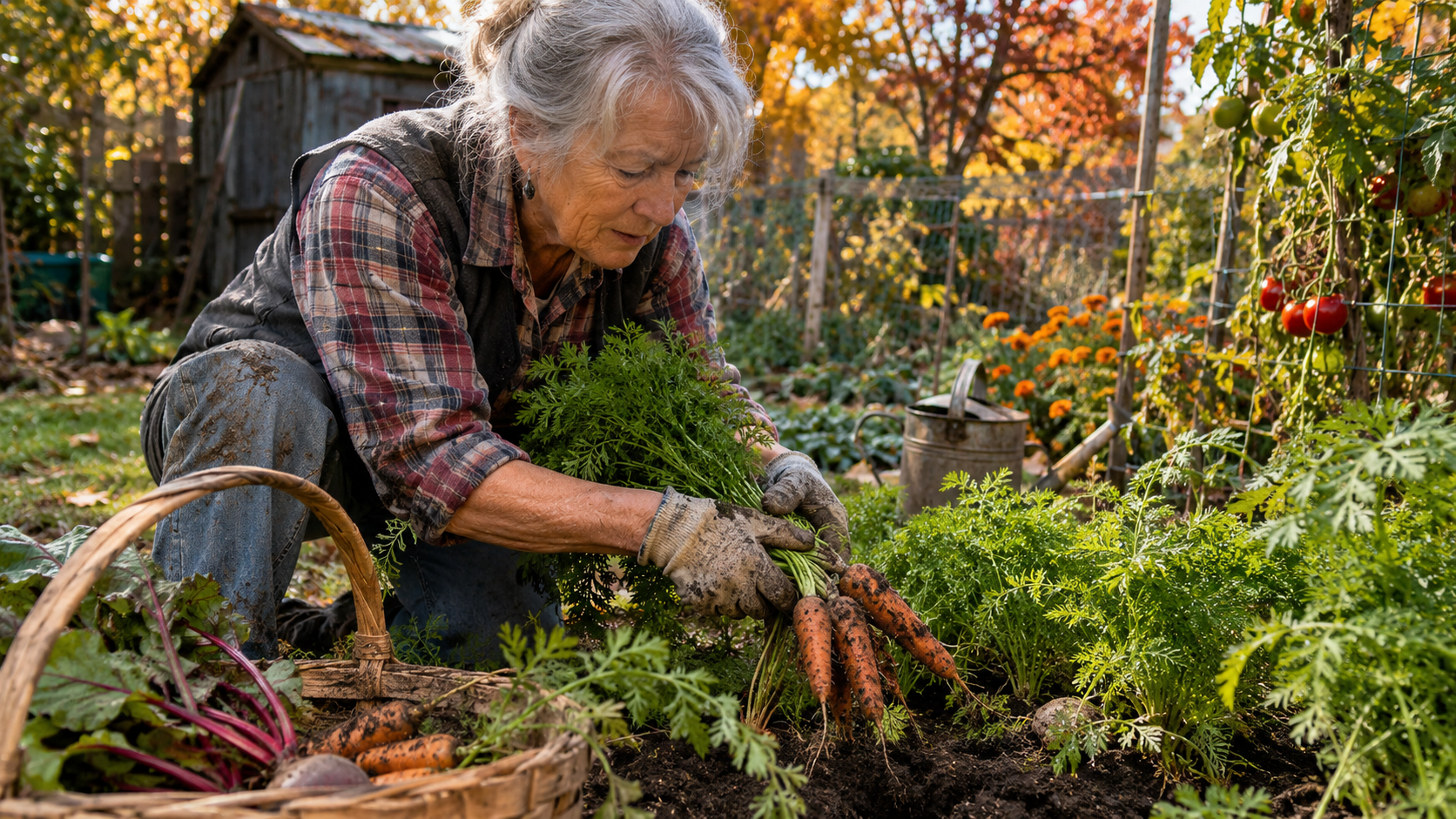
I grow vegetables, and in November there is still work to do.
The carrots are waiting in the garden. I have winter lettuce, and some plants must be covered when the weather becomes colder. There is always something that needs attention.
Having a garden sounds pleasant, and it is. But people sometimes forget how much work it involves.
During summer, there are periods when everything seems to need doing at once. The vegetables grow, the weeds grow, and you have to pay attention to the soil and the weather.
Then comes the harvest.
If you grow tomatoes, you must also decide what to do with them. I make tomato sauce so that I can use it later. There is fruit to preserve, vegetables to prepare and everything needs somewhere to be stored.
The work does not stop when you bring the vegetables into the kitchen.
But I am also practical. Some vegetables require a great deal of space, and if I only need them once or twice a week, growing them may not be worthwhile.
My garden is big enough for many things, but I do not want to turn the whole area behind the house into a vegetable field.
There must be a limit.
Some of the dishes I prepare are the same ones my mother and grandmother made. I learned those ways of cooking over many years. When you have watched somebody prepare food, and then done it yourself, you remember things that are not always written in a recipe.
I use recipes, of course, but I can also adapt them. If I have something in the garden, I can use that instead of buying another ingredient.
You have to know what works.
Strawberries have a season.
I prefer to eat food when it is in season.
Take strawberries. If you want strawberries in winter, they have to come from somewhere else, somewhere they can grow at that time of year.
That is possible, but it does not mean I want to buy them.
There is a time for strawberries and a time for tomatoes. Later in the year, we have apples, grapes and pears.
Pears are different because they do not keep very long. You have to eat them or preserve them before they become too ripe.
I make tomato sauce when tomatoes are available, and then I can use it in winter for pizza or other dishes. I do not need fresh tomatoes all year round.
It is not difficult to live like that once you are used to it.
I also think about the work needed to produce food. I know from my own garden that growing vegetables takes time and physical effort.
When I look at prices, I think about that work. Organic products can be more expensive, and I understand that production methods and the amount of labour involved can make a difference.
That does not mean the most expensive product is always the best.
I want to understand what I am paying for.
I am not a perfectionist.
Frank asked me whether I am a perfectionist.
No, I am not.
I know what I like, and I want things to be done properly. But there is a difference between doing something properly and trying to make absolutely everything perfect.
Sometimes something is good enough.
Shopping is a good example. I have my list, I know where I want to go, and I often go early in the morning when there are fewer people.
I buy what I need and come home.
I do not want to spend the whole morning deciding between different products.
The same is true in the kitchen. I cook regularly, usually deciding what to prepare according to what I have bought and what is available.
Some dishes need more attention than others. Sometimes I prepare something in advance or save part of a larger piece of meat for another meal.
But I do not need a complicated plan for every day.
I want good food. I do not want cooking and shopping to become more complicated than necessary.
The luxury of doing nothing.
Since I retired, I have been able to organise my time differently.
Frank asked whether it was difficult to stop working.
Not at all. I was very happy.
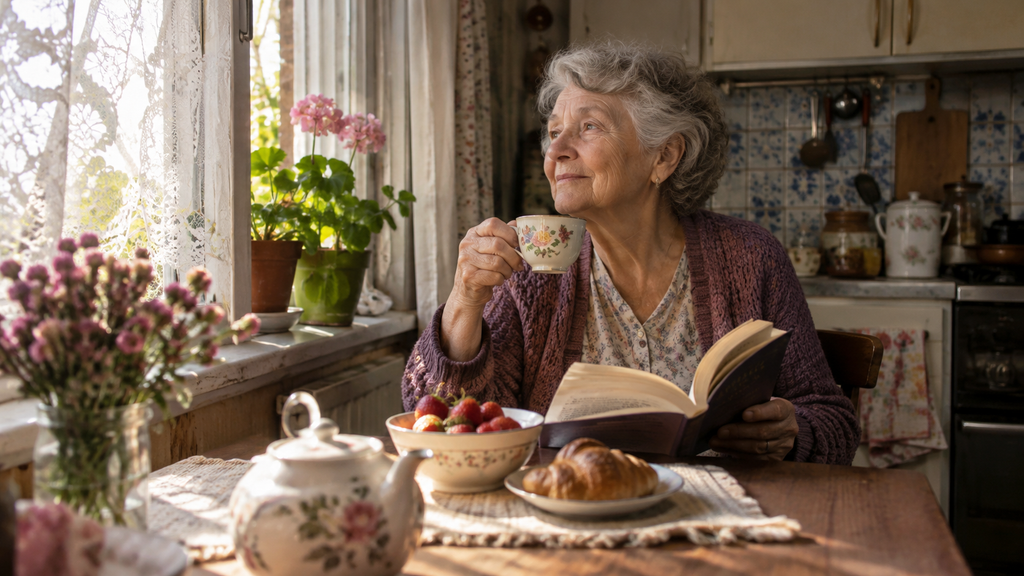
One of the nicest changes was having time in the morning. When I was working, I had to get ready and leave the house. Now I can sit down, have breakfast and read a little without watching the clock.
I do not have to finish everything in five minutes.
Of course, retirement does not mean there is nothing to do. There is the house, the garden, shopping and all the ordinary jobs that have to be done.
The seasons make a difference too. In summer, there is more work outside. When the weather is good, I enjoy being outdoors, and I can go cycling.
But I am careful about making too many commitments.
If I joined several associations and had meetings or activities every day, I might find myself with a timetable almost as full as when I was working.
Why would I want that?
I like having time for myself.
Sometimes I have a day without any particular plans, and I am perfectly happy with that.
Frank asked what I actually do on such a day.
Nothing.
Not necessarily a little gardening, cleaning or finding jobs around the house. Sometimes I really do mean nothing.
He suggested that I could teach other people how to do it.
But then I would be too busy.
Better for whom?
I suppose I am quite definite about some things.
I will take time to choose a cheese because its taste matters to me. I will work in the garden for months because I enjoy growing food and using what I produce.
I will prepare tomato sauce for winter, but I will not grow every vegetable just because I have a garden.
I will choose carefully when I shop, but I do not want to spend hours shopping.
And although I have more time now that I am retired, I do not feel obliged to fill every day with activities.
Perhaps the slightly better version is different for every person.
For me, it might be a cheese that is just right, vegetables from my garden or a breakfast that I can enjoy without hurrying.
On another day, it might simply be having nothing to do.
I know what I like, and I know when something is good enough.