
When the Fruit Is Ready, You Know.
By Fabrice, France.
Harvest looks simple from the supermarket aisle. In Fabrice’s world, it is a season of watching, tasting, waiting, preserving, sharing — and knowing what nature is doing before it is too late.
At the moment, I am surrounded by fruit.
There are plums to collect, apples and quinces coming, nuts later, and mushrooms if the weather is right. For the next four or five weeks, there is always something to do. The problem is simple: one day still has only 24 hours.
This year there are a lot of plums. By the time I finish, there will be well over 2,000 litres waiting to go through the process for schnapps. That sounds like a lot because it is a lot. You do not simply look at the trees and say, “Ah, nice harvest.” You pick, sort, taste, store, wait, protect, preserve and eventually process what you have collected.
And before all of that, you need to know when to start.
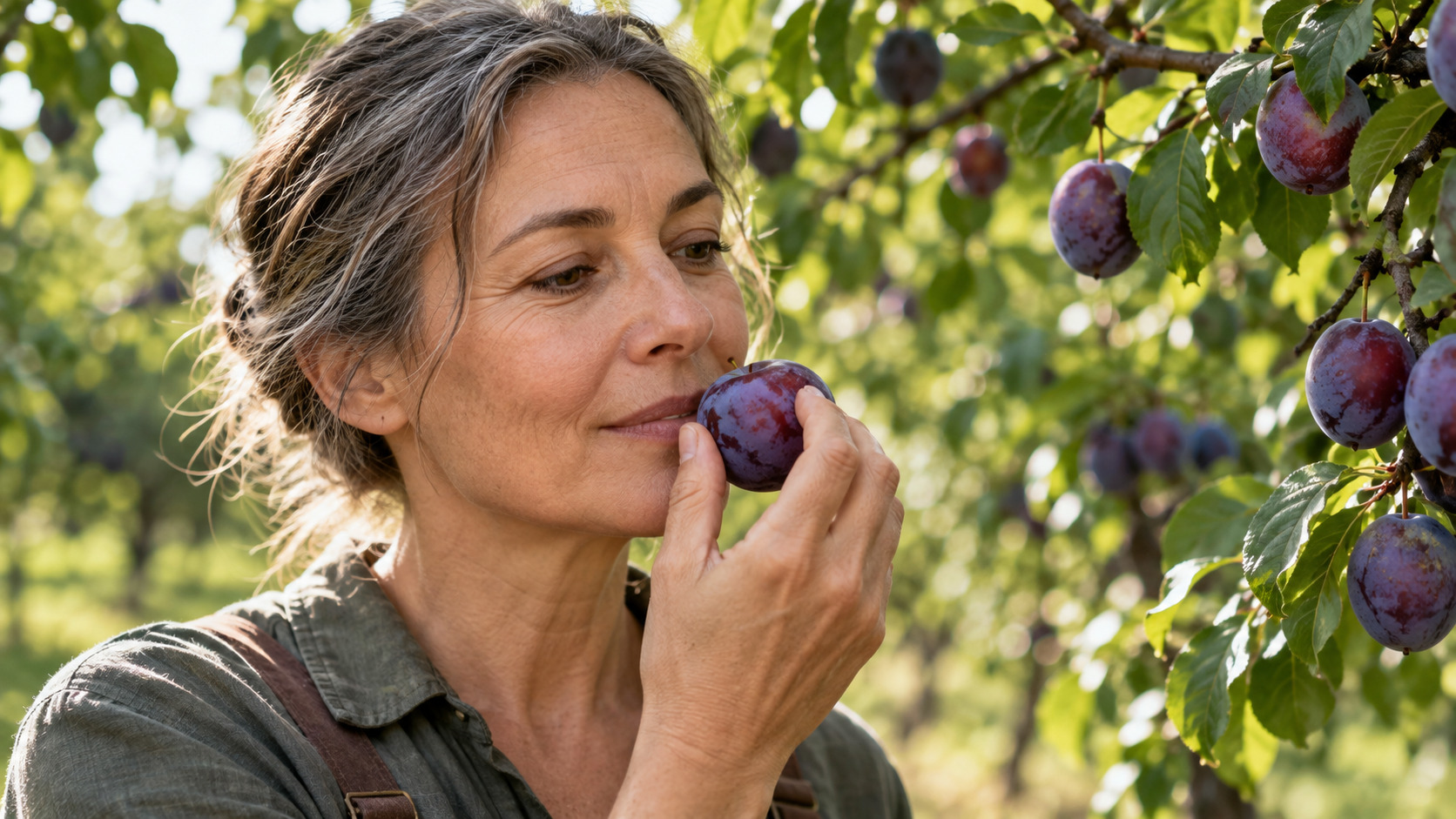
You taste one.
People asked me how I know when a plum is ready.
I taste it.
Not every plum, obviously. One. Maybe two. Perhaps three, four or five if the scientific work becomes very difficult.
At first the fruit can still be hard and bitter. Then you try again a week later. It may still be firm, but now it is sweet. That can be the right moment if you want it for a tart.
If I am collecting plums for schnapps, I wait longer. The fruit becomes softer and juicier, with much more natural sugar. Then it is ready for another purpose.
There is no single definition of “ready”. Ready for what?
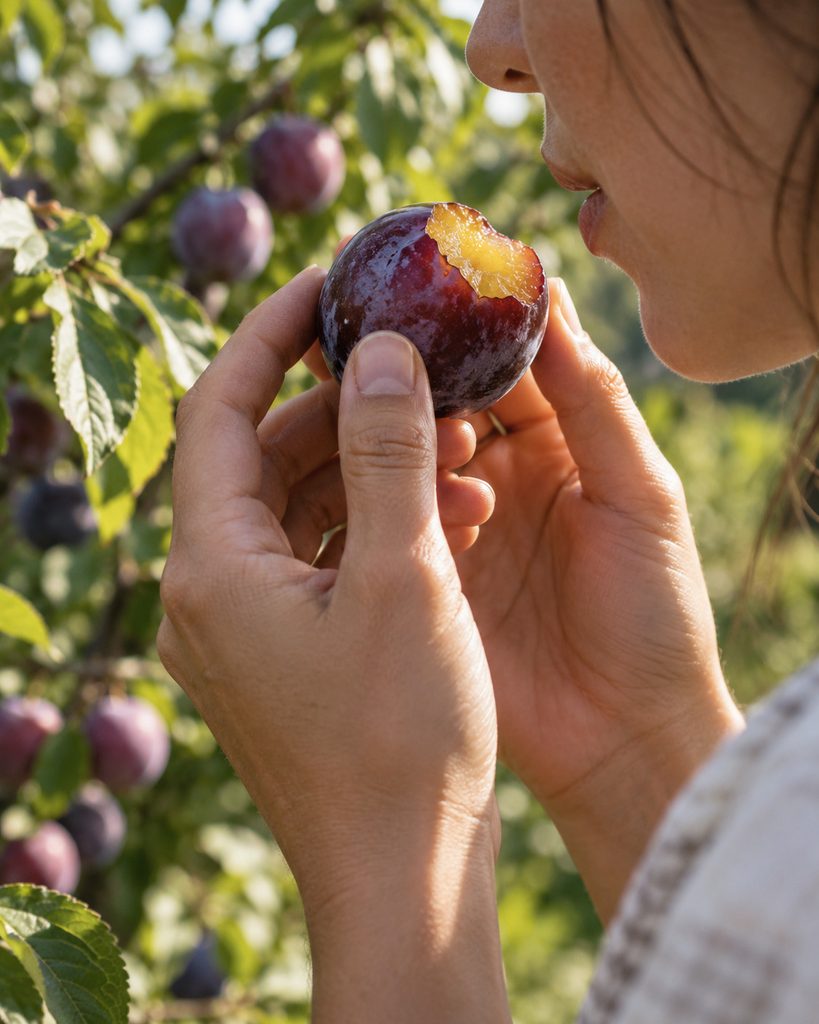
That is something you learn by doing it. You look, touch and taste. The calendar gives you an idea, but the fruit gives you the answer.
Quinces are different. Apples are different. Nuts are different again. Some fruit comes from the tree. With plums, I collect them from the ground.
To somebody who has never done this, perhaps that sounds strange. Why would you wait for fruit to fall and then pick it up?
For me, it is simply normal.
That is the funny thing about knowledge. Something can be completely obvious until somebody asks you why.
Rain, warmth and mushrooms.
Mushrooms are another story because you cannot put them into your diary and say, “Tuesday, 10 a.m., mushrooms.”
You watch the weather.
For porcini, September and October can be good, but it depends on the conditions. Rain matters. Temperature matters. After two or three days of rain, followed by warmer weather around 20 degrees, you begin looking.
Only sun and no rain is no good.
You also learn where to look. Certain trees matter. I look around spruce trees, and when I find a good mushroom place, I remember the surroundings. Taking a photograph of the area can be more useful than photographing the mushroom itself, because next year you want to find the place again.
The forest is big.
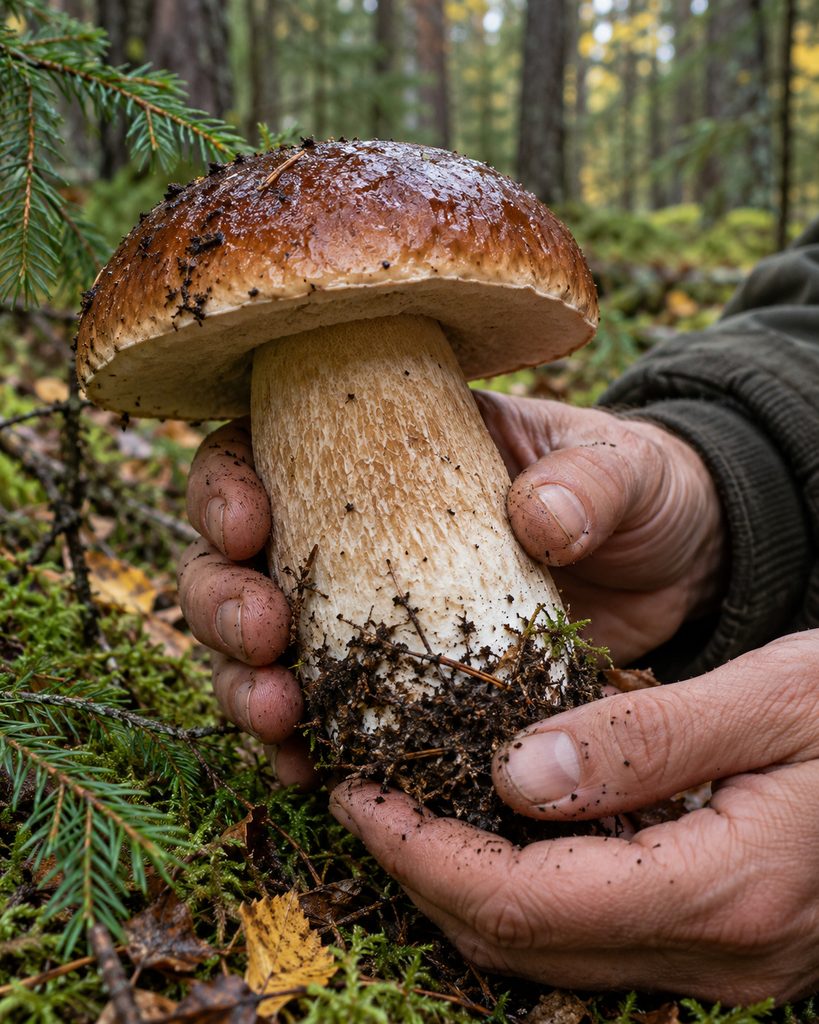
I once found a mushroom weighing about 1.3 kilos. I have seen even larger ones. And once you have found them, the question becomes what to do with them. You can eat them with potatoes or pasta, or clean them and freeze them.
Of course, freezer space then becomes another agricultural problem.
We have two freezers, but they are not empty. There is meat. There are other things stored for later. At some point you begin negotiating with the freezer.
Perhaps Janita had the right idea: bread for fruit. Bread for mushrooms. One kilo of bread, one kilo of fruit. We may have invented a new economy.
The harvest does not end when you pick it.
With plums for schnapps, picking is only the beginning.
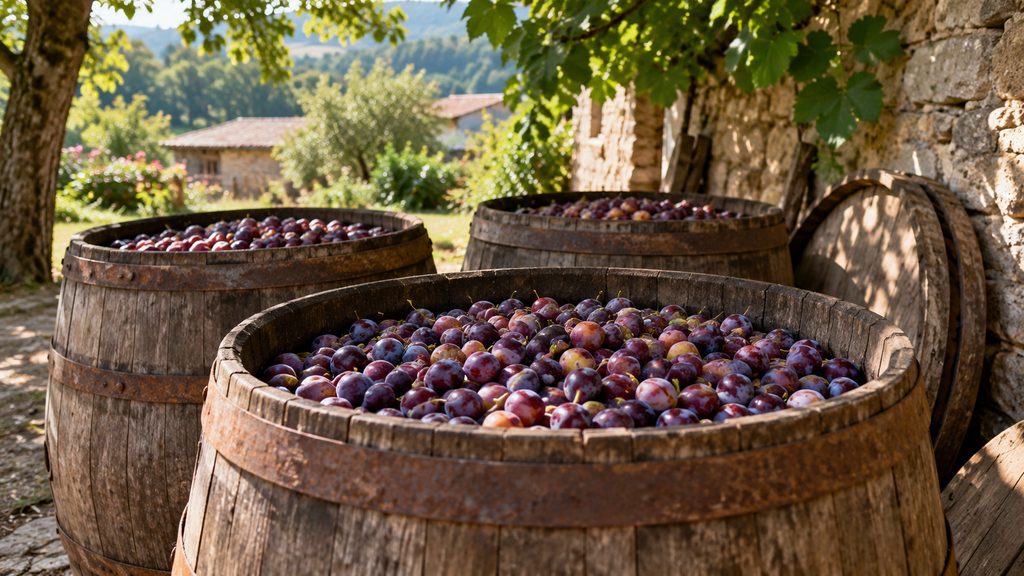
The fruit goes into large barrels and stays there for weeks while it macerates. Air is the enemy, so eventually the barrel has to be closed properly. You want the fruit and the gases from the process inside, not fresh air coming in and spoiling it.
Then you wait again.
I hope some of this year’s harvest can go to the distillery in November. Other batches may come later.
That is another thing hidden behind the finished bottle. You see schnapps on a table. You do not see the weeks of collecting fruit from the ground, checking it, filling barrels, waiting for the fermentation, watching the containers and arranging the distillation.
The bottle is the last part of a much longer story.
I learned some of this through my family, from my grandparents and the older generation. When I was young, I was sometimes told I was too young for parts of it. Much later I began doing it seriously myself.
I hope the knowledge continues.
Not because everything old must automatically be preserved, but because once nobody knows how to do something anymore, getting that knowledge back is difficult.
When there is simply too much.
Nature also has no interest in supermarket quantities.
You do not order six quinces, twelve plums and exactly enough apples for Thursday.
Sometimes a tree produces far more than you can use.
Then you find another solution. Friends can take fruit. People can help themselves. You preserve what you can. You make tarts, compotes or other things. You process it. You store it.
For me, the important thing is that good food should be used rather than left until it is spoiled.
This is where having too much becomes almost comic. One successful tree creates another job. Then another. Suddenly you are not asking, “Do we have fruit?” You are asking, “What are we going to do with all this fruit?”
The answer is rarely: eat everything immediately.
Unless Janita is helping me test the plums.
Then perhaps we have a chance.
The supermarket changes the picture.
Later in the conversation we talked about supermarkets.
Today you can walk into a supermarket in winter and find fruit from all over the world. Strawberries can appear when strawberries would never naturally be growing outside here.
Of course, this is convenient.
But when you grow something yourself, you experience food differently.
You plant tomatoes and then you wait. You water them. When the weather is dry, you may have to water every evening. You watch the plants grow for weeks. Something can fail. Something else can produce far more than expected.
You put work into it.
Then finally you pick a tomato and eat it.
For me, that is not the same experience as buying one kilo of tomatoes in a supermarket.
The same is true with strawberries. The strawberries from a garden may be smaller than the enormous ones you sometimes see in shops, but smell and taste matter to me. Size is not everything.
Growing your own food is certainly more work than going to the supermarket. I am not pretending otherwise.
But there is pleasure in going into your own garden and bringing something back to the kitchen that you have watched grow.
You know where it came from.
You know what happened before it reached your plate.
Food does not begin in the shop.
By the end of our conversation, we had travelled from plums to mushrooms, quinces, apples, nuts, tomatoes, pumpkins, strawberries, bread, pork and finally pasta.
Without mushrooms, Janita insisted.
Perhaps that is what becomes strange when you spend enough time growing, collecting and preserving food. The supermarket starts to look like the final chapter of a book in which most of the pages are missing.
Before the fruit reaches the shelf, something had to grow. Somebody had to wait. Weather had to cooperate. Somebody had to decide when it was ready. It had to be picked, stored, transported or preserved.
Sometimes that knowledge is complicated.
Sometimes it is very simple.
Taste a plum.
If it is bitter, wait.
If it is sweet, you are getting close.
And if you have 2,000 litres of them, clear your calendar.