
The Things We Stop Noticing.
By Ismar, Brazil.
Electricity, mobile phones, Sunday shopping, online gambling and an election led me towards a different everyday mystery: perhaps what we take for granted is not the thing itself, but the life we have built around it.
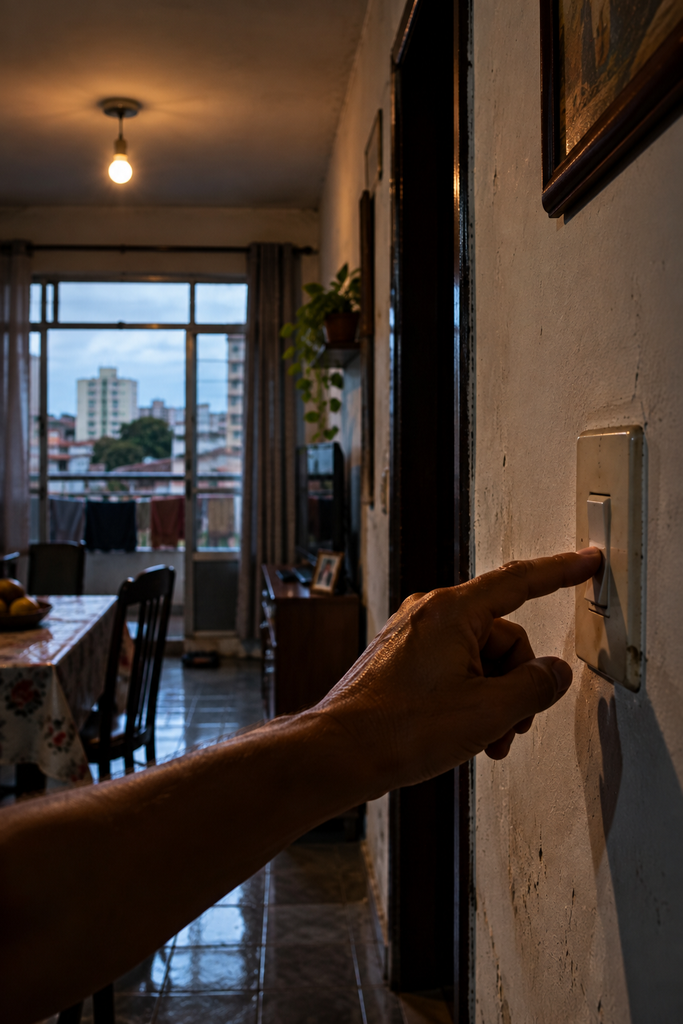
When I press a light switch, I expect the light to come on.
I don’t think about where the electricity comes from or who keeps the system working. I press the switch. The same with water. I open the tap and expect water to be there.
I notice these things when they stop.
Perhaps that is what taking something for granted really means. Something becomes so normal that it disappears from our attention.
Once we started talking about this, I realised that the same thing happens with much more than electricity and water.
When a mobile phone was something to show.
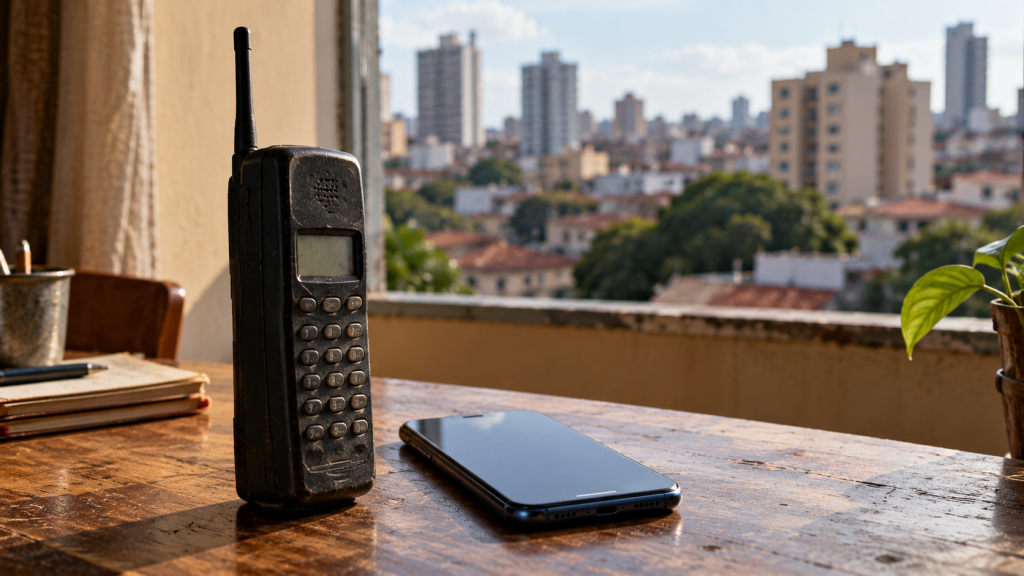
When I was 30, we didn’t have mobile phones. I was living in Manaus then, around 1991, and somehow we managed.
I bought my first one several years later, when I had my dental office as well as my work with the Brazilian Air Force. I needed to communicate with colleagues and patients.
The early phones were expensive, and some people made sure everybody could see them. Those large Motorola phones were worn on belts almost like status symbols.
I thought they looked terrible.
Mine was smaller, and it was really just a telephone. You talked on it. That was all.
Now our phones are cameras, newspapers, maps, banks, music players and communication centres. We have absorbed all of that so completely that losing a phone can feel as though part of ordinary life has stopped functioning.
Within one lifetime, something extraordinary became ordinary.
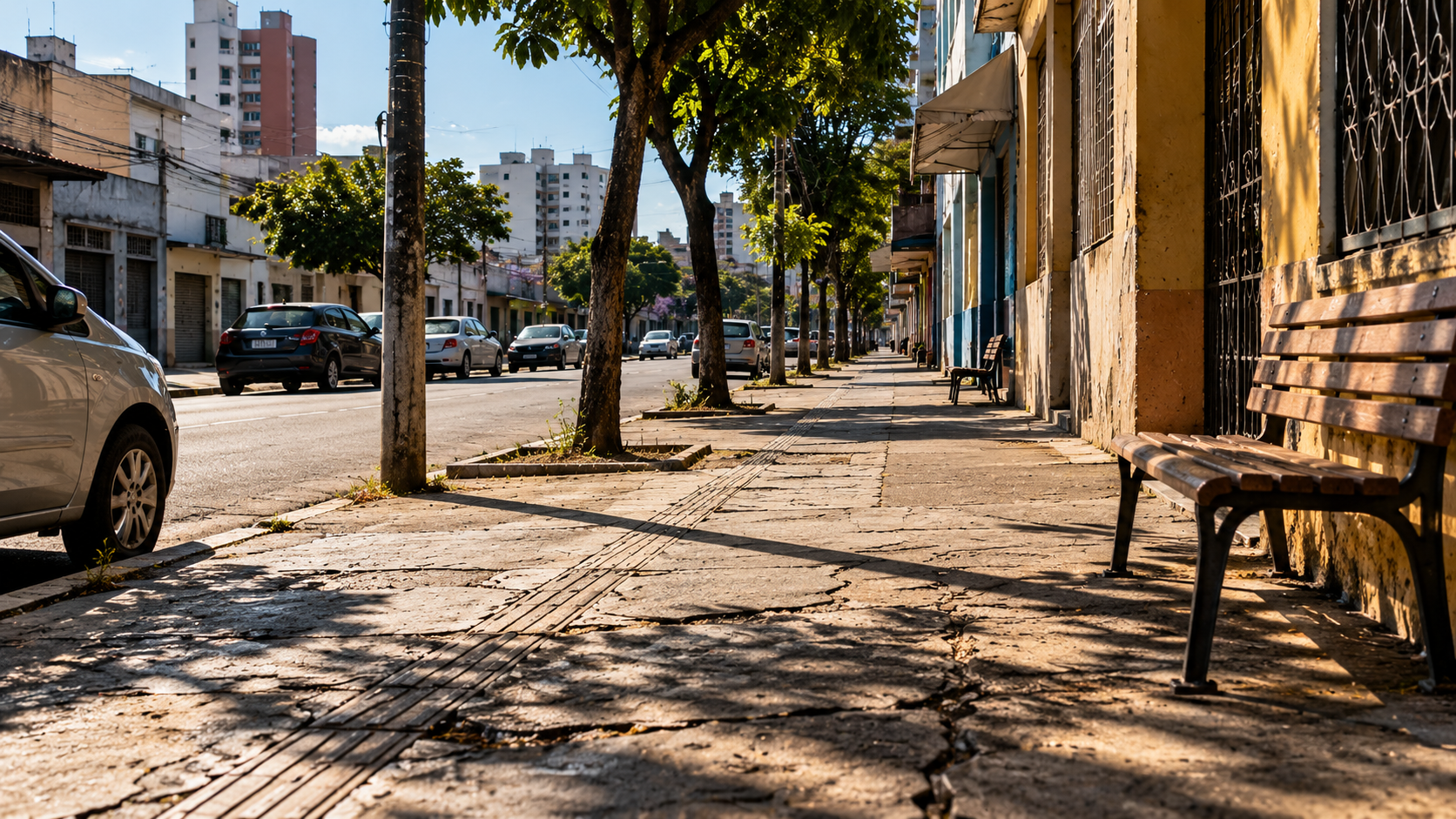
When walking was normal.
Asked what I might bring back from the past, I didn’t immediately think of an object.
I thought about walking.
As a teenager, I frequently walked the kilometre and a half from home into downtown Campo Grande. Later, when money mattered more, I walked to a preparatory course rather than pay for the bus.
Today I again live roughly the same distance from downtown, but I don’t walk there very often.
The sun feels stronger to me. There are more cars. And, strangely, I feel as though I have less time.
The car solved one problem and created others.
In my experience, a car in Brazil can also represent status. A young person gets a job and may spend years financing one because a car says something about having succeeded.
So it is not enough simply to tell people to use public transport. The alternative has to work.
Travelling from my home to my mother’s by bus can take half an hour or more, followed by a walk in strong daytime heat. By car, it takes around ten minutes.
Convenience wins very easily when the difference is that large.
Someone is stealing my time.
Then we imagined that everything still worked tomorrow, but ten times more slowly.
Messages take an hour. Deliveries take a day or two. Payments take five minutes. Websites crawl onto the screen.
How would I react?
At first, probably with anger. Then I would have to adapt.
But underneath that answer was something more interesting.
We expect things now.
Waiting can create the feeling that somebody is stealing your time. Stealing your life.
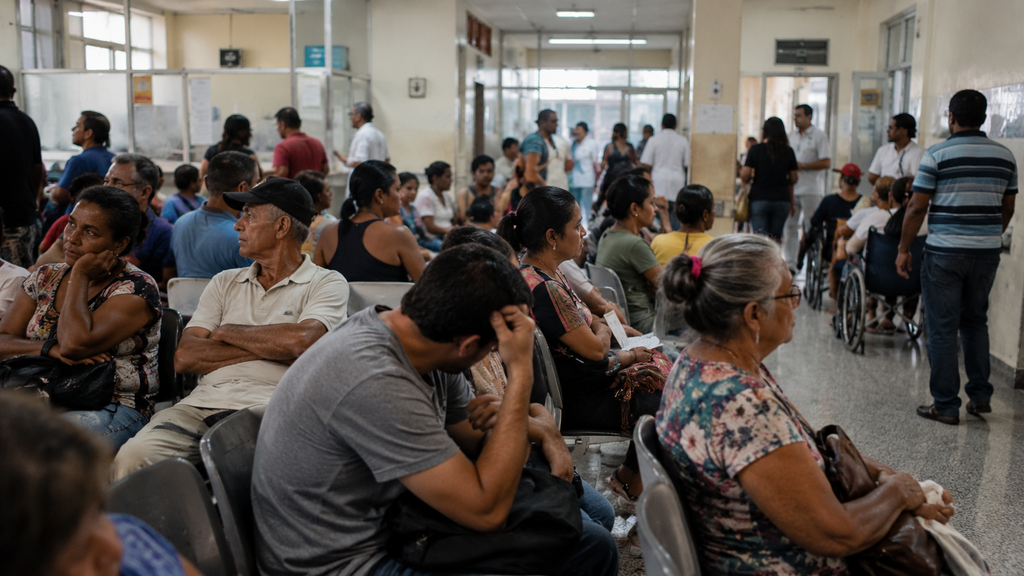
I have experienced long waits in public services. During the pandemic, I remember waiting hours to speak to a doctor. Many years earlier, after hurting my foot, I had an X-ray quite quickly and then waited for a specialist. Eventually I left. Other people seemed to be in more urgent situations than mine, and I imagined I might remain there until the next morning.
Intellectually, we understand that some things take time and that somebody else’s need may be greater.
But our time still feels like our time.
Once speed becomes normal, waiting starts to feel like a failure of the system.
And from there our conversation moved into politics.
If enough people become dissatisfied and complain publicly, I think governments notice, especially when elections are approaching. If people complain only among themselves, very little may change.
That is my interpretation. But it raised a larger question: perhaps political responsiveness is another thing we take for granted.
The supermarket that never rests.
Availability creates the same problem.
In Brazil, I can go to a supermarket on Sunday. I don’t particularly like that.
When I was a child, the large supermarkets were closed on Sundays. Today we expect to buy what we want when we want it. Some shops remain open around the clock.
But somebody has to make that convenience possible.
Why should I have my weekend while another person cannot be with family or simply relax at home?
I remember periods of my own working life when I had only one free weekend in a month. I know what that feels like.
Of course, there is another side. Somebody may need to shop on Sunday. An employee may prefer weekend hours. Somebody who needs a job may not have the luxury of rejecting the schedule.
That is the interesting part.
We say, “The supermarket is open,” as though the building opens itself.
It doesn’t.
People make our convenience possible.
Gambling in your pocket.
Online gambling is another example of something becoming almost frictionless.
It is no longer necessary to travel somewhere special. The betting shop can be in your pocket.
Brazil has spent considerable political energy regulating online betting, particularly because of concern about indebtedness and vulnerable families. During our conversation, I questioned the timing of recent government action so close to the presidential election.
My reaction was political: why now rather than earlier?
That is my interpretation, not proof of anybody’s motive.
But it reveals another form of taking things for granted. Once an activity becomes easy, legal and constantly available, we may stop asking what its availability is doing to people. Then, when government intervenes, another argument begins: is it protection, political calculation, restriction—or some mixture of all three?
The same action can look completely different depending on where somebody is standing.
What do we take for granted in a democracy?
Brazil votes in its general election on 4 October 2026.
I said clearly that I hope President Lula is not re-elected.
I also said that I do not consider the alternatives particularly good.
That matters, because my concern is not simply that one politician should replace another. It is about trust in institutions and about how people interpret what they see happening around them.
During the conversation, the Mayor raised another question: can people also take democratic freedoms for granted?
The right to vote. The ability to criticise a president. The possibility of reading different newspapers, using social media or looking outside Brazil for information.
My response was that the issue is not only whether those possibilities exist. It is whether people use them.
Many people, young and old, appear to me not to be very interested in politics or in what happens at the highest levels of government.
The possibility of becoming informed exists.
That does not mean people become informed.
And perhaps indifference is itself something we take for granted.
A freedom can exist without being exercised.
A vote can exist without much curiosity about what sits behind it.
I also have concerns about the limits of political speech in Brazil and about how challenges to institutions are treated. Those are my concerns. They should not be confused with proof that Brazil’s electronic voting system is fraudulent. The official electoral authorities maintain that the system is tested, audited and secure.
For me, the more interesting question is the disagreement itself.
How much scepticism should a democracy tolerate? At what point does criticism become an unsupported accusation? How should institutions defend themselves without making people feel that questioning them is forbidden?
I don’t have a simple answer.
Perhaps that is precisely why the question matters.
Younger does not automatically mean better.
Someone recently suggested to me that Brazil would improve when older politicians disappeared and younger people replaced them.
I asked: are you sure?
I don’t think age solves the problem automatically.
Young people can be indifferent. Older people can be indifferent. Young people can be responsible. Older people can be responsible.
I see a very small version of this at university, where I am usually the oldest student in the room. In one class, some of the younger students talk during the lesson, leave chairs out of place or leave rubbish behind.
That is one classroom. It proves nothing about a generation.
But it does make me suspicious of the easy belief that younger automatically means better.
There is also a young student in that class who is different from the others and, in my observation, was being left outside the groups. Nobody wanted me in their group either, perhaps because I am much older.
So I invited him to join me.
We became a group of two.
I joked that we were the two awkward people.
That small scene probably tells me more about people than any theory about generations.
Someone else may see what you don’t.
Towards the end of the conversation, the subject became more personal.
I spoke about my girlfriend.
She is five years older than me. When I say we are old people, she disagrees. She doesn’t feel old.
She is also much more optimistic than I am.
That interests me because, from what she has told me about her life, she has had reasons not to be optimistic. Yet she has a good humour and a spirit that I admire.
When I was asked what she sees in me, I wasn’t so certain.
She says I am good company.
I am not always convinced.
And perhaps that belongs in this conversation too.
We notice electricity when the lights go out. We notice water when the tap is dry. We notice speed when something becomes slow, convenience when a service disappears, political freedom when we fear losing it.
People may be different.
Sometimes another person sees something in us that has become invisible to us.
Maybe that is one more thing we should be careful not to take for granted.
We began with inventions.
We ended somewhere else.
The things we stop noticing are not always things.