
The Trust Beneath the Machine.
By Bruce Lloyd in London & Frank Peters in Cleebourg.
We worry about whether artificial intelligence will escape our control. But perhaps the deeper question is older and more ordinary: how much of modern life already depends on trusting people we will never meet?
Frank told Bruce a story from his days as a receptionist at the London Hilton on Park Lane.
The hotel had recently introduced electronic key cards, still something of a novelty at the time. One day, a guest came to reception and reported that somebody had been in his room and something was missing. The immediate reaction was that this could hardly have happened. The new electronic system was secure.
Except that the thief had found a much simpler way in.
He walked the corridors until he found a room being serviced, told the chambermaid it was his room and said he needed to fetch something. She believed him, let him in, and he stole what he wanted.
Nothing was wrong with the electronic security system. Nobody had hacked the key card.
The weakness was human trust.

The story surfaced halfway through one of Bruce and Frank’s conversations about artificial intelligence, control, hacking, power and all the increasingly alarming questions that seem to follow AI wherever it goes. It changed the direction of the discussion because it suggested they might have been looking at the problem from the wrong end.
Much of the public debate asks whether humans can trust the technology.
Bruce and Frank found themselves asking something more difficult.
Can humans trust one another?
Both sides of the fence.
Bruce has often thought of himself as an outsider trying to sit on both sides of the fence at the same time. He is critical of many of the contradictions within existing systems and questions whether some of them can continue without substantial change. Concentrations of wealth and power, weaknesses in institutions, ownership of information and the growing influence of technology all deserve scrutiny.
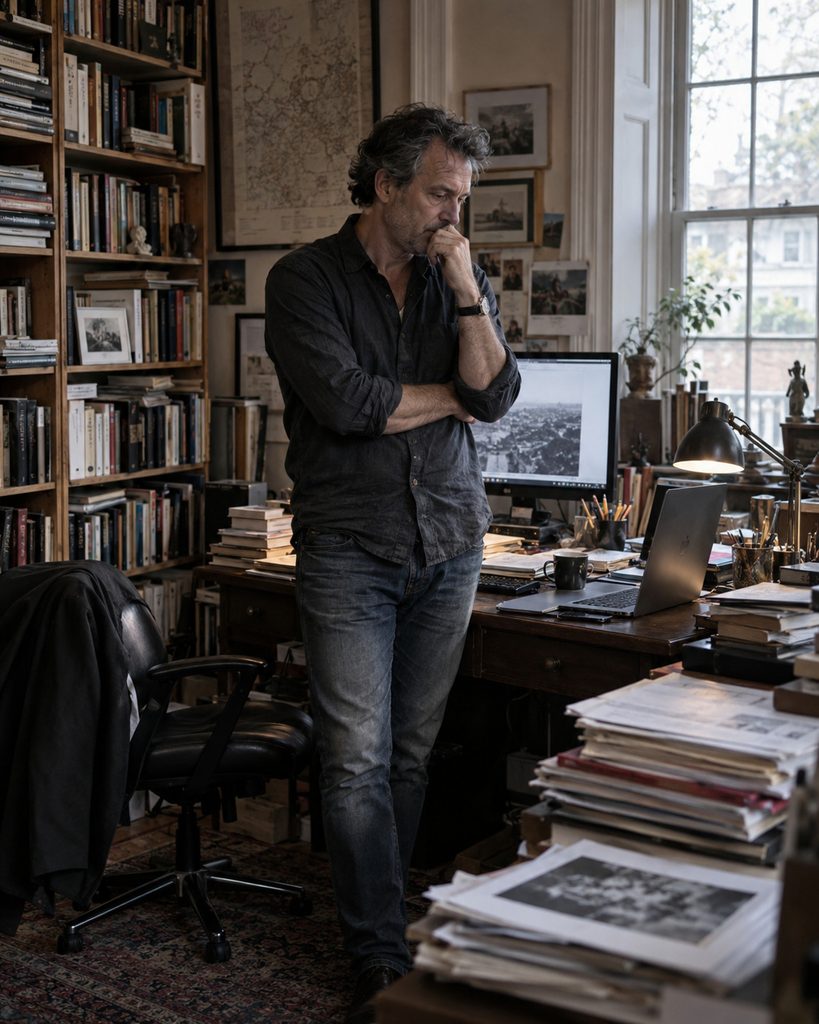
At the same time, he is completely dependent on those systems functioning.
So is everyone else.
His own work has sometimes involved helping institutions operate more effectively, which produces an obvious paradox. A person can spend time trying to improve the workings of a system while simultaneously wondering whether the system itself needs more fundamental change. Artificial intelligence has not created that contradiction. It has simply made it more visible.
Oddly enough, their conversation had begun with something much smaller.
Frank was explaining his experiments with a possible new app for The Pineapple. It might open hundreds of archived articles to readers, allow more interaction around them and perhaps, eventually, provide a different financial foundation for the Brida community.
Almost immediately came the usual questions. What should people pay? What happens if demand grows quickly? What infrastructure would be needed? What if the volume became too great?
Bruce’s response was fairly prosaic. There seemed little point worrying about being overwhelmed before there was anything to be overwhelmed by. Start carefully. See what happens. Monitor it. Adapt.
Frank then connected his possible new role, jokingly, to an earlier discussion they had been having about Karl Marx and the age of AI.
Was he about to become a miniature digital capitalist?
It was a joke, but a useful one.
The factory owners of the Industrial Revolution controlled machinery, labour and capital. Today, extraordinary power can sit in servers, data, algorithms and the systems through which information passes. Bruce had been experimenting with asking different AI models to analyse questions around Marx, technology and modern ownership, and what interested him was not simply the individual answers but how often the different systems converged on similar underlying questions.
Ownership. Control. Purpose.
Who runs the intelligence that increasingly helps run the economy, and who decides what it is for?
For Bruce, that was not an answer. It was the beginning of a discussion, and perhaps that is where some of the real value of AI lies. Not in producing a final response that settles the matter, but in helping people ask better questions, compare different perspectives and keep the argument going.
What happens when the system stops?
There is considerable anxiety about AI agents and the possibility of systems acting without direct human intervention. Bruce makes no claim to expertise in that field. Even with the AI systems he already uses, however, he occasionally notices them doing things he did not explicitly ask them to do. Usually, they appear to be trying to help.
He has never felt that he had lost control.
The concern becomes more serious when increasingly capable systems are connected to infrastructure where failure carries much greater consequences. But even here, AI may simply be drawing attention to a vulnerability that has existed for years.
Long before generative AI arrived, there was hacking, ransomware and attacks on computer systems. People had already become deeply dependent on technologies most of them neither understood nor controlled. An air traffic control failure can cause widespread disruption without AI having anything to do with it. Electronic payments can stop. Electricity can fail. The internet can disappear.
Then what?
Bruce began wondering what would happen in a society that had become almost cashless if electronic payments disappeared for any significant length of time. How would ordinary transactions continue? Would people suddenly return to cash? Would shops offer credit? Would handwritten IOUs make an unexpected comeback?
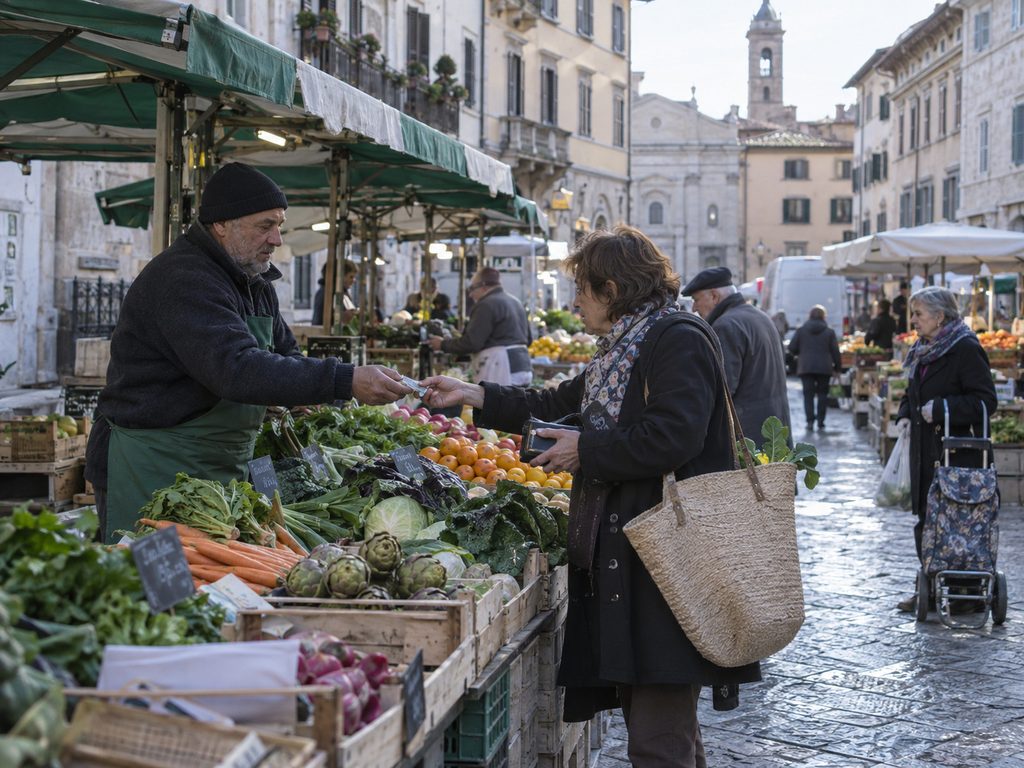
Enormous effort goes into making systems faster and more efficient. Far less goes into thinking about how people would function when those systems were no longer available.
Frank took the thought somewhere even more ordinary.
Get out of bed in the morning. Switch on a light. Turn on a tap. Make coffee. Check a phone.
Behind each trivial action is a complicated chain of people the user will never know. Somebody keeps the electricity flowing. Somebody maintains the water supply. Somebody operates the telecommunications infrastructure. People monitor networks, repair faults, inspect equipment and make thousands of small decisions that remain invisible until something goes wrong.
Society trusts them.
Nobody investigates the character of the person maintaining the electricity network before switching on the kettle. Modern civilisation would become impossible if everybody tried.
That took Bruce and Frank back to AI from a different direction.
Do people trust those working inside OpenAI, Anthropic and the other organisations developing increasingly powerful systems to do their jobs properly and, just as importantly, to raise a hand when something does not look right?
That does not necessarily mean making a public declaration. It could happen inside a laboratory, a technical team or a meeting nobody outside the organisation will ever hear about.
Somebody simply has to be willing to say: this needs another look.
Many of the systems civilisation already depends upon function because somebody, somewhere, does exactly that.
Trust is not faith.
The story from the Hilton also warns against making trust sound too comfortable.
The chambermaid trusted the man outside the hotel room.
Her trust was exploited.
Every security system creates another opportunity for somebody to look for a weakness. Society adds passwords, identity checks, authentication systems and two-step verification, and somebody begins searching for a way around those too. Complete security may be impossible.
Trust therefore has to live alongside scrutiny.
Bruce spends quite a lot of time experimenting with different AI systems. Sometimes he asks one model to evaluate answers produced by several others. The frameworks they create can be surprisingly sophisticated. They establish criteria, compare arguments, identify areas of agreement and disagreement and occasionally expose weaknesses none of the original answers recognised.
But there are traps.
Sometimes Bruce has asked one system supplementary questions that another was never given. The AI carrying out the comparison does not necessarily spot that the playing field is uneven. It can produce an impressively structured analysis of evidence that was never quite comparable in the first place.
That does not make the analysis useless.
It makes it something to question.
Perhaps that is closer to the kind of trust an AI world requires. Not faith. Not obedience. Not the belief that a sentence becomes true simply because a machine delivers it confidently.
Trust with inspection. Trust with argument. Trust that remains capable of changing its mind.
The same issue appeared when their conversation moved from AI to the media. Bruce spoke rather broadly about the incentives towards sensationalism in media and social media. Frank pushed back. Serious publications, he argued, should not casually be grouped with outlets whose commercial model depends far more heavily on provocative headlines.
The distinction mattered.
If every institution is described as untrustworthy, the word itself becomes almost meaningless. There still has to be a distinction between reliable institutions and unreliable ones, careful evidence and noise, mistakes and deliberate manipulation.
Trust only means something if discrimination remains possible.
The human infrastructure.
As often happens in conversations between Bruce and Frank, they then wandered through newspapers, taxation, billionaires, innovation, family structures, voluntary organisations and village life. They sounded like different subjects, but underneath them was much the same question.
What holds a complicated society together when no individual can possibly understand, supervise or personally control more than a tiny fraction of it?
Frank described the network of associations and voluntary organisations around him in France. People belong to sports clubs and cultural groups. They pay modest subscriptions. Volunteers sit on committees. Grandparents help with children. Communities organise events and keep local traditions going.
Frank himself had been recruited into the local grape harvest festival.
For about twenty minutes, he would be dressed as a peasant from roughly a century ago, wearing a costume produced by decidedly modern global manufacturing, and take part in the village parade.
It would cost him nothing.
He would meet people, have some fun and, if everything went according to plan, receive a glass of wine into the bargain.
It is easy to dismiss such things as picturesque local colour. Yet they are also part of the invisible infrastructure on which society rests.
Not digital infrastructure.
Human infrastructure.
Bruce added an important qualification. Community works best when it is inclusive rather than exclusive. The solidarity that creates belonging can also become suspicious of outsiders. Local pride can sustain a place, while parochialism can close it off. In the same way, the wider argument cannot simply be reduced to individualism versus collectivism. Competition can encourage innovation; collective structures can provide stability, care and cooperation. Either can become destructive when pushed too far.
Finding the balance is the work.
One of Bruce’s AI experiments had arrived at something similar when presented with competing alternatives. Sometimes the useful answer is not to choose one side and defeat the other, but to look for a third possibility that preserves something valuable from both.
Perhaps that is also where the conversation about trust ended up.
People are right to ask what happens when machines become more powerful, more autonomous and more deeply connected to the systems around them. They are right to ask who owns them, who controls them and what happens when they fail.
But none of those questions begins with artificial intelligence.
Every morning, before most people have finished making coffee, they have already placed their lives in the hands of hundreds of people they will never meet.
The machine may be new.
The trust beneath it is not.