

Just Add Garlic.
By Ralf
Instant answers are useful. But curiosity starts when you understand why something works — and sometimes when you ask another person instead of Google.
The Mayor gave me a new rule: whenever something goes wrong, I am allowed to give only one answer.
Just add garlic.
I liked this immediately.
At home we had a very practical problem. The shutters on our bedroom windows were not working properly. On one window the shutter was down and could not open. On the other it was open and could not close. The wrong motors had been fitted. This is not ideal in a bedroom.
Normally you telephone somebody, order the correct motor, wait for another appointment and hope that this time everything works. But under the new rule, the answer is much easier.
Garlic.
I am surprised the mechanic did not think of it himself.
There are not many situations where garlic makes life worse. Perhaps if you have marmalade on your bread. Then I would be careful. Otherwise, I think we have possibilities.
But behind this stupid idea was actually a good question. Today we can get an answer for almost everything immediately. Google, YouTube, instructions, videos, forums. You type in the problem and — boop — there is the answer.
But is getting an answer the same as understanding?
I don’t think so.
First, Do Not Panic.
Cooking is a good example.
People can make a very small problem into a very big problem. The food is too salty and immediately they think: finished, terrible, throw it away, I must cook everything again.
Why?
My mother taught me something different. If something becomes too salty or too spicy, you can sometimes grate a potato very finely and cook it with the food. It can help soften the problem.
That is experience.
It is not panic, throw everything in the bin and start again. It is: look at the problem, think about it, try something.
I like this way.
Maybe the first rule of cooking should not be just add garlic. Maybe it should be first, do not panic.
Then add garlic.
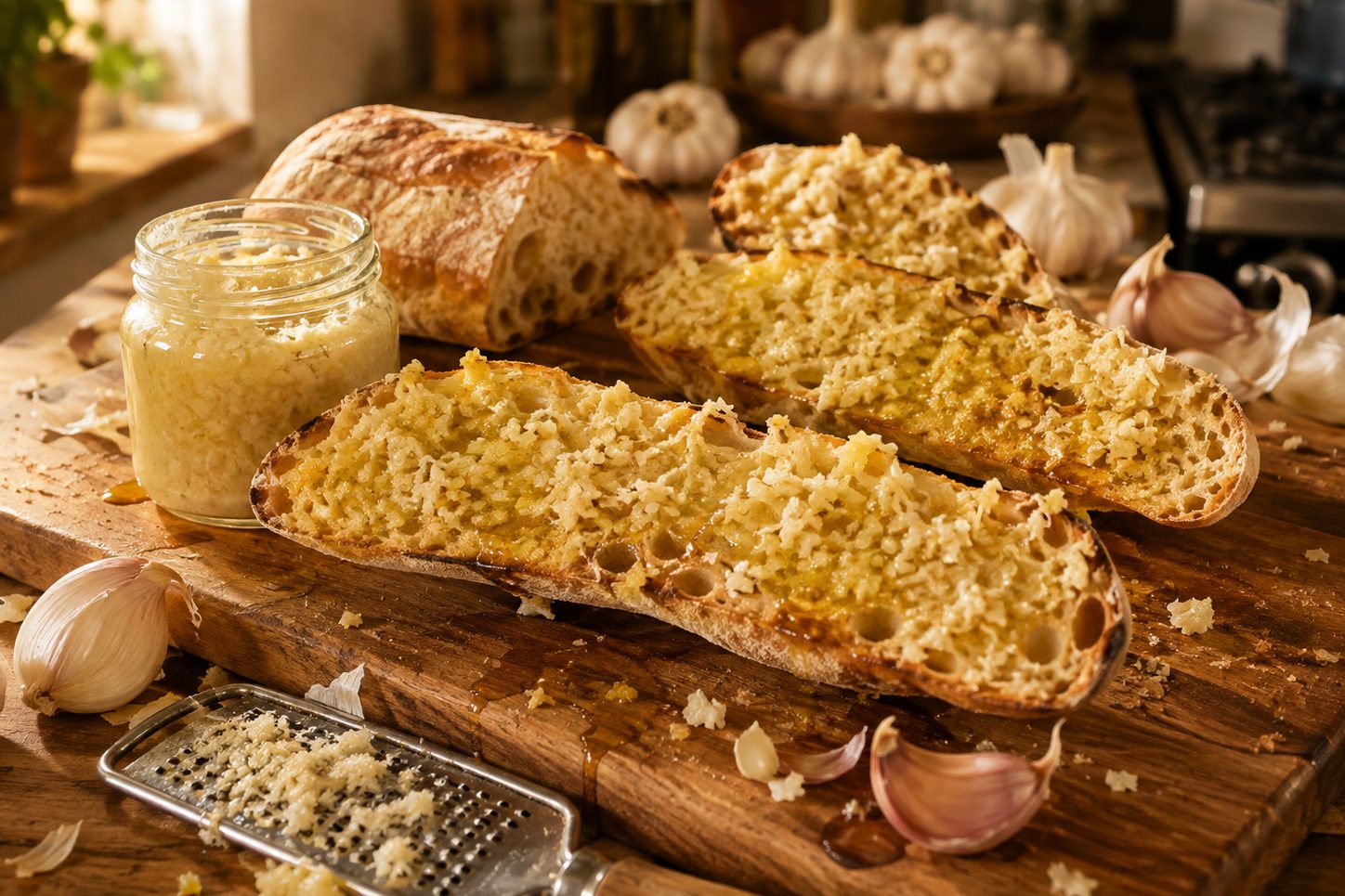
A Recipe Is Not an Explanation.
You can find a recipe in seconds today, and that is fantastic. I use the internet myself. I use Google. I look on YouTube.
If something at home is broken, first I look at the instructions. Then I use my own brain. Maybe I take my tools out and try to find the answer myself. If I still have no idea, I go to the internet.
There is nothing wrong with that.
But with cooking videos I notice something. Many people tell you exactly what to do.
Put this inside. Then this. Then this. One spoon of that. Mix it. Finished. Boom.
Very few explain why.
Why does this ingredient help? Why this oil and not another one? Why does one small change make the food better?
For me, that is much more interesting than simply following instructions.
When somebody explains the reason, I learn something I can use again. The next time I do not need exactly the same recipe, because now I understand a little more about what is happening.
An instruction gives me one meal.
Understanding gives me possibilities.
Before Google, There Were People.
The Mayor asked me what we did before the internet.
Good question.
We asked somebody.
I asked my mother. I asked my father. I asked friends. If you needed specialist information, you found a book, went to a library or searched for somebody who knew more than you.
You needed more time. And you needed to know who to ask.
Today it is simple. I put the question into Google and Google says: Boop. Here is your answer.
For me personally, that is better. I like having information quickly. I do not want to return to a world where every small question requires a library and three telephone calls.
But perhaps the old way was better in one important respect.
People talked to each other.
If I did not know something, I had to find somebody who did. Then we had a conversation. The answer took longer, but something else happened at the same time.
We connected.
That is something an instant answer cannot completely replace.

The Beautiful Danger of Curiosity.
Of course, the internet creates another problem.
You search for one thing. Then you see another thing.
That looks interesting.
Click.
Then there is another video. Another barbecue. Another recipe. Another machine.
And suddenly three hours have disappeared.
I know this problem very well.
When my wife is out running, cycling or swimming, I sometimes have time for this. I can look at recipes, barbecue equipment and new ideas. I enjoy it.
But I also like the other version of curiosity: going somewhere and talking with somebody who really knows the subject. You stand there, look at the equipment, discuss it, ask questions, hear an opinion and learn something you did not expect.
Then perhaps I go home and continue on the internet.
For me, this combination is probably best.
The internet gives speed.
People give context.
Experience tells you whether any of it makes sense.
New Does Not Mean Better.
I notice this especially with barbecue equipment.
Somebody tells you one machine is fantastic. The best. Very, very good.
A few years later there is a new machine.
Suddenly the old one is terrible.
Now the new one is the best thing in the world.
I don’t like this.
It is completely okay to say, “I have learned something new. This version is better. This is the next step.”
Good. No problem.
But that does not mean yesterday’s good machine has become rubbish overnight.
Sometimes I look at these things and think: what actually changed?
The machine?
Or the story around the machine?
That is when your own experience becomes important. You have to look, compare and ask questions.
Curiosity does not mean believing everything new.
Sometimes curiosity means becoming slightly suspicious.
Use Your Own Head.
That, for me, is the important thing.
Instant answers are not bad. I use them. I enjoy them. I like being able to ask a question and have an answer in seconds.
But the instant answer should be the beginning, not always the end.
You still need your eyes, your nose, your experience and your memory. You need to know what your family likes and does not like. You need to remember the little tricks your mother taught you. You need to recognise when somebody on the internet understands what they are explaining — and when somebody is only saying, “Put this inside, then this, then this. Boom. Finished.”
And sometimes you should still ask another human being.
Perhaps the answer takes ten minutes instead of ten seconds, but you get a story with it. Maybe you laugh. Maybe you learn something you did not even know you wanted to know.
Maybe that is what curiosity needs in the age of instant answers.
Not fewer answers.
Better questions.
And when all of that fails?
Just add garlic.