Why Do We Do That?
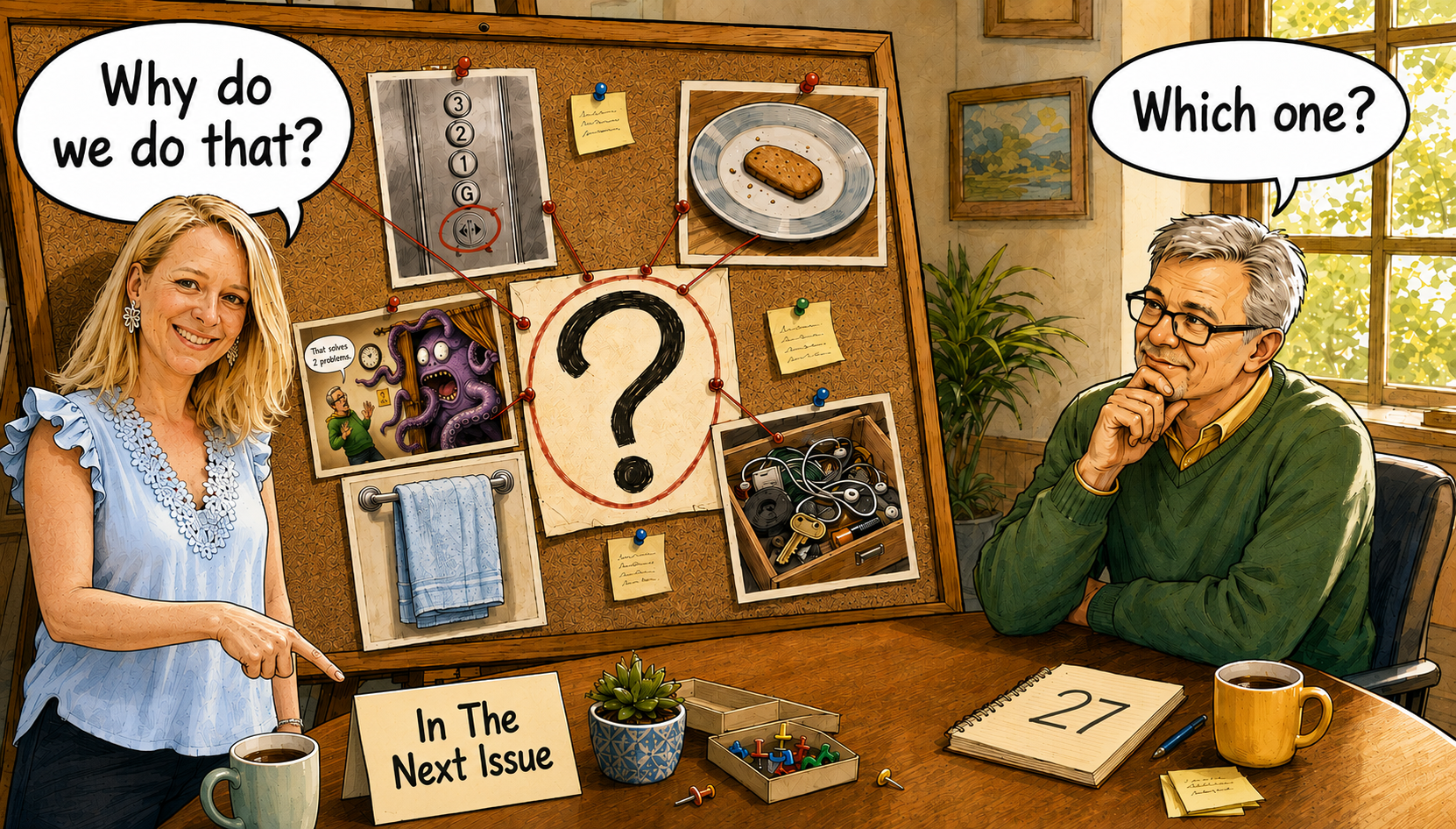
The mystery began with a button.
It sat beside the lift, perfectly ordinary, slightly scratched, with a small red light in the middle. Nobody pressed it. People pressed the buttons above and below. Once, a child reached towards it and his mother quietly moved his hand away.
There was no warning. No sign. Nothing to suggest catastrophe.
And yet everybody seemed to know.
You did not press that button.
Why do we do that?
Once you start asking, ordinary life becomes suspicious.
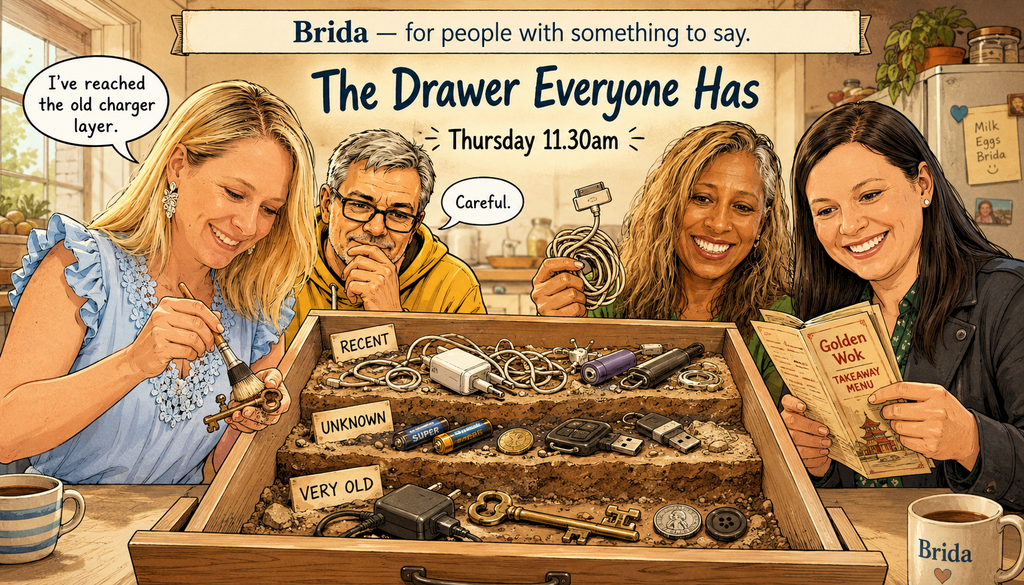
There is the drawer almost every house seems to have: old batteries, mysterious keys, elastic bands, forgotten chargers and one small metal object nobody can identify but nobody dares throw away.
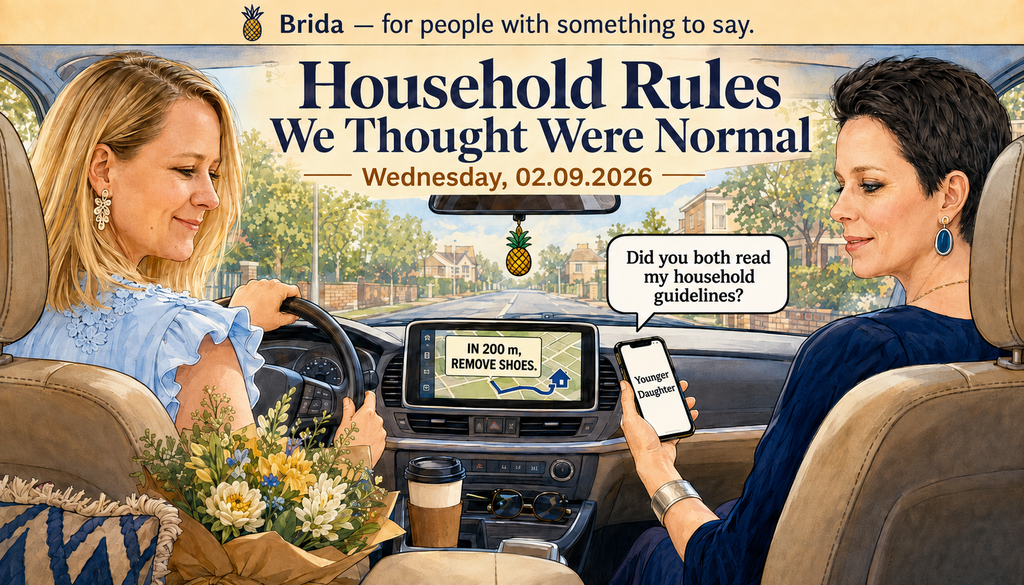
There are household rules nobody remembers making. The good towels are not to be used. One chair belongs to one person. The last biscuit enters diplomatic territory. Shoes come off at the door. Windows stay closed during storms. Then one day somebody looks at you and says, “You do what?”
Suddenly, your normal becomes strange.
Outside, the mysteries continue.
Consider the queue. A few strangers stand behind one another and, within seconds, create a tiny society. There are rules, rights, expectations and a shared sense of justice. Nobody writes them down. Nobody is officially in charge. Yet jump the queue and everyone knows something important has been violated.
But what?
That is the pleasure of everyday mysteries.
Why do we knock on wood? Why do people press crossing buttons repeatedly? Why do we keep “good boxes”? Why do we apologise when somebody else bumps into us? Why do intelligent people shout at machines? Why do habits with no obvious logic feel so deeply right?
We can search for the answer. We can ask AI. We can look up the history, psychology or science.
But perhaps curiosity in the age of instant answers also means not solving everything immediately.
First, notice it.
Ask someone else what they do. Discover that their normal is your absurd. Follow the strange little trail. Laugh at it. Argue about it. Wonder where it came from.
Because behind the buttons, drawers, queues and peculiar family rules are people. Copying people. Remembering childhood. Trying to belong. Creating order. Repeating things long after the reason has disappeared.
And sometimes doing something for no better reason than everybody else does it too.
So next week, we begin with one simple question:
Why do we do that?
Join us as we follow the clues through the strange, serious, funny and wonderfully mysterious habits of everyday life.
And yes, sooner or later, somebody is going to press that button.
At Next Week’s Tables.