

Before You Hand Over the Keys
Four weeks in Bangalore. Four weeks in Campo Grande. The real question was not what to see, but how to live in somebody else’s world.
Imagine that Ritesh and his wife leave Bangalore and spend a month in Ismar’s apartment in Campo Grande, Brazil. At the same time, Ismar moves into their apartment in Bangalore, India.
No hotels. No tour guides. No host standing beside you to solve every small problem.
Before handing over the keys, what would you need to explain?
The answers quickly moved beyond monuments and tourist attractions. Living somewhere else begins with much smaller things: when to open the windows, when to take out the rubbish, whether you can trust the pedestrian light, how to greet a neighbour and what happens when you are hungry at midnight.
It turns out that discovering another world begins very close to home.
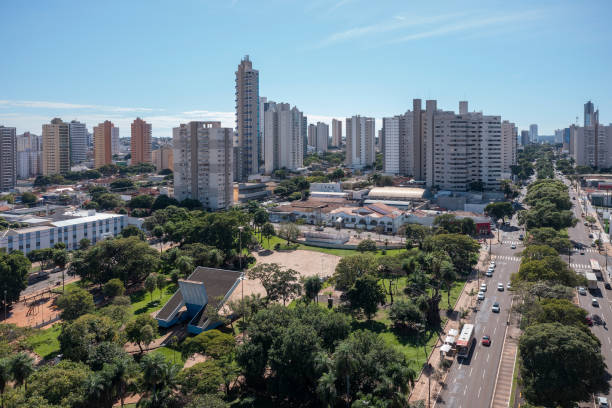
Close the windows before six.
Ritesh’s first question to Ismar was simple: he had just arrived at the apartment in Campo Grande. Before Ismar left, what were the first three things he needed to know?
First, the windows.
After the apartment has been closed for some time, Ismar would open the living-room door, the service-area window and, if possible, the other windows to freshen the air.
But there is a deadline.
Close them before six in the evening.
Otherwise, Ismar warned, mosquitoes may arrive and make a peaceful night’s sleep rather less peaceful.
The second rule concerned the neighbour downstairs. Do not drag chairs, beds or anything else across the floor unnecessarily. Noise travels.
The third was even more ordinary: check the taps and be sensible with water and electricity. These are things that are paid for according to use.
Three instructions for life in Brazil: air, neighbours and the water bill.
Then Ismar turned the question around.
What should he do on his first morning in Ritesh’s Bangalore apartment?
Take out the rubbish.
Ritesh lives on the second floor. The rubbish has to be taken downstairs so that the municipal collection can pick it up. The vehicle usually comes in the morning, sometimes earlier than expected, so Ritesh recommended having everything outside by about 6:30.
Miss the collection and the rubbish may remain there until the following day.
“I have not received a complaint so far,” Ritesh said, making clear that he hoped Ismar would preserve his record.
The great cultural exchange between India and Brazil had begun.
With garbage.
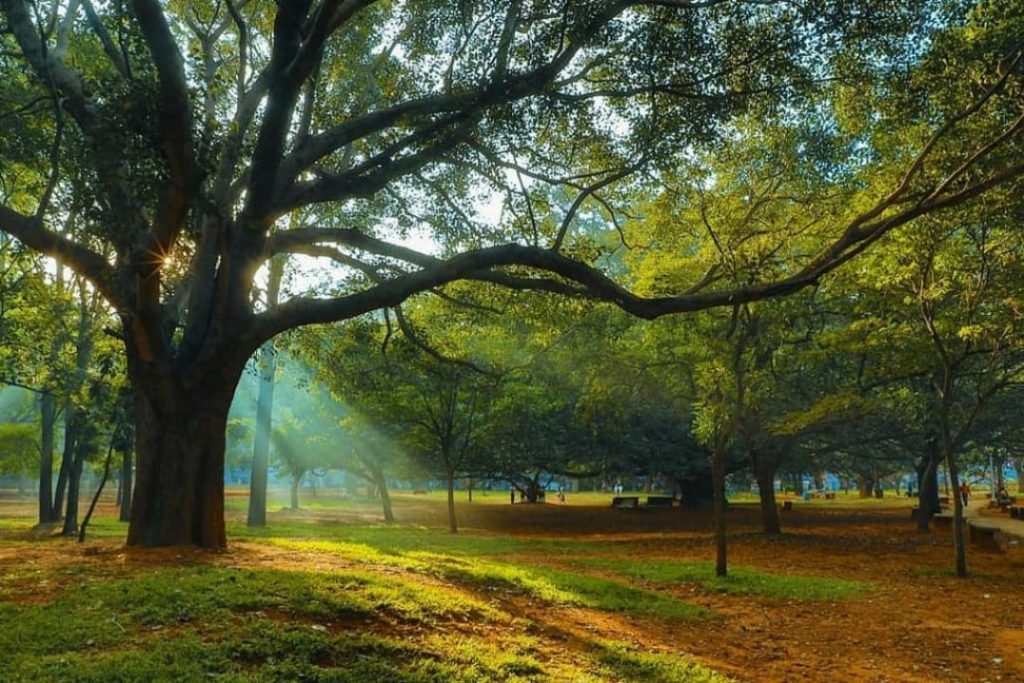
Bangalore, one ordinary day.
If Ismar wanted to explore Bangalore, Ritesh would begin gently.
Go to a large park. Walk. Spend an hour or two there. Watch people gathering with friends and families. It could also be a place to meet somebody.
From there, Ismar could continue towards MG Road, on foot or by metro, and find somewhere for breakfast, brunch or lunch. There are museums and an art museum to visit. Later he could return towards MG Road for restaurants, music and nightlife before taking the metro home.
Ismar approved.
It sounded as though there would be plenty to do.
There was only one concern.
“I think Ritesh wants that I become fatter,” he joked, after hearing how often restaurants appeared in the proposed programme.
Food, fortunately, would not be difficult to obtain.
Ritesh explained that ingredients can be ordered through delivery apps and brought to the apartment very quickly. His kitchen already contains spices, oils and other ingredients suited to Indian cooking. There is an induction hob, although no oven, so Ismar would have to adapt some of his plans to the equipment available.
This did not appear to worry him.
“In Brazil, I only cook for myself to survive,” Ismar said. He does not offer his creations to other people, but he was confident that, left alone in Bangalore, he would manage.
Ritesh offered an emergency escape route.
If the cooking experiment failed, stop experimenting and order a meal.
Food delivery is widely available, he explained, including very late into the night. Ismar might need to sign up for the right apps, but Ritesh was confident about one thing: his Brazilian guest would not go to bed hungry.
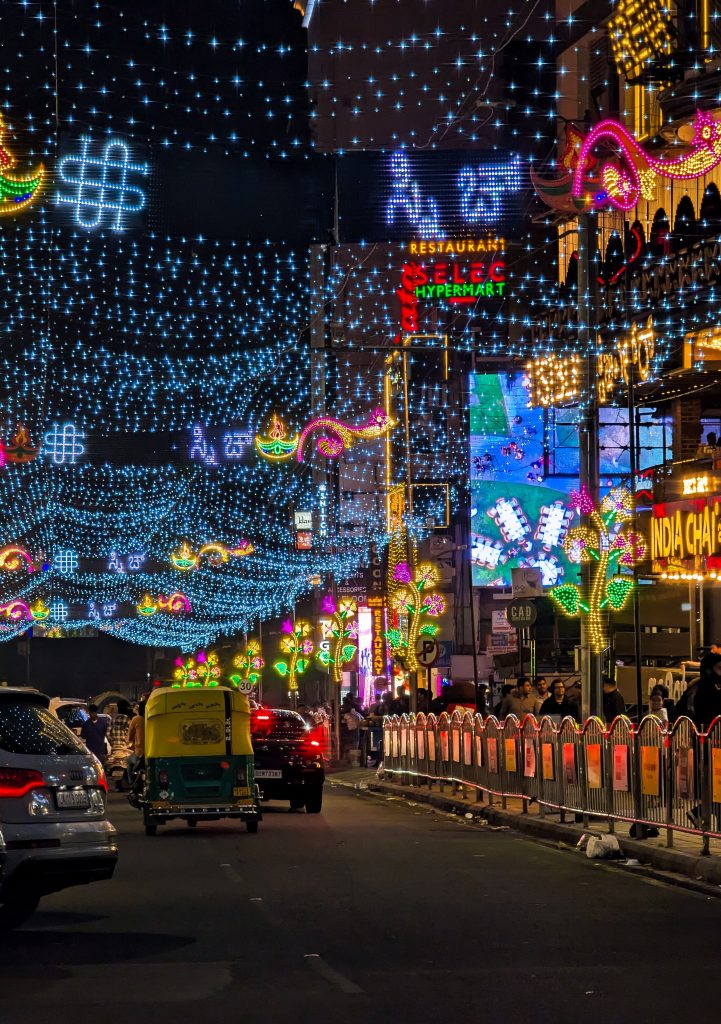
Never trust the traffic light completely.
Campo Grande came with a different warning.
What mistake might Ritesh make not because he was careless, but simply because he came from somewhere else?
Ismar did not hesitate.
Do not trust the pedestrian traffic light without also looking at the traffic.
In his experience, drivers do not always give pedestrians the priority they expect. Even when the signal tells you that you can cross, he advised checking carefully for approaching cars.
Ritesh found this strangely familiar.
Traffic in Bangalore is also something a pedestrian needs to negotiate carefully, although congestion often prevents vehicles from travelling very quickly.
Getting around Campo Grande itself sounded manageable. Ismar’s apartment is close to a bus terminal, and he recommended public transport rather than immediately renting a car in an unfamiliar country. He described buses as inexpensive, with connections into the centre and to places such as the main shopping mall.
The system does have one inconvenience: each new bus journey generally means paying another fare.
For greater flexibility, Ismar suggested using Uber or another transport app rather than worrying about driving, parking and navigating an unfamiliar city.
Bangalore requires its own travelling kit.
An umbrella is important, Ritesh said, because rain can suddenly turn into sunshine and back again. Then there is the noise. Road junctions, traffic and especially the constant honking can be startling for somebody unused to it.
Ritesh remembered overseas colleagues finding both the honking and the simple act of crossing a road intimidating when they first visited India.
His possible solution for Ismar was wonderfully twenty-first century: noise-cancelling earphones.
Bangalore moves quickly, he said. People move quickly too.
But there was another side to this energy. If Ismar became confused or needed help, Ritesh believed people would generally be willing to answer him, often in English.
Ismar added his own Campo Grande survival kit: an umbrella, sunblock and a bottle of water.
And some caution.
People may be helpful, he said, particularly when they realise someone is a foreign visitor, but friendliness should not mean abandoning ordinary good judgement.
Listen to people.
Pay attention to what is happening around you.
Do your part and say hello.
The conversation became more interesting when the imagined visitors stopped being tourists and became neighbours.
How should Ritesh and his wife behave with the people living and working around Ismar’s building?
Ismar rejected the easy stereotype that every Brazilian is naturally warm and welcoming.
“You’ll find any kind of people,” he said.
Some neighbours will return a greeting. Others will not.
His advice was not to spend too much time worrying about the difference.
“Do your part. Greet everyone you meet.”
Whether the other person responds is their decision.
Ritesh recognised the same principle in Bangalore, although he saw one practical issue. His neighbours know who normally lives in the building. If an unfamiliar foreign visitor suddenly appeared in his apartment for several weeks, people might naturally wonder who he was.
So Ritesh would inform the landlord in advance.
Not because he expected a problem, but because preparation removes the problem before it starts.
Ismar liked the idea and would go one step further in Campo Grande. His building has a WhatsApp group, so he would tell the other residents that a couple of friends would be staying in his apartment. Then nobody would wonder whether something strange was happening.
The two cities were beginning to sound less foreign.
Different languages. Different buildings. Different streets.
Very similar neighbours.
Where do you go for a real conversation?
For Ritesh, Campo Grande presented one obstacle that Bangalore did not.
Language.
If he wanted one genuine conversation during his first week, Ismar thought finding an English speaker might require some planning. His suggestion was the university library, where Ritesh would have a better chance of meeting students able and willing to speak English.
For Ismar in Bangalore, Ritesh expected the opposite experience.
He believed English would allow Ismar to talk to many people without looking for a special location. A park could be enough. Some people would naturally be occupied with their own families or friends, but others might respond to a stranger and give him a few minutes of conversation.
The possibility appealed to Ismar.
India, he said, would be an interesting place precisely because it would be a different culture to experience.
Yet the imagined month was no longer sounding overwhelmingly different.
In Ritesh’s apartment, Ismar’s domestic responsibilities would be modest. Take out the rubbish. Keep things in their proper place. Be considerate of the neighbours. If he wanted to cook, cook. If he did not want to cook, order something. Even loud music and dancing would be possible, Ritesh said, as long as the sound did not disturb anybody else.
Once again, another world came down to an ordinary rule.
Enjoy yourself.
Just remember the neighbours.

Beyond sightseeing.
Towards the end, Ritesh asked what he should discover in Campo Grande that had nothing to do with conventional sightseeing.
Ismar’s answer immediately moved towards food.
Try a Brazilian barbecue. Try feijoada, which he described as a bean stew. For the courageous, there are also dishes using parts of the intestines.
And, if Ritesh and his wife drink alcohol, there is the famous caipirinha.
Then came the imagined disaster.
Suppose Ritesh lost his apartment key. His phone was not working. He felt ill.
What should he do, and whom could he trust?
The answer depended on where he was and what exactly had happened, Ismar said. If he became ill in the street, he believed people would help. If he needed to get back into the apartment, he would need someone able to open or replace the lock. For a medical problem, there was a public ambulance service that could assess the situation and decide what assistance was necessary.
The important thing was not that nothing could go wrong.
It was that ordinary life contained ways forward.
By then, the imaginary month had covered windows, mosquitoes, rubbish, buses, restaurants, rain, traffic, neighbours, landlords, language, cooking, parks, emergency help and the possibility of intestinal stew.
So The Mayor asked Ismar the larger question.
Would he actually do it?
Would he swap apartments and spend a month living in Bangalore?
Yes.
He expected to find some things that were specific to India and others that felt unexpectedly familiar.
Neighbour behaviour, for example, might not be so different after all. Some people would be curious. Some would be very nice. Others perhaps less so.
“Something that is new is interesting for our experience,” he said. “I think it would be a very nice experience.”
And what about Ritesh and his wife in Campo Grande?
That, Ismar said, would depend on what interested them. Campo Grande is not, in his view, primarily a tourist city. But if they wanted to explore it, there would still be places to go, things to do and, because they enjoy walking, interesting places to discover on foot.
Perhaps that was the most useful discovery of the whole exchange.
To enter another person’s world, you do not have to begin with the grand explanation of Brazil or India.
You begin by handing over the keys.
Then you explain the windows, the rubbish and the neighbours.