
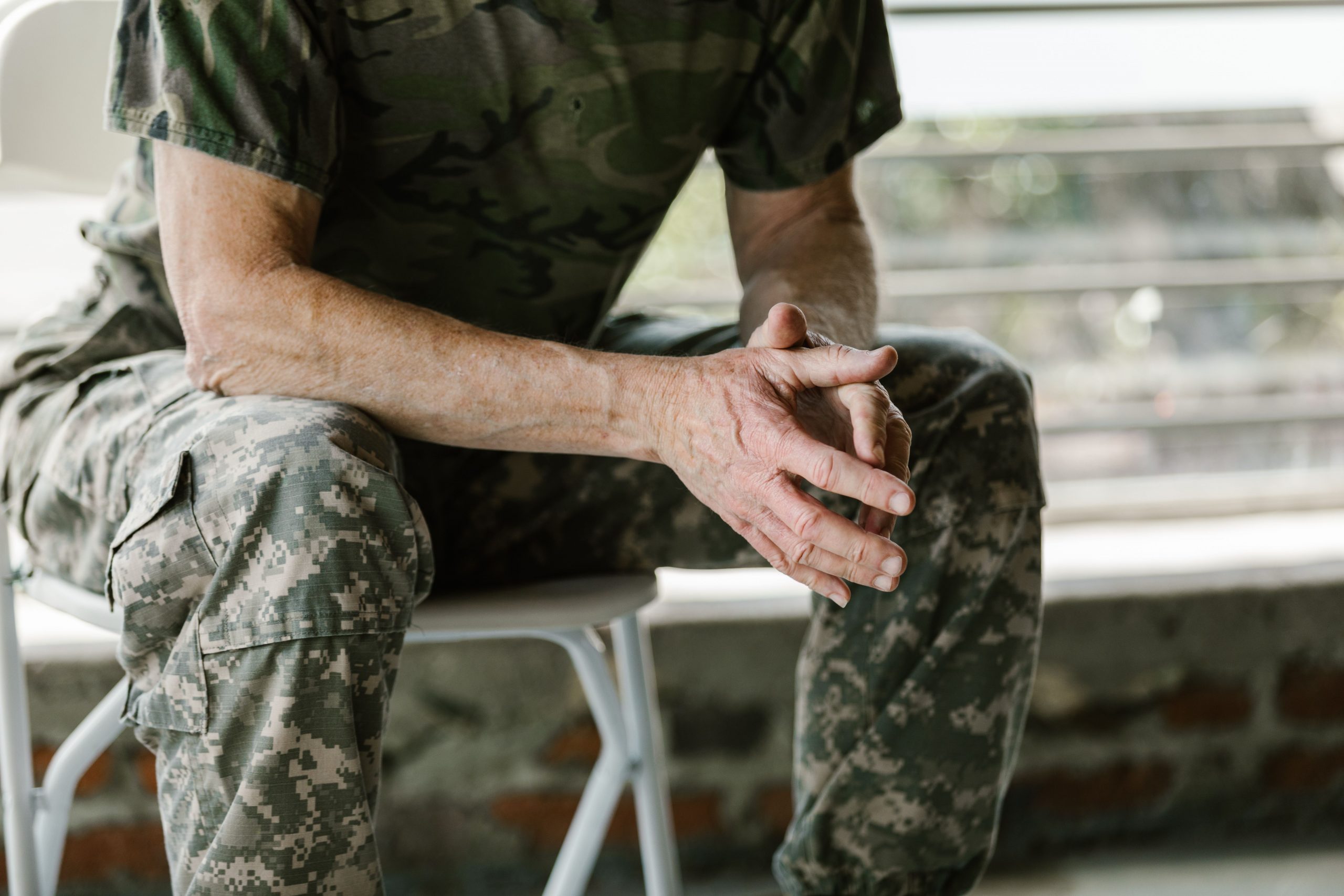
Coffee at the Mediterranean, Sleep on Barbed Wire
Fabrice began with four hours of sleep, one litre of coffee and a clear plan for the day. From there, the conversation travelled through rain, deserts, night watches, long drives, strange beds and the question of whether rest depends more on comfort or curiosity.
This began as a conversation about sleep that restores.
But I am not sure I understand the idea in the normal way.
For me, sleep is not always eight hours in a good bed, followed by a calm morning and a healthy breakfast. Sometimes it is twenty minutes in a car. Sometimes it is five minutes beside a tree. Sometimes it comes after a long drive, a military exercise or a completely unnecessary journey to the Mediterranean for two coffees.
The important thing is simple.
When I can sleep, I sleep.
Then I wake up and continue.
My Head Is Awake in Five Seconds
How do I know when I have slept well?
My body is awake. My head is awake. Within four or five seconds, my brain has already started the programme for the day.
First, coffee. Then work. After that, walking, cutting grass, going to the hills or doing whatever must be done.
I do not need a long discussion with myself in the morning. My brain begins.
The coffee also helps.
I drink a little more than one litre every day. The Mayor and Janita thought this was a lot. For me, it is normal. I drink a large cup when I wake up and another before I begin work. When I come home in hot weather, cold coffee with ice cream is also very good.
This may not be official sleep advice.
But it works for me.
Sleeping on Demand
The Mayor asked me about the difference between sleeping many hours and feeling rested.
This was a difficult question.
What does feeling rested mean?
Maybe it means having energy and motivation. Not only enough energy to survive the day, but enough energy to do things.
For me, sleeping longer does not always help. If I sleep ten or eleven hours, I often wake up tired. The day feels strange and my head is not clear. Five hours can be enough. Sometimes seven or eight is good.
But too much sleep can make me feel like a pirate for the rest of the day.
Not a dangerous pirate.
A tired pirate.
During the last months, I have often gone to bed late and woken very early. One night before our conversation, I slept only four hours. I went to bed after midnight and woke before five.
Then I worked.
France had a public holiday today, but I work in Germany.
Germany was still open.
Sometimes, after several short nights, my body says that it needs more. Then I go to bed at eight or nine and sleep until five the next morning.
Janita gave this a name.
“You sleep on demand.”
I like that idea.
Maybe sleep is not something I collect in the same amount every night. Maybe I take a little today, more tomorrow and a lot when my body asks for it.
This habit comes from the army. There, we learned one simple rule:
When you can sleep, you sleep.
You never know when you will have the next chance.
Five minutes can be useful. Twenty minutes can be enough to continue. You do not wait for perfect conditions because perfect conditions may never arrive.
The Mind Does Not Always Stop
My body can be very tired while my head continues working.
This is a problem.
I make my own stress. I stress myself.
When I go to bed, my mind continues with the information from the day. Good experiences are not a problem, but bad experiences stay longer. I cannot always find the switch.
Sometimes silence helps. Sometimes wind. Rain is very good for sleeping.
Snoring is not.
A tractor at four in the morning is also not ideal.
AC/DC was suggested during the conversation. I like AC/DC, but this does not mean it is always the correct music for sleep.
Coffee by the Sea
Sleep and adventure have always lived close together in my life.
When I was younger, we sometimes left a disco at five in the morning and decided to drive to the Mediterranean. It was more than two hundred kilometres.
We drove there, drank one or two coffees, looked at the sea, got back into the car and drove home.
Four hundred kilometres for coffee.
Perfectly normal.
At least, it felt normal then.
Was it sensible?
Maybe not.
Was it nice?
Yes.
Janita remembered friends in South Africa who drove six hundred kilometres to the beach, walked beside the sea, ate breakfast and then drove six hundred kilometres home again.
She did not join them because everyone had been drinking and nobody was safe to drive.
This was the correct decision.
Curiosity is good. Adventure is good.
But curiosity must not remove the brain completely.
The Surprise Sleep
I learned this in a more serious way.
Once, after a full day of water sports and military activity, I began a drive of more than one thousand kilometres towards home.
It was late and I was exhausted.
At some point, I fell asleep while driving. My eyes were open, but I was sleeping. The car began moving towards the side of the road, and I woke at the last moment.
I call this a surprise sleep.
It was not funny.
It was dangerous.
The body can decide to sleep even when the person driving has other plans. That moment taught me that sleep is not only comfort.
It is also a limit.
You can ignore the limit for some time.
But the body remembers where it is.
Heat, Mosquitoes and Trust
During military life, I slept in many countries and many conditions.
There was Lebanon, Somalia, the Ivory Coast and French Guiana. There were insects and mosquitoes. Mosquito nets helped.
There was also heat.
In the desert, we began working at five in the morning. By midday, or one o’clock at the latest, the temperature could reach forty or forty-five degrees. After that, normal work was not possible.
But sleep was not always possible either. Sometimes the heat stayed until late at night.
The strange thing is that unfamiliar places did not always make sleep difficult.
We were a group, and the group became like a family. The weather could be difficult. The insects could be difficult. But the people around me were familiar.
That changed everything.
The Mayor asked what made me feel safe enough to close my eyes during military exercises.
My first answer was preparation.
We trained again and again. When there was no mission, we prepared for the next possible situation. Training became routine, and routine created confidence.
But preparation was not the complete answer.
The other answer was trust.
I trusted my team. I trusted my friends.
When one person kept watch, the others could sleep. If the person on watch was reliable, you slept with both eyes closed. If the person was a little bit special, you slept with one eye open.
Some people made one mistake after another. Then we explained the problem.
Sometimes we explained it with diplomacy.
Military diplomacy can be very clear.
But with the right people, trust became strong. We worked together every day. We knew how each person reacted. We knew who could stay calm and who needed help.
It sounds like a cliché, but it was like the musketeers.
One for all and all for one.
Only without the swords.
I preferred my gun.
Between Two and Five
The hardest guard duty was between two and five in the morning.
Before two, the night was still manageable. After five, morning was coming. But between two and five, the body wanted sleep very badly.
When I became a corporal, I sometimes organised the watches. I tried to take the first or last watch myself and avoid giving somebody the hardest time without reason.
When I kept watch, I hoped the others trusted me enough to sleep.
I had trusted them.
Rest was not only something I gave myself.
It was something we gave one another.
One person stayed awake so another could recover.
Then we changed places.
Sleeping Almost Anywhere
In the army, you learn to sleep almost anywhere.
On the ground. Against a tree. Sitting on a chair. Inside a vehicle. In a train, airport, forest or tent.
Even on barbed wire.
Sometimes, during a night march, the first soldier stayed awake and followed the route. The soldiers behind held the backpack of the person in front. Then they could almost sleep while walking.
This worked only if the first soldier remained awake.
If he also slept, the complete group could continue in the wrong direction.
That is one way of finding your bearing.
First, check that the person at the front is conscious.
A car is also not only for driving.
You can listen to AC/DC. You can rest. You can sleep.
I have tested different cars for this purpose. A BMW is better for sleeping than a smaller car because there is more space.
This may be an unusual reason to choose a vehicle, but people buy cars for many reasons.
Some want speed.
Some want technology.
Some want a comfortable place for a twenty-minute sleep after breakfast.
Everyone has priorities.
The Sleeping Bag Knows First
Janita asked what my old military sleeping bag would say if it could speak.
I do not think it would speak.
I think it would only make a face.
Sometimes, in the field, we slept in our battle clothes. We opened the sleeping bag, left our boots outside and put the rest of the body inside.
If there was little water, showers were not always possible.
After some time, a person smells different.
The sleeping bag is the first object to notice.
It knows before everybody else.
This is another kind of trust.
The sleeping bag never tells anyone.
A Man Who Slept in the Ground
I once knew an older man who had served in the Foreign Legion.
For many years, he slept in the forest during summer and winter. He made a hole in the ground, about two metres long and deep enough for his body, then covered it with sheets of metal.
During winter, when the temperature was below zero, he built a fire inside the hole. Before sleeping, he removed the hot charcoal. The earth stayed warm.
Then he climbed inside, covered the space and slept through the cold night.
This was not a hotel.
But it was knowledge.
He understood the ground, the fire, the weather and what his body needed.
Comfort does not always come from buying something.
Sometimes it comes from knowing how to use what is already around you.
When to Continue and When to Stop
At the end, Janita asked what ordinary people could learn about sleep from soldiers.
My answer was simple.
Sleep in every situation.
Sleep wherever you can.
Do not always wait for the perfect bed, the perfect room, the perfect temperature and the perfect silence. There are many different ways to rest.
Then she asked what soldiers could learn from ordinary home life.
That answer was easier.
Wash your sleeping bag.
Take a shower.
Of course, I hope soldiers already know this.
But hope is not always enough.
The conversation began with sleep that restores. I am still not sure restoration always means waking slowly, drinking water and beginning the day in silence.
For me, sleep has often been connected to movement, work, journeys, heat, coffee, forests, trust and curiosity.
The next thing was always waiting.
Perhaps that is why I learned to sleep whenever I could.
Adventure gives us stories. Curiosity gives us direction. Sleep gives us enough strength to continue.
The difficult part is knowing when to continue—and when the body is telling us to stop.
Sometimes we find our bearing by moving towards the next place.
Sometimes we find it by closing our eyes.