
Some People Break Companies, Others Build You
I sit there and I laugh a little already, because when I think about crazy co-workers, one face comes directly into my mind. There is no warm-up needed. His name was D, even today I am not completely sure, but I see him clearly.
He was like a walking parrot.
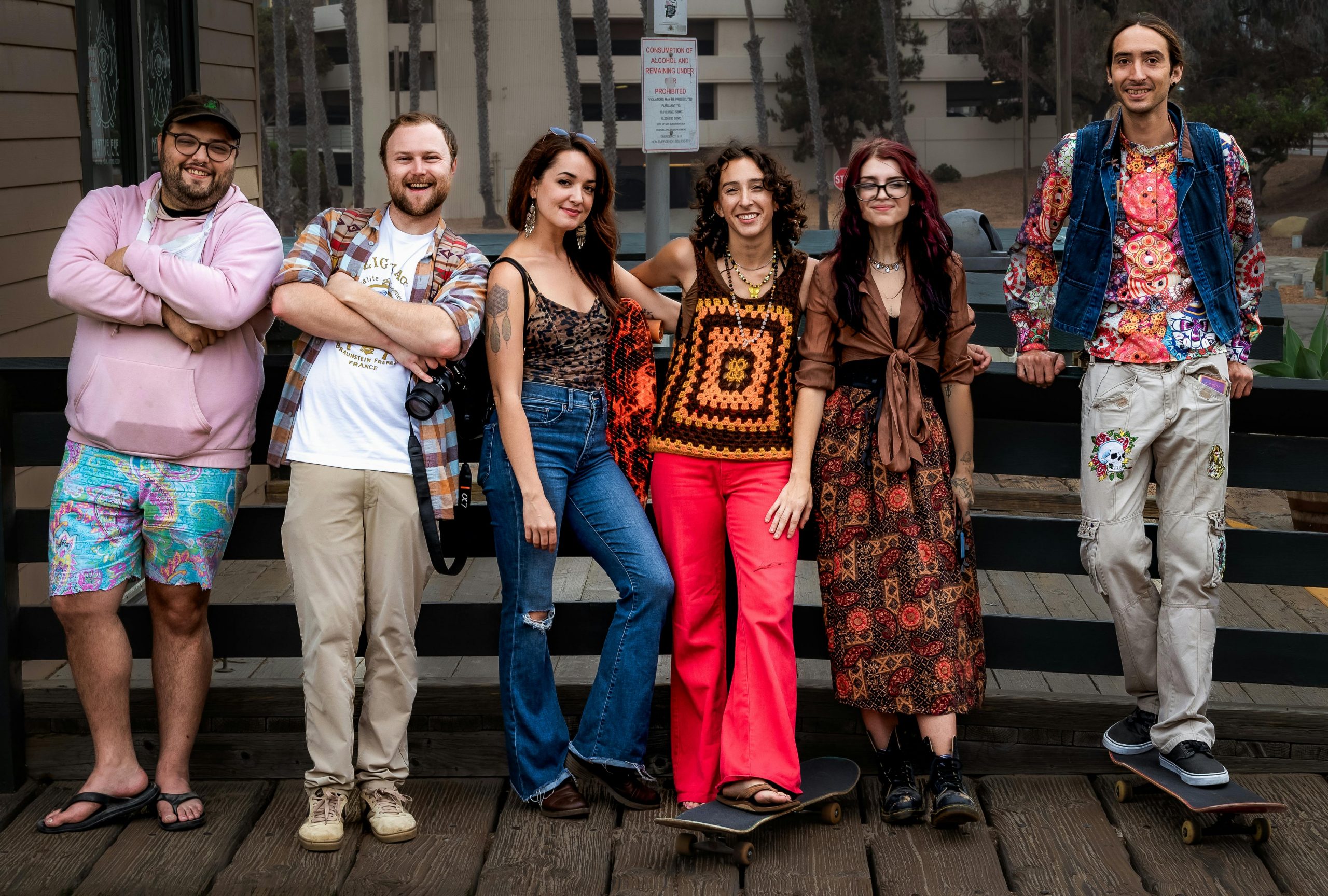
Brown shoes, green trousers, dark blue shirt, yellow jacket—everything at once. When my distributor told me, “Come, I show you this man,” I thought maybe it is a joke. But no, this was real. Before he even started with us, people from his old company, Metabo, warned us. They said, “If he comes to you, you must stop him. Wherever possible. Stop him.” That already tells you everything.
But still, he stayed. One and a half years.
And I tell you honestly, for me he was crazy—but I said, I can work with him. Others could not. Finally, the bosses said, “No, this is too difficult,” and they let him go. But I was stubborn. I thought, no, I can handle this. Maybe I was also a little crazy.
This man… he left broken companies behind him like empty bottles after a party. He spoke to big distributors and said things like, “500,000 euros? Nothing.” Or, “250,000 euros? Just a drop in the ocean.” He talked like money was water from the tap.
And I remember thinking, this is not normal. This is not how you build something. This is how you destroy it.
But you know… the funny thing is, people like this, they stay in your head. Not because they are good—but because they show you what not to do.
If I compare this to the military, I always say: the really crazy people are not in uniform. They are in business suits.
In the military, if someone is strange, okay—he is strange. But the system is strong. There are rules, structure, and consequences. In business, a crazy person can destroy numbers, relationships, trust… everything.
Still, the military has its own kind of madness.
I remember my friend, F.A. We were sitting in a vehicle, eight seats, rain coming down, and a young officer comes and asks politely, “Can I sit in the car?” And F.A. says, “No, we have no child seat.” You must stay outside.” And then—boom—the door closes, and we drive away.
Now imagine… if I were that officer, I would say, “Fis, come outside. You stand for one hour in the rain. That is an order.”
And he would have to do it.
This is the power of the system. You can make someone stand in the rain—not because it makes sense, but because you can. That’s also a kind of craziness.
But then, in between all this chaos, you meet people who are… different. People you would follow anywhere.
For me, one of these was M.P. He was a sales director, and I always say—he was a big human. Not big in size, but in heart.
His door was always open. You could go to him with anything—problems, ideas, nonsense—and he would listen. Really listen. And then he would find a solution, not only for the company, but for you as a person.
That is something I never forget.
When he left the company, it was like the ground moved under our feet. Everybody felt it. And after him… there came others. Many others. Some of them… I don’t even want to talk too much about.
At one point, I said to myself, “I cannot do this anymore.” And I left.
I ended up without a job. Just like that.
And then something happened that I still feel today.
A friend called me and said, “Be ready. Your phone will ring.” I thought he was joking. Maybe he drank too much or smoked something funny. But then… the phone rang.
K. H.
He said, “I want to meet you. Hamburg airport. Monday.”
So I go there. And we sit. And we talk. Two and a half hours. About work, about life, about everything. It felt… easy. Natural.
He brought me back.
But I also disappointed him later. I left again—for money, I say honestly. Like a prostitute, I say sometimes, laughing a little about myself. And he was hurt. Really hurt. And that stayed between us like a thorn.
Years later, I called him. I said, “Can we smoke a peace pipe?”
We met in a steakhouse. We talked. And I saw—he is a man who does not hold a grudge. That is rare. Very rare.
Now, when we meet with old colleagues, sometimes in Austria, sometimes traveling with a camper, he comes to see us. And I think, yes… this is a real boss. This is a real connection.
For me, a good co-worker or a good boss is very simple.
Just be as you are.
No theatre. No playing roles. No fake stories.
If I meet difficult people—and there are many—I don’t always fight. Sometimes I just keep distance. But if I have to work with them, then I try to find one small point. Something we both like. Maybe food, maybe a story, maybe a joke.
And then… you take them out of the office. Coffee. Lunch. Dinner.
You sit together, you eat, you drink—and suddenly, the door opens a little.
I learned this many times.
Even with people I didn’t like at the beginning.
Like O. from Berlin.
First time we meet, I looked at his camper and say, “These things… they stand on the street, and some crazy people make love inside for money.” I was not very polite.
Later that evening, he puts his hand on my stomach and says, “Oh, you are so fat.” I tell him, “Take your hand away and go to your….special truck.”
And then… we drink one beer. Maybe two. Maybe a Williams schnapps. And suddenly—we are friends.
Today we travel together. With camper, with our wives, making plans to go to the south of France. Eating, laughing, living.
Sometimes friendship starts exactly there—where you think it will never happen.
From all these years, I learned much more from the good bosses than from the bad ones.
The bad ones… they showed me what is wrong.
I remember one situation. A boss goes into a meeting and says, “We reduce the bonus by 2%.” Then outside, he says, “We give 4%.” I look at him and think, this makes no sense.
Or he pushes prices down so low that it feels like the money comes out of my private wallet.
And I said this openly: “This is my wallet. You take money from me.”
And suddenly, the conversation changes. Because now it is not numbers—it is personal.
That is something I believe strongly: business is business, yes. But when you make it human, when you make it personal, then people understand fairness.
If I would build my own company one day—a food testing company maybe—I would not start with CVs or numbers.
I would start with people.
I would talk 30% about work… and 70% about life. Family. Home. What they do in the evening. How they live.
And then I would invite everyone—with their families.
A big table. A barbecue. Food, wine, laughter.
And I would watch.
Because you can feel very quickly who is real, who is open, who fits.
In the end, everything comes back to this: people.
Crazy ones, good ones, difficult ones, loyal ones.
And if you are lucky, you find a few who stay. Who you can sit with, years later, maybe in a camper, maybe in a steakhouse, maybe just at the kitchen table—with a coffee—and you smile and think…
Yes. That was a good time.