
The Red Card That Made Sense — Until It Didn’t
He didn’t look like someone who had made a mistake.
That was the strange part.
Alexander sat there calmly, almost thoughtfully, describing the moment that had taken him off the pitch. A red card. Two games suspended. The kind of thing that, from the outside, looks impulsive. Emotional. Maybe even reckless.
But the way he told it, it didn’t feel like that at all.
There was a pass. Two defenders outplayed. A striker running alone toward the goal. And Alexander, two meters behind, already knowing what would happen next.
He didn’t panic. He calculated.
Two thoughts, he said. Either the striker scores, or I stop him.
So he pulled the shirt.
Not aggressively. Not dramatically. Just enough. The striker felt it, went down—clever, he admitted—and the referee had no choice. Last man. Red card. Clear decision.
At the time, it made sense.
Only later, when the game ended one to four, did the doubt arrive.
“It would be better,” he said quietly, “if he just scored.”
That sentence stayed in the room longer than the story itself.
Because it wasn’t really about football.
It was about something else—something he has been learning, slowly, over years. That the “right” decision in the moment is not always the right decision in the bigger picture. That control can sometimes cost more than acceptance. That instinct and reflection don’t always agree.
And maybe that’s where the real conversation began.
Because until that moment, it would have been easy to think Alexander’s life was… clean. Structured. Almost perfect. The kind of life where things simply work because the person is disciplined, prepared, reliable.
And in many ways, that’s still true.
He has routines. Principles. A clear sense of what he does and what he doesn’t do. He prepares. He shows up. He builds relationships carefully—brick by brick, as he would say.
But what became clear is that this version of Alexander didn’t just happen.
It was built.
And not from a place of certainty—but from comparison.
Years ago, before the structure, before the stability, before the family, there was a different version of him. Not unhappy. Not lost. But… limited.
He was working as a tool mechanic. The job was fine. Even enjoyable at times. But every day looked the same. The same tasks. The same rhythm. No real decision-making. No freedom to say, today I go here, tomorrow I do this.
And then something changed.
Not suddenly. Not dramatically.
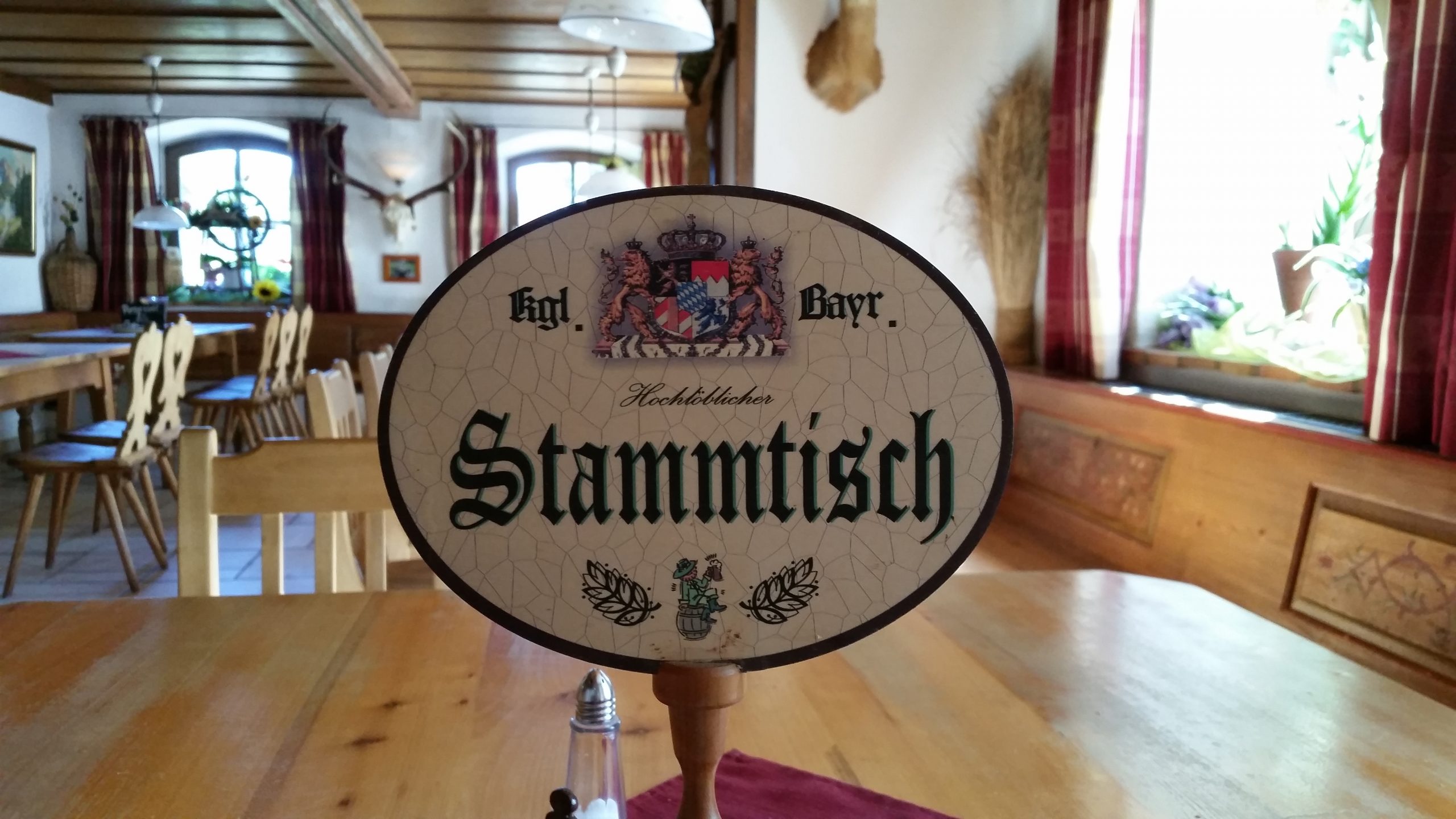
Just a table.
A regular table. A Stammtisch. A group of men who met every Monday. A place you couldn’t just walk into. You had to be invited.
He didn’t join because of ambition.
He joined because his brother was already there.
But once he was inside, something shifted.
Around that table were people who lived differently. CEOs. A policeman. A specialist who built artificial limbs. People who had responsibility. Direction. Presence.
They didn’t talk about theory. They lived it.
And Alexander noticed.
Not in a loud, emotional way. Not with some big decision. But quietly. Observing. Comparing.
“I have to do more,” he realized.
That was the beginning.
From that moment, he started working on himself. Not because someone told him to. But because he could see the gap between where he was and where he could be.
He began reading. Personal development. He watched how these men spoke, how they behaved, how they carried themselves. He didn’t try to copy them. He tried to understand them.
And at the same time, he was honest with himself.
His school education wasn’t strong. His path wasn’t obvious. So he looked for something else—something familiar.
There was a pattern in his family. His father. His grandfather. Sales managers.
And suddenly, that became the direction.
Not because it was easy.
But because it felt possible.
What followed was not smooth.
For a year, he sent applications. Rejections. Again and again. No shortcuts. No hidden opportunities.
Just no.
And that’s where another turning point appeared.
A mentor.
Not someone he paid. Not a formal program. Just a man who saw something in him and decided to help.
Weekly calls. Advice. Structure. Introductions. A different way of thinking.
And slowly, things began to move.
He got his first job in sales.
And from there, the direction changed completely.
Looking back now, it’s easy to draw a straight line. The Stammtisch. The mentor. The career. The life he has today.
But the interesting part is how he talks about it.
He doesn’t say he was lucky.
Even when others do.
There’s a phrase someone once told him—that he was “born with a silver spoon.” That everything came easily. That his life just… worked.
He doesn’t like that.
Because from the outside, yes, it looks like that. A good job. A family. A car. Stability. Respect.
But people don’t see what’s underneath.
He describes it like an iceberg.
The visible part is small. Clean. Impressive.
But below the surface—most of it—is hidden. The effort. The rejection. The decisions. The quiet discipline.
And that’s where his life really exists.
It shows in small things.
In his football team, younger players come to him with questions. Not about life. Not about philosophy. Just simple, practical things about the game. But even that says something.
They trust him.
They see him as someone stable.
Someone who knows what he’s doing.
And yet, even now, he’s not standing still.
In fact, he’s at another point of uncertainty.
For the first time in a while, he’s not sure what the next step is.
He has reached many of his goals. Better salary. More responsibility. A strong position.
But what comes next?
A higher level would mean more time. More pressure. More distance from family.
And that’s where the conflict is.
Because his values are clear.
Responsibility. Family. Presence.
So now the question is no longer “Can I achieve more?”
It’s “Should I?”
And that’s a different kind of decision.
One that no mentor or group can make for him.
Even the Stammtisch—this pillar of his life—has its limits.
For some members, it’s just a club. A place to meet. To talk. To relax.
For him, it’s more.
A space of reflection. Of comparison. Of quiet growth.
There are a few men there—three or four—who matter deeply. Relationships built over years. Conversations that go beyond surface level.
And sometimes, those moments stay with him.
Like when one of them, Severin, told him how much he had developed. How far he had come.
It wasn’t a big speech.
Just a few words.
But for Alexander, it meant something.
Because it confirmed what he had been building—step by step—for years.
And maybe that’s the most interesting part of his story.
Not the red card. Not the career. Not even the transformation.
But the consistency.
The way he doesn’t chase dramatic change.
He observes. He reflects. He adjusts.
Quietly.
Even when he looks back 14 years, there’s no regret. No desire to rewrite anything.
If he could meet his younger self, he wouldn’t warn him. He wouldn’t change his path.
He would simply say:
Go exactly this way.
And maybe that’s why the red card matters.
Because even now—even after all the structure, all the discipline, all the reflection—he still makes decisions in the moment.
Some right. Some questionable.
Some that make sense immediately.
And some that only reveal their truth afterwards.
And he lives with both.
Calmly.
Without drama.
Like someone who knows that life isn’t about avoiding mistakes—but about understanding them, one step later.