

Doodle Horse Your Day
He overslept.
He got up at half past six instead of at his usual involuntary hour between half past three and four. But then the evening before had run later than was wise. He had been working on a report, and the mind, once engaged with duty, is not always disposed to release itself at a reasonable time. So he rose later than usual, and for a little while there was the modest luxury of breakfast and coffee in peace.
It was then that the automation idea came to him.
He asked the Fruitbowl whether it could be done, and it appeared that it could. He had already done something similar. It was the same process, only the content differed. He felt at once the strong temptation not to pursue the matter further. One can always find reasons to postpone a discussion that promises to introduce structure into one’s life. But priorities, if neglected, lead to misunderstandings; and misunderstandings, once they have taken up residence in a household, are far more laborious to remove than dust.
The Dustbusters arrived about ninety minutes later.
He printed them out and looked at them with the curious mixture of interest and suspicion with which a man regards a plan that may improve his life at the cost of altering it. The moment had come. Doodle Horse had quizzed him carefully about his needs and had promised to set something up. She had said, “in a little bit,” and then had sent him his cleaning instructions. The phrase had had an uncomfortable ring to it. Instructions for cleaning carried with them something faintly disciplinary, as though one had, without quite intending it, enrolled in a moral programme.
The week before, they had discussed shopping and food planning. None of this was entirely new to him. He was, in fact, a very observant shopper. He generally had a fair sense of prices, and of what was going on in the two supermarkets he usually used. Last week, perhaps in the euphoria of the whole enterprise, he had overspent. This week he intended to take a different approach. To sit down first and work out a complete food plan and only then go shopping did not, he felt, suit the temper of that particular morning. He had a rough idea of what he needed. So there would be no list. He would instead focus on habits, and he would not skimp in the fruit and veg section.
He bought some grocery cupboard items. There were two unplanned purchases: a bag of crisps and a bottle of peanut oil, not usually available, but useful given that the cooking routine at home was Asian-infused. He also noticed a promotion on rice noodles, made a swift calculation, and discovered that the XXL bags offered him three for the price of two. He took the last two remaining bags.
The shopping came to forty-seven euros, and with that sum came a vow: he would not go shopping again until the following week. The basket had been balanced. The pantry was doing well. He wished to experiment, on a small scale, with a food philosophy that interested him. Buy what you need and cook, or cook what you want and buy to replenish. It seemed simple enough, but he knew from experience that simplicity in domestic life is often achieved only after considerable complexity of thought.
By ten o’clock the groceries were stored, and the time had come to study the Dustbusters. The list looked a little overwhelming. He realised it would not be as straightforward as the page suggested, because the day was not to be devoted exclusively to cleaning. When his wife was away, tradition in the house dictated that Mother should come for Saturday lunch at half past twelve, and she had requested a pizza, with lots of mushrooms.
He was not going to buy a cardboard pizza. Cooking provided balance, and balance was imperative. Besides, he had made pizzas before. The first lesson, then, was plain enough: integrate the Dustbusters into your day. They were not a standalone product. He made himself a cup of tea and considered the order in which events must now be arranged.
Make the dough. Let it rise. Clean the living room, forty square metres of it. Try to finish in time for lunch to be served in a pleasantly clean environment. Finish the pizza. Serve at half past twelve. Sharp.
Then he remembered the laundry. It was the second wash. The first had been done almost immediately after he had crawled out of bed. The Guinea Pig had two problems: thinking, and thinking in processes. Thus the simple business of laundry became a complex operation. One must think with the end in mind. The clean clothes had to go somewhere. So how did one arrange them in such a way that no additional work was created later? His wife was not good at this. There was so much clutter that any process began with clearing space before one could get to the actual task. It drove him crazy.
The whites wash was hung, and he surveyed the scene.
The bedroom is supposed to be the intimate sanctuary of the house. Theirs was not. In fact, the whole house had become rather like a jumble sale. How did other people do it? Perhaps, he thought, they planned. Perhaps they worked towards long-term projects. Let us put new wallpaper in the living room. Very well. You begin with the idea, explore the options, set up a budget, determine who does what, execute, and then enjoy. Together, as a family, you build momentum and do it when time and money allow. Family time, spent away from the television. The notion had great attractions in theory.
The dough was done.
The Dustbuster had said that one of Saturday’s tasks, among others, was to deep clean a room. Guinea’s problem was more complex than the paper allowed for. All the rooms needed a deep spring clean. There had been neglect. There had been work priorities, and those had led to misunderstandings. There had been pressure, health concerns, and the chaos of a life that did not fit into the cheerful categories of household advice. It spread over two countries. There had been a life-changing accident over two years before, and what had once been called recovery was now merely the permanent state of play. There were mother and mother-in-law in their eighties, and a great deal of travelling, his wife doing that. The only constant was constant flexibility. It had taken its toll.
He stood in the living room and asked himself whether he could clean this monster in ninety minutes. And what, exactly, did “deep clean” mean? He began by shifting furniture into the adjacent office, and the answer presented itself in brutal honesty. Armed with microfibre cloths, which he had fetched from upstairs, he began. It was not difficult. It was merely a matter of wiping everything with a wet cloth and allowing the clean surface to reveal itself.
The dust vanished, and the meditative spirit arrived.
He found himself asking how dust thought. If one imagined oneself to be dust, how did one spend one’s days? Did one remain hidden in a corner and participate in family life from the margins, listening to conversations, doing one’s own thing, merely existing? How did dust see the world? Was dust colour blind? And how was it that dust seemed always to multiply? Was that, from dust’s point of view, fun?
Something odd was happening to him. He was entering into the flow of the work, and it was actually becoming enjoyable. It ceased to be a thankless chore, the sort of thing one did because it had to be done and because one feared what the neighbours might think, and worse, what they might say. It became instead awareness, relaxation, meditation. Zen.
He came to the trolley with his wife’s family photographs. His mother-in-law, a complex personality, had once said to him in the course of an argument, “Don’t you underestimate me.” He had chosen not to, and twenty years later did not regret taking the advice. It seemed to him that he knew her thinking sometimes better than her three children did. He saw the last picture taken of his father, about ten days before his passing. Other family members looked out from their frames. What had they been doing then? There was a picture of his daughter, now expecting a second child at the end of July.
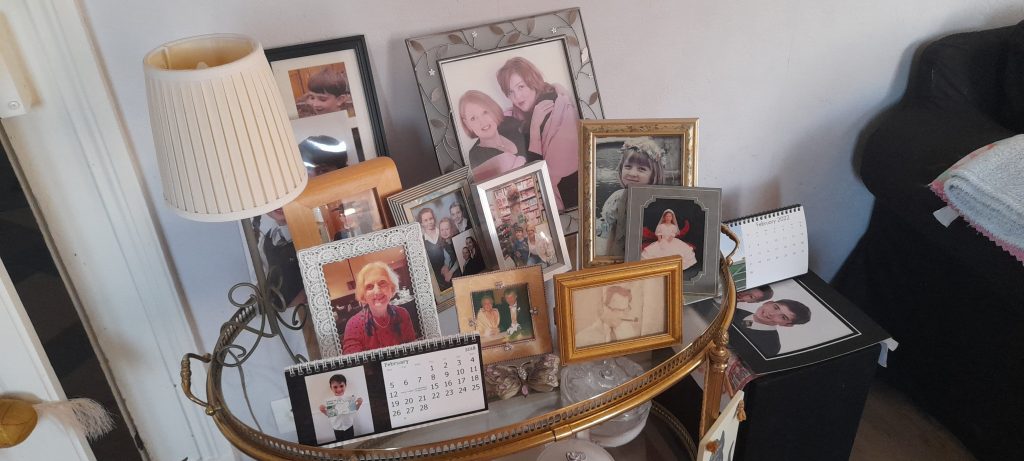
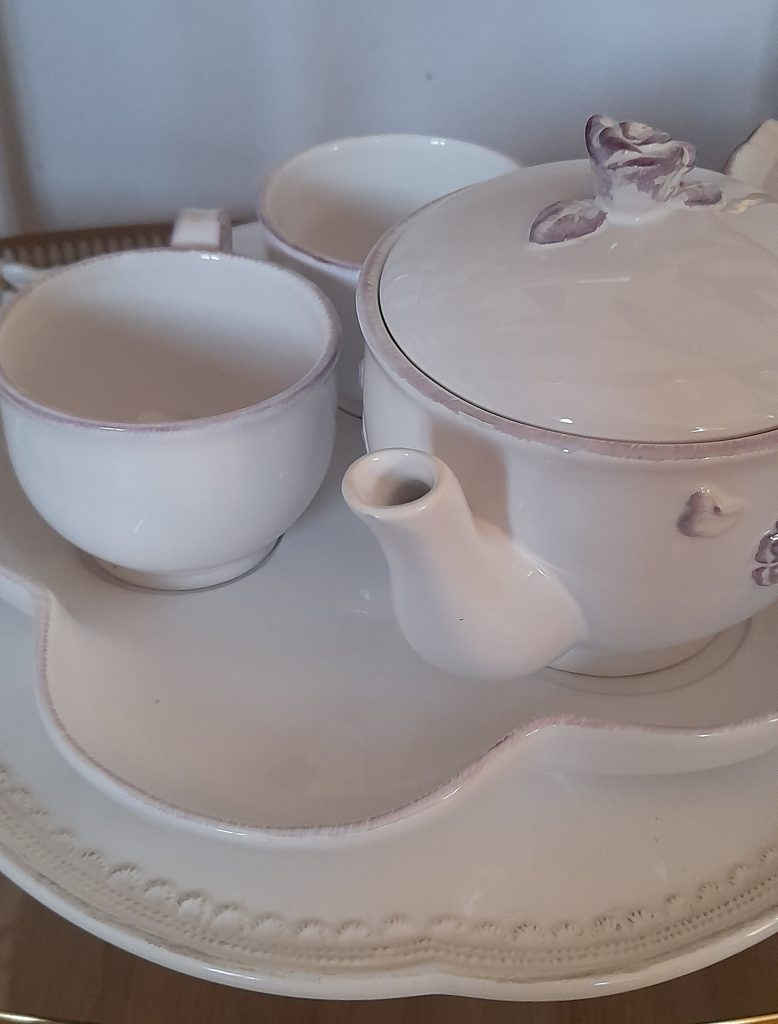
As he handled the objects and looked at them, each told a story and brought back a memory. Cleaning was becoming a storytelling session in his head. The phone was in jail. There was no music, and nothing else to distract him. He merely looked at the objects and touched them. He saw the tray with a teapot and two cups. It was not practical, but it was somehow beautiful. He could not remember the last time it had been used. Now it sat there like a lost child gathering dust. Why?
Beauty. Beauty matters.
Why drink tea from a branded mug with some design on it, on the go, when one could slow down and use what had been sitting there all this time? One could take time to savour not only the beverage, but the vessel, and remember how it had come into the house in the first place. He remembered them buying it. The shop no longer existed. And it seemed that the teapot and the two cups had somehow died as well.
He looked at the clock.
The dining end of the living room had been done. It had taken an hour and a half. The dust had moved out, unappreciated. The furniture had been wiped down. It was time to put things back for lunch. And he felt strangely calm. He was breathing differently. This, he thought, was how it was supposed to be. It was not exactly nice. The word escaped him. But it was right.
Then he went into the kitchen and found himself in the middle of a minor catastrophe.
The pizza toppings had been arranged. In fact, while the living room floor had been drying, he had gone back to cut the mushrooms and peppers. It was then that he realised his mistake. The shopping experiment — focusing on certain items, observing habits, even privately noting with amusement that the price of butter, which before Christmas had sunk to a spectacularly low level and had even made the media, had now gone up again by twenty cents — had taken longer than expected.
But he had forgotten to buy the mozzarella.
A pizza without cheese is no pizza at all, or so the purists say; and yet necessity has a way of compelling innovation more effectively than imagination. There was no time, and certainly no flexibility, to nip into town, seven kilometres away, and retrieve the missing culprit. He stood for a moment in the kitchen with the flat gaze of a man confronted not by tragedy, but by the ridiculous inconvenience from which the day will nonetheless take its tone.
But he had feta.
Would feta work?
He also had some leftover pineapple. That endless discussion. There are questions over which civilisation appears determined to divide itself, and pineapple on pizza is one of them. But the fact remained that some of the most interesting meals arise from experiments disguised as missing ingredients. He had no choice. And the feta, to judge by its general air, had already decided that it wanted to leave this earth anyway.
So lunch would proceed on altered terms.
At this point Mother came into the kitchen and noticed the casually but strategically placed Dustbuster sheets. A few minor words in translation were exchanged, and then there followed a brief explanation. He explained what the sheets were, how they were meant to work, and that they were not fixed in stone. They were adaptable. They had to be integrated into daily routine if they were to succeed. That required adaptation and priorities, so as to avoid misunderstandings. It was all, he said in effect, about mindset.
This led at once to horror.
Sundays, it transpired, had also been assigned tasks.
No. Sundays, according to Mother, was a day of rest.
She instructed him to say hello to Doodle Horse and to tell her that she disagreed with the Sunday task. He did. And Doodle Horse replied, say hi too, I agree with her, actually.
Guinea suspected that men needed to be kept on a short lead.
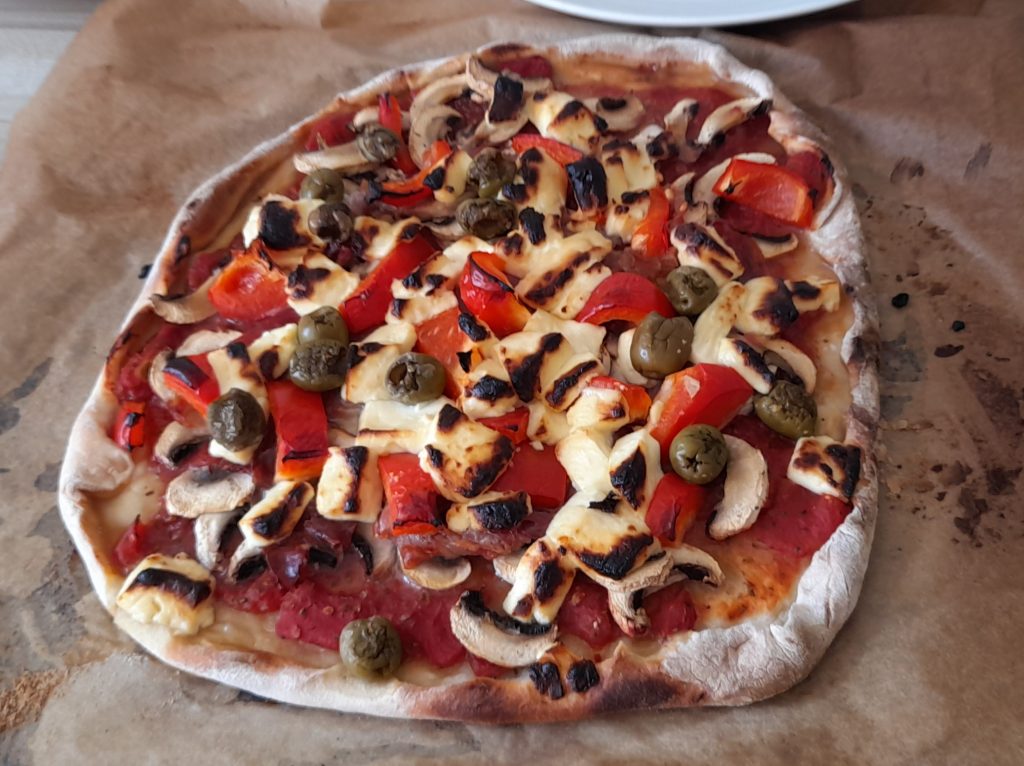
Lunch came. The pizza was appreciated. The feta had done its duty. The pineapple had, for the moment, survived its scandal. A possible domestic disaster had been converted into a meal. But by then he needed to recharge his batteries. There is a point at which a man is no longer virtuous in continuing, only less efficient. So he paused.
By two o’clock he was up again and doing the second half of the living room. He had by now got into the swing of things. Yet he still wondered why he had to clean up after the cats.
That thought in turn gave rise to a more interesting question. When is something dirty?
The answer came to him with the severe plainness of fact.
When you think it is.
On that basis, the recommended and already enacted task of cleaning the cat blankets on a bi-weekly cycle was axed. They needed changing every week. New law. If wife and mother were at loggerheads over the number of times the washing machine got used, then so be it. Cleaning was personal. If one did not feel comfortable, it drained energy and made one generally unpleasant. It was as simple as that.
Mercifully, the cats were out frolicking in the sunshine and warmth, so the operation passed without hiccup. He moved the table with the amplifier and the books he was supposed to finish reading, and then the lizard appeared.
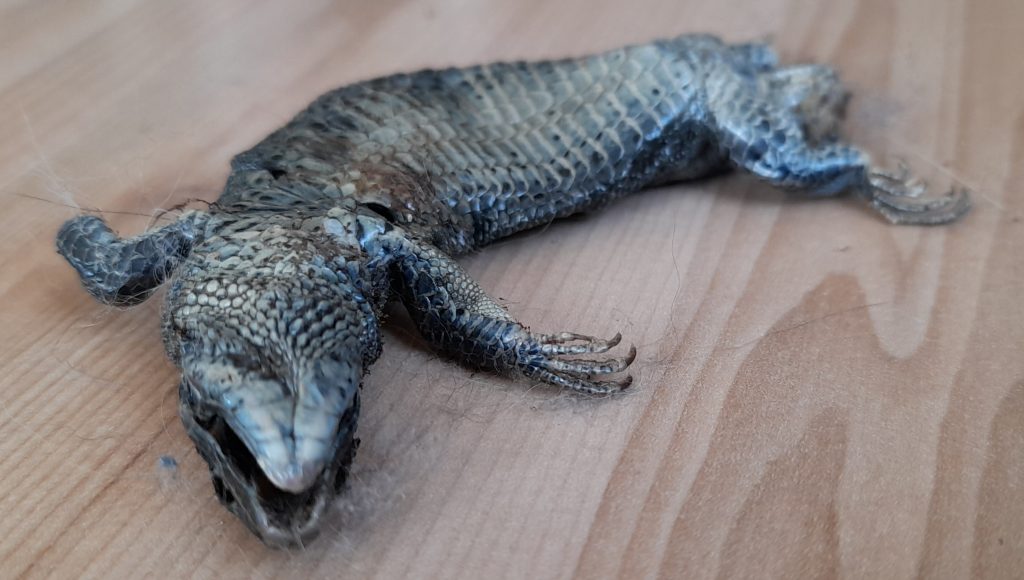
It was not alive. But somehow it had undergone a strange transformation and seemed to have passed from leather to plastic. He was not at all sure, at first sight, whether it was some toy left behind. In fact, it looked like a bonsai crocodile. Guinea stared at it. How had it got there? The answer was not difficult. It had escaped the cats, but had died of starvation. The more humiliating question was how anybody could have missed it.
It was the low point of the whole operation.
When the cleaning had been finished and the furniture put back in its place, he made himself another cup of tea and sat at the dining table. The sun was pouring in through the window, and he basked in its glow. It was a strange feeling: deep relaxation, a sense of accomplishment, and a sense of being alive. The memories remained with him. The adventure of the lizard. The wooden tobacco container, once used for that purpose in the days when smoking was still considered socially acceptable, now repurposed as a receptacle for foreign coins from various travels.
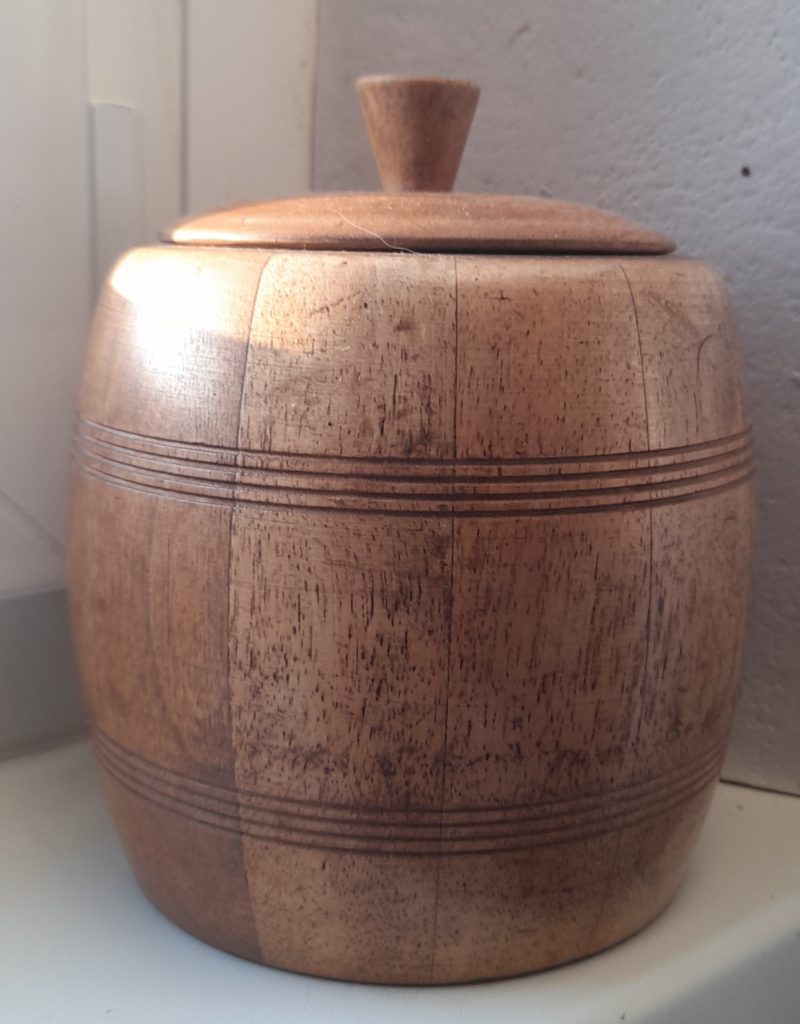
The room spoke stories. They had been buried and forgotten, and now they had regained their shine.
The Dustbuster sheets were in front of him. He ticked off several items. Meal plan. He was not going to get around that. So he went to the office, got the shopping receipt, and systems thinking struck him. He wanted to know how his forty-seven euros had been allocated. The largest share had gone on fruit and veg. That was good.
He then put together the meal plan on the basis of what there was. There would be no need for further shopping that week. The meals would be simple, healthy, balanced, and doable, given the workload that awaited him. It is one thing to plan aspirational meals and another to plan those that can actually be made by a tired man on a working evening. He was wise enough to prefer the second.
But now there presented itself a fresh challenge. There were leftovers from the pizza — mushrooms, peppers, some feta — and he had bought some Turkish peppers. There was rice. He went to the office to get Raphael and asked him. The result was interesting.
The phone sprang to life again. He had shared his accomplishments with Doodle Horse. There was accountability in this. One had to show her that one was taking the matter seriously. It was, after all, her project, and he was the guinea pig.
The response was typical. Practical. Down to earth.
Well, to be honest, it took a long time but not too long. The idea is to not let it get that bad again. Hence the cleaning schedule 🤣🤣🤣🤣 a few minutes per day will save hours. 🤷🏼♀️🤷🏼♀️🤣🤣🤣🤣🤣🤣
Tell me something I don’t know, he thought. It was a slight slap on the wrists, for being a below-standard guinea pig. Oh well.
He sat there, slowly emptying his brain, writing sheets of paper with thoughts, with things that had to be done. DYD, he had called it. Design Your Day. Or, as he had mentioned to her, Doodle Horse Your Day.
It seemed fitting.
For she had messaged him the adventures of her own morning: doing something meaningful with a new friend, winning a prize, and getting even more ideas for Doodle Horse.
He found this curious. Both of them had done something different. She had gone out to have fun and had come back more energised than expected. He had done what desperately needed doing and had come back much wiser. And in that lay the strange connection.
For that, perhaps, was the lesson of the day.
A house does not descend into disorder all at once, nor is it restored by heroics alone. It slips, little by little, through fatigue, pressure, grief, divided loyalties, work, age, illness, travel, accident, and the thousand domestic postponements by which people excuse themselves until they can no longer bear the result. And it is restored in equally modest ways: one wash hung out, one room cleaned properly, one lunch improvised, one blanket changed when it no longer feels right, one receipt examined, one week planned, one list adapted to reality instead of worshipped as law.
The underlying truth was now visible enough. Order was not rigidity. It was care. Adaptation was not failure. It was intelligence. A routine did not exist to dominate the day, but to support it. If it was not integrated into life, with all its interruptions and absurdities, it would collapse into one more source of resentment. But if it was adapted with honesty and followed with a certain steadiness, it might prevent misunderstandings before they began.
He sat there in the late afternoon, the cleaned room around him, the sun warm on the table, the papers before him, and felt that the day had become something rather more than a day of housework. It had become an act of attention. The objects had spoken, the dust had departed, the stories of the room had resurfaced, and life, which had lately seemed so much a matter of coping, had for a few hours disclosed another possibility.
Not ease.
Not perfection.
But a kind of rightness.
And that, in the end, was enough.
The Meals
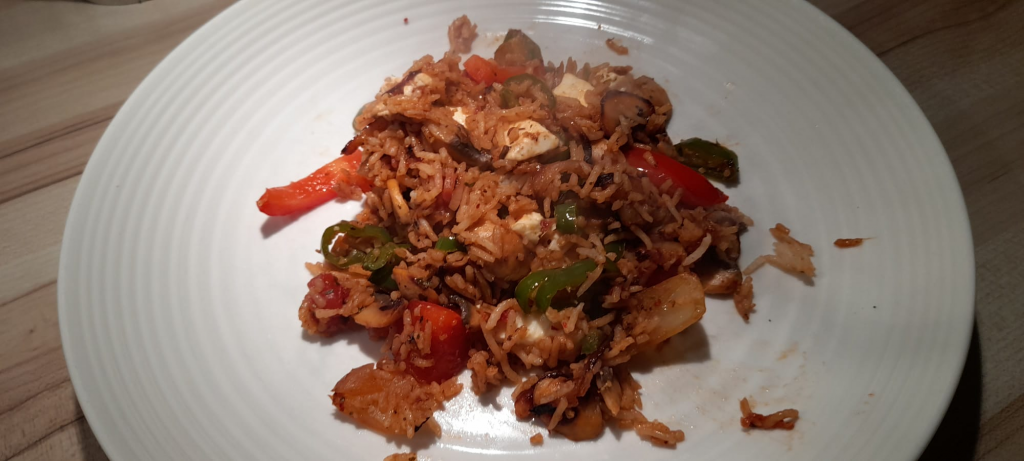
A Turkish tavern–style fried rice (meyhane style) would lean into olive oil, peppers, feta, and a little acidity. It becomes closer to a warm pilav / sautéed rice meze rather than Asian fried rice. 🍳🌶️
Turkish Tavern Rice with Feta, Mushrooms & Sivri Peppers
Ingredients
- 2 cups cooked rice (preferably cooled)
- Leftover mushrooms
- Bell peppers from the pizza
- 2 sivri peppers, sliced
- 1 small onion, finely chopped
- 2 cloves garlic
- 3–4 tbsp olive oil
- 100 g feta, crumbled
- 1 tsp tomato paste
- ½ tsp pul biber (Turkish chili flakes)
- ½ tsp dried oregano or thyme
- Black pepper
- Juice of ¼ lemon
Optional tavern touches:
- chopped parsley
- a few olives
- toasted pine nuts
Method
- Start the base
- Heat olive oil in a wide pan.
- Cook the onion slowly until soft and slightly golden.
- Add flavor
- Stir in garlic and tomato paste.
- Fry the paste for about 1 minute so it darkens and becomes aromatic.
- Cook vegetables
- Add mushrooms, bell peppers, and sivri peppers.
- Cook on medium-high heat until slightly charred.
- Add rice
- Add the rice and break it apart.
- Toss well so the oil and tomato paste coat the grains.
- Season
- Add pul biber, oregano, black pepper, and a squeeze of lemon.
- Finish
- Turn off heat and fold in crumbled feta.
- Sprinkle parsley on top.
How it would be served in a tavern
Serve warm with:
- yogurt or cacık
- tomatoes & cucumber
- olives
- flatbread
It becomes almost a mezze-style rice dish rather than a main.
🔥 Chef’s tavern trick:
At the very end, drizzle a little extra olive oil and lemon over the rice just before serving. It gives the dish that authentic meyhane freshness.