
Lederhosen, Laptops, and the Space In Between
I sometimes smile when people ask me whether I am German or Bavarian.
On paper, of course, I am German. I have a German passport, I speak German, I work in Germany. It’s simple.
But when someone asks me that question, it doesn’t feel simple.
If I say, “I am Bavarian,” what do I really mean?
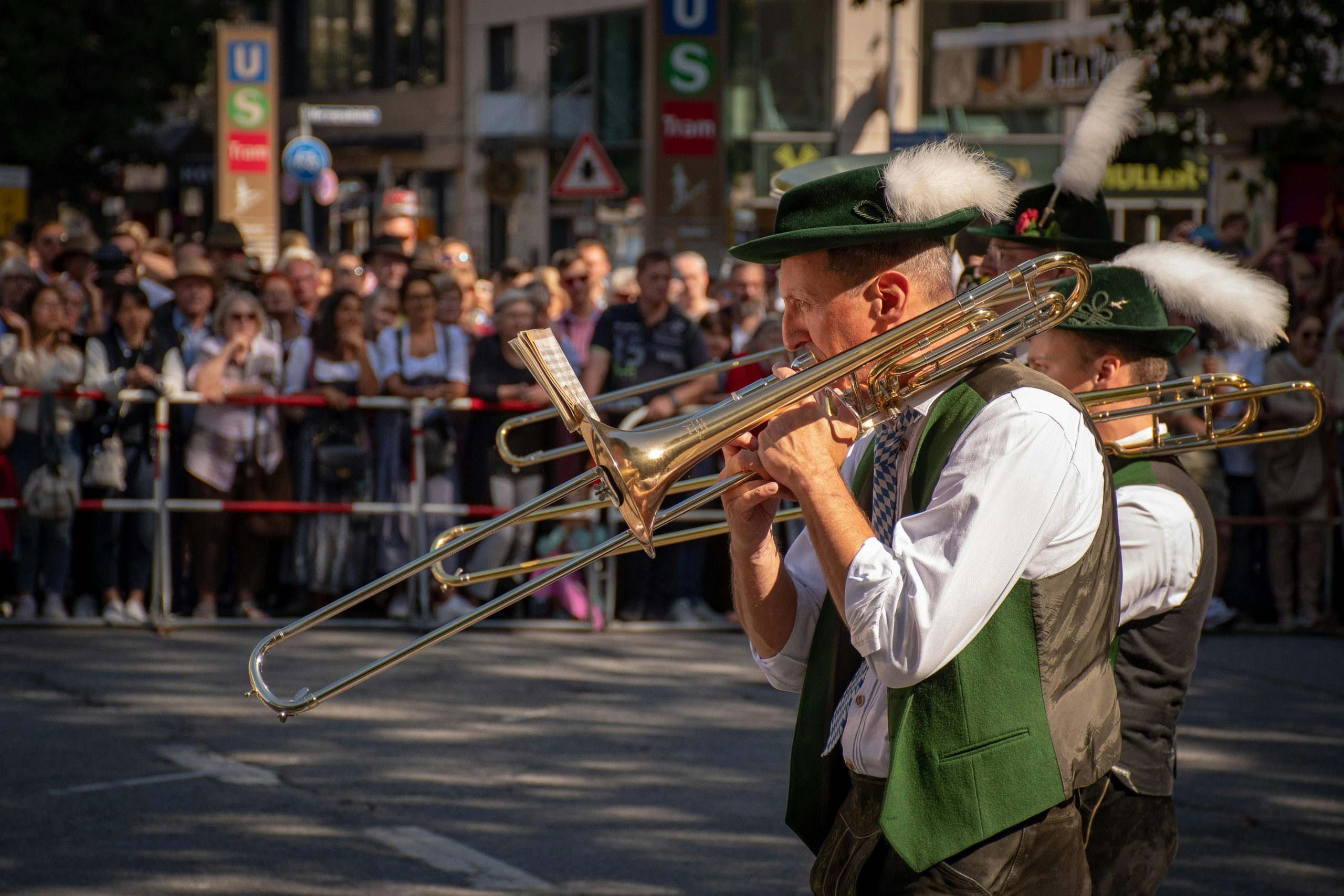
For a long time, I thought being Bavarian meant the obvious things. Lederhosen. Beer tents. Brass band music. White sausage with pretzel at eleven in the morning. The cliché. The image people have in their heads when they think about Germany.
And yes, I own two pairs of Lederhosen. Short ones. One of them was very expensive. I bought it for a Bavarian-themed evening at a trade fair. A customer had organized it, and I remember thinking, “Okay, if I go there, I go properly.” So I invested in a good pair.
But if I’m honest, I don’t walk around every Sunday in traditional clothes. I’m too vain for that. Lederhosen are fine for a special event, for Oktoberfest, for a wedding, for a themed evening. But in everyday life? No. That’s not me.
When I think about a typical Bavarian evening, I see a big beer tent in my head. Long wooden tables. A brass band playing this strong, rhythmic music that you feel in your chest. Pork knuckle. Dumplings. Weißwurst with sweet mustard and a fresh pretzel. And of course, beer. A Helles, not too bitter, very smooth.
It gives energy. That’s the interesting part. The music, the atmosphere, the noise — it doesn’t make me tired. It does the opposite. It lifts something inside me.
But here’s the truth: in my normal life, I eat Weißwurst maybe three or four times a year. Pork knuckle? Also only on special occasions. Oktoberfest? Once a year, like everyone else.
For people from outside Bavaria, these things are magical. For us, they are just there. They are part of the background. Like Paris for someone who lives in France. You know it’s special — but it’s also normal.
So maybe being Bavarian is not about costumes and food.
When I travel to Frankfurt or Berlin, I do feel something different. I can’t always explain it. The mentality is different. The way people talk. The speed. The atmosphere. It’s not worse. It’s not better. Just different.
And when I go to Austria for work, I notice something else again. The Austrians are very direct. If they have a problem, they tell you immediately. “The price is too high.” “Your delivery time is not good.” It’s clear. I like that. It makes business easier.
In Germany, especially in some regions, people are more careful. They don’t want to hurt you. They don’t say the real problem directly. In sales, that means you have to search for it. You feel there is a wall, but you don’t see it. You have to find the weak point.
In Austria, the wall is not there. They just show you the door.
I respect that.
At the same time, Austrians can be very traditional. Titles matter. MBA is written in the email signature. Formalities are important. And still, they switch to “du” faster than many Germans. That small word — “du” — carries weight. For me, it means trust.
Trust is something I think about a lot. In business. In friendships. In family.
And maybe this is where Bavaria becomes more personal for me.
I like living here. Not because of Lederhosen. Not because of beer. But because of the structure of my life.
In 30 minutes, I am in the Czech Republic. Munich and Regensburg are not far away. We have forests, lakes, mountains. The diversity is great. If I want nature, I have it. If I want a city, I have it.
But if I’m really honest, geography is only the bonus.
The real reason I stay is people.
My friends. My family. Julia’s family. My football club.
We meet my family every week. We meet my friends every Monday. It’s normal. Nothing special. And maybe that’s exactly why it is special.
I once spoke to a salesman who had moved three or four times in five years, always within Bavaria. Better career steps. New cities. New opportunities. For him, it was no problem.
For me, it would be.
Even with WhatsApp, Instagram, all the technology — I know how it goes. In the beginning, you write every week. Then once a month. Then every few months. And suddenly, you don’t really know what is happening in each other’s lives anymore.
One of my best friends lives five minutes away. And still, we sometimes only see each other every three months. So what would happen if I moved two hours away?
Friendships need proximity. Not only emotionally. Physically.
Julia’s family lives seven minutes from us. My mother lives maybe 15 or 20 minutes away. And even inside that short distance, there are differences.
Julia’s family is very close. Very involved. Sometimes, for me, a bit too involved. If her mother doesn’t see us for a few days, she writes immediately: “When do you come?” There is a strong connection, almost like a magnet.
My mother is the opposite. If I don’t call her, weeks can pass.
Both models exist in my life. And I stand somewhere in the middle.
Now I have a two-year-old son. And sometimes I ask myself: what does it mean for him to grow up Bavarian in 2026?
The world is changing. Digital. Fast. Global. Laptops everywhere. The old sentence about Bavaria being the land of Lederhosen and laptops — maybe that’s true.
Traditions are weaker than before. I’m not someone who lives 100% for tradition. I like it, but I don’t define myself through it. Oktoberfest is nice, but it’s also just another event in the calendar.
So what do I want to pass on to him?
Not the costume.
Not the sausage.
But maybe the quieter things.
Reliability.
Showing up.
Meeting your friends every Monday because you said you would.
Supporting your partner without making a big speech about it.
Building trust slowly.
Saying what you mean — maybe a little more like the Austrians sometimes.
And understanding that paradise is not a place on a postcard.
It’s the place where your people are.
I could probably live in France. Or somewhere else in the world. I don’t think I am afraid of that. But without my friends, my routines, my football club, my family — it would feel empty.
So am I German or Bavarian?
Maybe I am both.
But more than that, I am someone who belongs to a small network of people, in a small city with a beautiful old town that tourists find impressive and I find normal.
And maybe that’s the real identity.
Not the image.
Not the cliché.
Just the life you build, week after week, with the same people — until it quietly becomes home.