
Courage and Conviction (and a Tiny Snake on Your Shoulder)
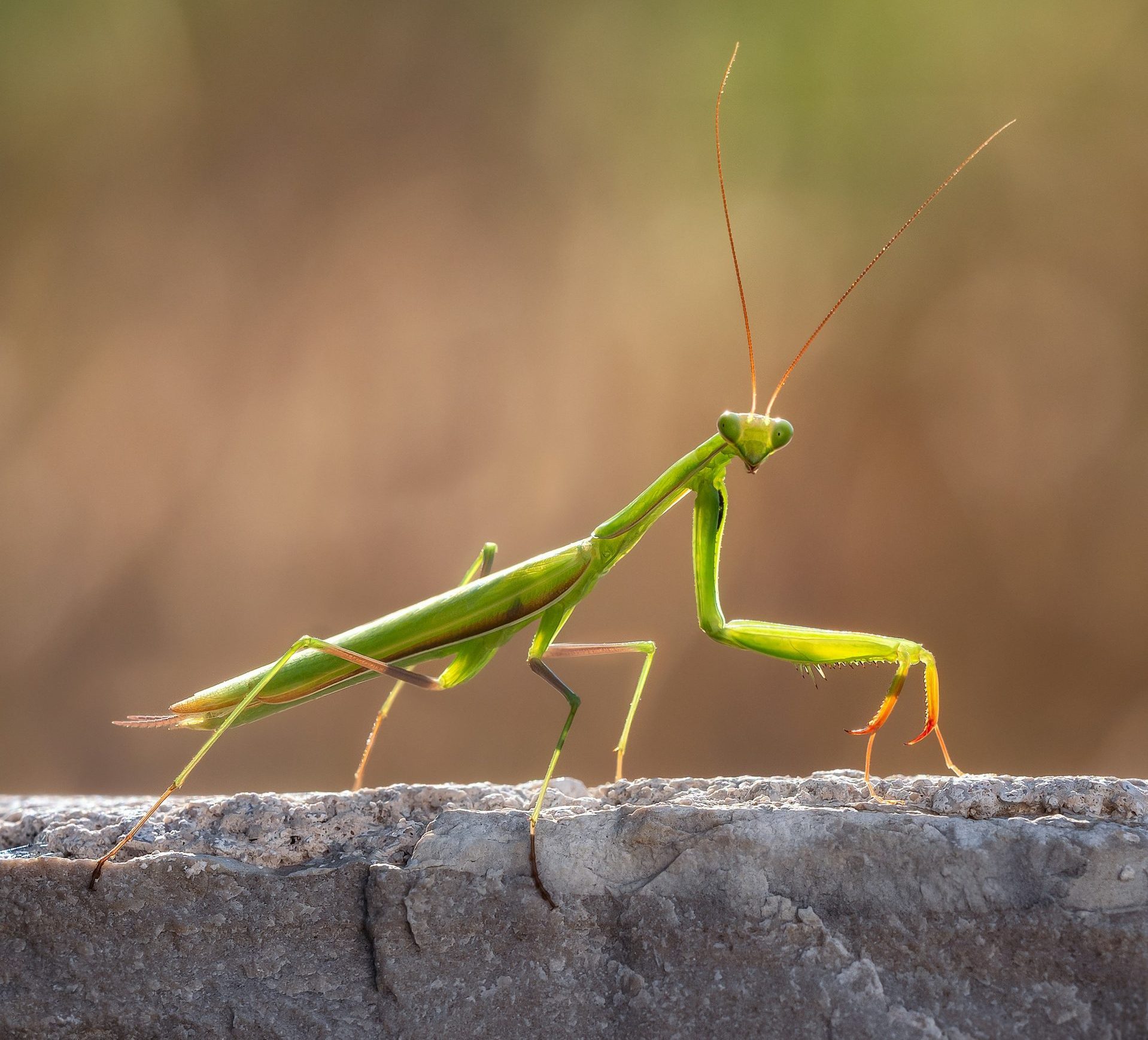
A Lunch meeting where fear showed up—muted, multilingual, and occasionally wearing a praying mantis costume.
The meeting began the way many good Lunches begin: with somebody muted, somebody apologising for their English, and Frank doing his best impression of a strict headmaster who absolutely, definitely expects “nothing but perfect English in this forum.”
Nobody believed him for a second.
Natalie—speaking from the honest, slightly wobbly edge of translating thoughts into another language—offered a gentle apology for Google Translate. Frank, of course, refused to accept it on the grounds of ridiculous standards. Janita didn’t even notice a mistake. Rosie arrived with warmth. Bruce arrived with the calm exhaustion of someone who had been up before the sun.
And just like that, the table was set.
Today’s theme was Courage and Conviction—two words that sound like they belong on the cover of a leadership book, but in this group they quickly turned into something more human: a first day in a foreign country, a first day in a new job, a narrow ledge in the Himalayas, a first lesson taught to strangers, a WhatsApp invitation to coffee, and a tiny creature of fear perched quietly on a shoulder.
The first kind of courage: the “I have to” kind
Natalie went first, because she was prepared—and because sometimes courage looks like simply starting.
Her story was arriving in South Korea, alone, surrounded by new social codes, a new alphabet, and the particular loneliness of not understanding what’s written on signs—or what’s being said around you. She reached for a French expression that doesn’t translate neatly, something like taking courage in both hands, and the group did what they always do: they waited, they listened, they helped find the words without stealing them.
What helped Natalie take action wasn’t a heroic speech. It was simpler.
Survival.
You need to eat. You need to buy things. You need to live. So you go.
Frank, never one to miss a narrative sequel, pointed out that Natalie’s story would repeat itself soon—this time in Ghana. “At least they speak English,” he offered, like that alone would tame the lion’s den. Natalie wasn’t exactly “looking forward” to it, but she could accept it. Frank, meanwhile, was already imagining her future self: relaxed, braided, cool, moving with the rhythm of a new place—because Frank tends to paint fear with bright colours until it becomes slightly less terrifying.
The second kind of courage: the “I chose this” kind
Rosie’s courage had a different flavour: less survival, more transformation.
She described her first training session for 70 coordinators—in an auditorium, under the lights, in April 2024. She had spent years teaching teenagers (a space where she felt comfortable, fluent, herself). Now she was training professionals, explaining rules, guiding other educators, stepping into a new identity. The butterflies didn’t ask permission. They arrived on schedule.
But Rosie did it anyway.
What helped her? Confidence built through preparation, support, and study—and a quiet belief in her own ability. Frank also added something important: sometimes courage comes with a small shove from life. Rosie didn’t exactly get six months to consider her options. She left the school, and weeks later she was in a different role. It wasn’t a total change of field—education stayed constant—but the way she served it shifted. Same river, new current.
And somewhere in this story, a side-plot emerged: Portuguese lessons for Frank and Janita.
Frank promised they would “muster up the courage” and arrive with “conviction” that they would master the language. Janita admitted she knew only the bad words (she refused to repeat them, because—recording). Rosie insisted Portuguese might be even harder than English because words can look identical and mean completely different things, which is both a linguistic fact and a very good metaphor for fear.
Sometimes the same feeling shows up with a different meaning.
Bruce, vertigo, and the courage of watching someone else do it
Bruce offered his story in the calm, reflective way he often does—like he’s walking around an idea and inviting you to look at it from different angles.
He spoke about trekking in the Himalayas, narrow ledges, and what he believes is vertigo. He didn’t dramatise it. He didn’t try to sound brave. He simply described the experience of trying to place your feet somewhere your brain insists is impossible.
Then he said something that hung in the air for a moment:
Courage can come from self-confidence, reinforced by competence and experience.
And sometimes you get over fear by watching someone else succeed—and letting that create a new internal story: If they can do it, why can’t I?
He also added a second dimension: courage rooted in values. Some people are praised as courageous for what they do, but they don’t experience it that way at all. They’re just acting in line with what they believe. For them, it doesn’t feel like bravery. It feels like truth.
Which might be one of the quietest definitions of conviction.
Frank’s first lesson—and the slow, sneaky way we become ourselves
When it was Frank’s turn, he admitted he struggled to find an example at first. Then Rosie’s story jogged something loose.
He described his first English lesson—thirty years ago—fresh out of training at Berlitz, stepping into a room with three adults who didn’t know it was his first time. He prepared for hours. He overthought everything. He built grammar rules into a fortress. He walked into the classroom carrying not only a book, but a whole future.
It went okay. (Understatement of the year.) He’s still teaching decades later, still evolving, now also building websites and riding the endless wave of new technology.
Frank’s point wasn’t “Look how far I’ve come.” It was more human than that:
You don’t notice the changes while you’re changing.
You only see them when you look back.
And in today’s world, he said, simply getting through a day positively—ending it thinking, It’s been a good day—can feel like its own act of courage and conviction. Not dramatic, not cinematic. Just real.
Janita’s everyday bravery: coffee with a stranger (plus a playdate plan)
Janita brought the conversation back down to the kind of courage most of us actually meet.
She talked about being invited to coffee by someone she didn’t know well—and saying yes. Not because it was life-or-death, but because it was outside her comfort zone. She turned it into a playdate so both sons could come, softening the uncertainty with something familiar: children playing in the background like little reminders that life is allowed to be simple.
She also noticed her son’s nervous foot bouncing in the car—excitement? nerves? both?—and how the moment became a shared brave step for everyone involved.
Then Frank pointed out the layer underneath it: trust.
When you don’t know someone, the courage isn’t just social. It’s protective. You’re navigating the question: Can I trust this person? And you take the risk anyway, carefully.
The tiny creature exercise: fear gets a body
And then—because this is Lunch, and Lunch always finds a way to make serious things lighter without making them smaller—Janita asked the group to personify fear:
If fear was a tiny creature sitting on your shoulder, what would it look like, and how would you remove it?
Natalie chose a snake—even the image of one frightens her. She tried to shrink it down into something manageable: a baby snake, maybe even a worm-like version, as if making it smaller might make it less powerful. Then she joked about snakes protesting in Paris, demanding the right to exist. The table laughed—not because fear is funny, but because humour is one of the ways we stay in the room with it.
Rosie couldn’t quite land on a creature. She moved toward something more abstract: not an animal, but a voice—the inner narrator that lists fragilities and bad outcomes. Sometimes fear isn’t claws and teeth. Sometimes it’s commentary.
Bruce—true to form—was mostly concerned with removing the creature humanely. Open a window. Let it go. And then he offered a surprisingly sharp insight: sometimes the hardest part of dealing with fear isn’t the fear itself—it’s managing someone else’s reaction to it. (Fear plus screaming is a different kind of challenge entirely.)
Frank took a philosophical turn. He questioned whether the creature is the point at all. A snake doesn’t know it’s scary; it’s just being a snake. So maybe the real work is what we do next: do we run, or do we say hello? Do we panic, or do we ask what it’s doing there? He spoke about fear like something you might offer a cup of tea to—because sometimes the bravest thing is to stop fighting the feeling and start listening to it.
Then Janita revealed her creature: a praying mantis.
Not because she’s afraid of them—she isn’t—but because they’re persistent. The kind of creature that lands on your head, returns to your shoulder, and keeps coming back until you physically carry it to the bathroom window and send it out into the night.
Harmless, apparently.
Ugly up close, definitely.
And possibly good luck, according to Frank—meaning Janita may have thrown her fortune out the window, which feels like a very on-brand Lunch ending.
What lingered after the laughter
This was a meeting full of gentle truths:
- Courage isn’t always dramatic. Sometimes it’s paperwork in a new country.
- Conviction isn’t always loud. Sometimes it’s simply doing what matches your values.
- Fear isn’t always a monster. Sometimes it’s a voice, a wobble, a foot tapping in the car.
- And sometimes the bravest thing you can do is show up—muted, imperfect, translating as you go.
They wrapped up with plans and goodbyes: Natalie heading to Vietnam, future topics floating (values and relationships), and Frank’s familiar closing energy—warm, teasing, and oddly comforting—like someone turning off the lights after a good dinner.
Maybe that’s what Lunch really is:
a table where fear can sit on your shoulder, and nobody tells you to “get over it.”
They just keep talking—until it becomes small enough to carry to the window.