
School bells and Safari Dreams
I was in the office that day, not at home, and I remember answering her the way you answer when you’ve already been moving since morning — fine, good, busy, the usual. The office air felt a little stale and the light on my screen was too bright, and when she asked if I was going for a run later I almost laughed, because the thought of more effort after work felt like someone adding weight to a bag I was already carrying.
She was already thinking about dinner. It was almost five for her after our meeting, and she had that parent timing in her voice — the kind that measures everything in “before bedtime” and “after homework.” Her son is seven, and she said he didn’t want to do homework that day. I could picture it so easily: a small body going limp in the chair, the pencil suddenly heavy, the sighs that come from nowhere.
Somehow that turned into school schedules, the way it does when you’re both living around children and clocks. In France, when they’re little — from about three to eleven — there isn’t class on Wednesday. That’s normal to me. It’s just the shape of the week. But for her it was different: school every morning, Monday to Friday, starting around eight, but drop-off at 7:30, and then finished by one o’clock. That’s it.
I remember saying, “Incredible,” because it is incredible to me, this idea of a day that ends at lunchtime.
My daughter is in high school. She leaves home at seven in the morning because of the bus. Some days she gets home at half past five, then the bus again, and she’s home at six. A whole day gone to school and roads and waiting. And then homework, in theory — except she’s clever about it, so she tells me she did it during breaks, or when a teacher wasn’t there, or when she was bored at school. I said it out loud, half-joking, half not: that it means she can spend more time on her phone. The truth is I can hear the little victory in her voice when she says she has nothing to do. It’s not “I’m free.” It’s “I’m free to scroll.”
My tutor mentioned her other student in France — fifteen, turning sixteen — who gets home late some days because of the bus too. It made me smile in that tired way, like, of course. We’re all just moving children around like parcels and pretending it’s normal.
Then we talked holidays, and you could hear the parents’ exhaustion sitting right behind the words. I said there was a two-week holiday — this week and next week — and how long that is for parents. She understood immediately. That’s why I was in the office. My daughter and her boyfriend was at home cooking, and I preferred to go to work because it made me nervous. I could feel that — the tension of someone else being in your space all day, even if you love them, even if they’re doing something nice.
She told me about December with her son. School “closed” on paper around the first of December, but really the work finished earlier, so he was home for two weeks in November, all of December, and then another two weeks in January until school started. Two months. You say it casually, but when I picture it again I can feel the drag of it — the endless little snacks, the mess that appears again five minutes after you clean, the way your own brain never fully settles because someone is always there.
From there we slipped into weather, because weather is the other calendar parents live by. She wanted to run away during winter. In South Africa, our coldest months are June and July. August is still cold, but it starts to warm up. When I asked what “cold” means for her, She told me: some mornings and evenings we go down to minus one. The coldest is maybe minus four. During the day it’s about ten or eleven degrees. Not Europe-cold, but cold enough that you notice your hands. Cold enough that you want soup.
They don’t heat the house the way people imagine, not all day. In the evenings or at night, yes. But during the day if you keep the windows and doors closed, it holds the warmth. Still, lately it hasn’t been as warm as usual. They’ve had a lot of rain, and I remember her, looking outside and saying it was only twenty-five degrees — only — like that’s something to complain about.
We wandered into islands after that, because travel always sneaks in when you’re talking about seasons. I mentioned friends of my daughter who left France to live on Réunion, and then I tried to remember the name of another French island near Madagascar and got stuck in that irritating way where your mind keeps circling the word but won’t land. Mayotte. That was it — a small French island, very poor. A family member’s son moved there; he’s a sports teacher. I remember the way my tutor said it, practical, like a fact that also carries a little weight.
I asked if she travel to Europe. She doesn’t. Not yet. It’s expensive — the plane tickets most of all, from South Africa to anywhere in Europe. And then food, drinks, a place to stay. It adds up so quickly it almost feels rude.
But I’ve travelled in other ways. She told me about Namibia when she was fifteen — the long car drive, going down toward Cape Town, then crossing the border. They did a 4×4 safari-type trip and camped next to a river. She could still feel the dry air at night, the way the darkness in places like that feels thick and wide, and how you listen harder without meaning to.
They went to Fish River Canyon. She had to check the name because it slipped away for a second, but once it came back it came back fully — the canyon opening out, the viewpoint where you can see the curve of it, and knowing there’s a hiking trail that goes all the way through. Her dad used to hike a lot. When he was younger, he hiked through that canyon with a backpack, boots, sleeping bag, food — everything carried on his own body. Five days. They used hot springs to bathe in the evenings, then cooked, and some nights they slept under the stars. They didn’t do the hike. They stayed at the resort at the end, where hikers come out, like a soft landing. One morning, they woke early and walked into the canyon from that side, not too far because her sister was still small. She remembered the wild horses. That surprised me the most — horses in that landscape — and antelope too, different kinds, appearing and disappearing like they were part of the rocks.
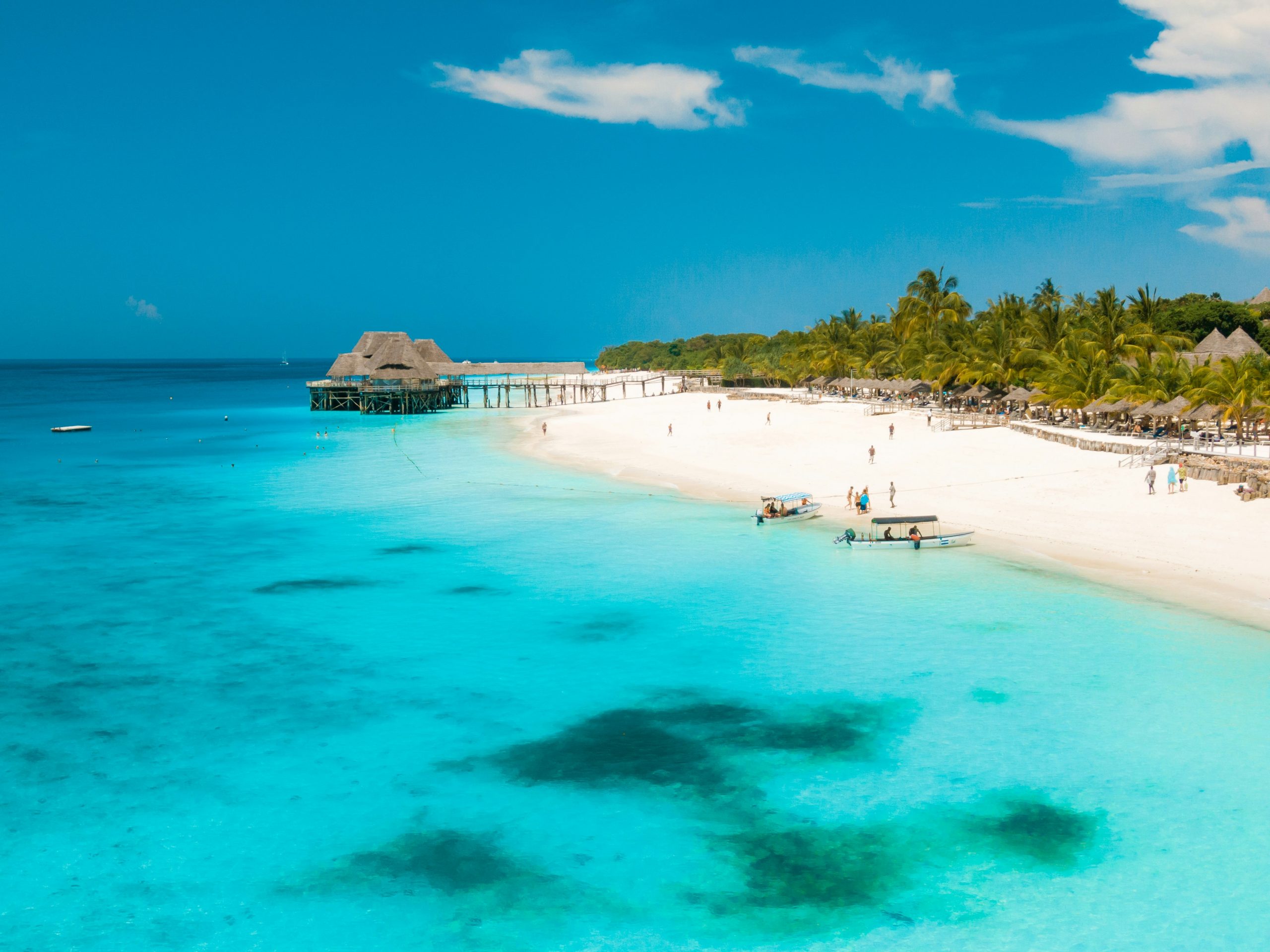
I said, casually, that next year I’ll be fifty and I’m planning a safari in Tanzania, then finishing in Zanzibar to relax afterwards. It was so straightforward — like someone naming a future they’ve already allowed themselves to have.
And I told her the truth: that’s my dream too. Tanzania. A safari. Zanzibar after. I said we will see, because you always say that when money is involved, when time is involved, when you don’t want to jinx it by sounding too sure.
We talked about why Tanzania feels bigger in my mind than Namibia for safari — more to do, more animal life — while Namibia is desert and history and old buildings and those beautiful sand dunes. I could feel myself leaning into the idea, the way you do when something you want is still far away. Zanzibar came up again, because she knows someone who went there for their honeymoon — her husband’s cousin — and they said it wasn’t very expensive. Beaches, sea turtles, scuba diving. The kind of list that makes your body relax a little just hearing it.
Then I asked about snow in South Africa. Some places get snow, in the mountains. Lesotho gets snow in winter. Once — about three years ago — they had a little snow where they live, but it didn’t settle. The flakes fell and melted immediately, and still it was beautiful to see. It was also cold, the kind of cold that makes you notice your own breath.
She told me, she likes warm weather. Her husband likes cold weather. He likes the snow. We joked about swapping him with Frank. It was that light kind of joking where you’re half serious, because honestly, sometimes you would like to swap out parts of life, just to see what it feels like.
Then I asked about danger in South Africa — the way people hear about it on TV, the way it turns into a blurry fear from far away. She didn’t sugarcoat it. It depends. There are places you shouldn’t go, places you shouldn’t walk around in. Cape Flats is dangerous. Johannesburg CBD is dangerous day and night; you shouldn’t go alone at any time. People will mug you, take your phone, your handbag — even your shoes if they can. It’s that kind of fear where you don’t panic, you just manage.
Even where she lives, if she wants to go for a run, she wouldn’t do it in my immediate area. There are very poor people there, and they would also try to steal what they can. She can run at the sports grounds where she usually goes, or in the safer area where her parents live. You have to pay attention. You have to be vigilant. It’s not dramatic when you live it — it’s just the way your shoulders stay slightly lifted.
I asked if her son can play outside. They live in a complex — about fifty houses — closed off, with our own small front and back yard. He can play outside and she can watch him. During the day, the doors can be open, the windows open. At night they close everything. If they leave, they lock everything. Cars too — lock them, because yes, they’ll steal that too if they can. Some parts are safe. Other parts you don’t play around.
Holiday places feel different, she told me. Kruger National Park is safe. The only thing to be afraid of there is the lions.
From there we went back to travel size and distance — how far she is from the beach (about six hundred kilometres), how Cape Town is much colder in winter and much farther (about one thousand two hundred kilometres), how big South Africa is. She said Frank mentioned it might be twice the size of France, and I sat with that for a second, because France already feels like a whole world to me from here.
We touched on heat too — her grandparents closer to the Botswana border where it reaches thirty-five to forty-five degrees in summer, and even in winter it can still be around twenty. Too hot, I said. That kind of heat feels like it presses on your skin.
Somewhere in all of that, we fell into a different kind of seriousness — not heavy, just real. Underdeveloped countries. I mentioned having to stop over in Ethiopia once and seeing warnings about safety, and then seeing pictures and being surprised because it wasn’t the image I had. She told me about a chef friend who worked in Uganda, and the pictures he sent — how poor people were. Another friend worked in Guinea, where there’s often no electricity, sometimes no running water, and hospitals aren’t really an option. They lived in a big house, but it was cheap because the basics weren’t there. I remember saying it out loud: we’re lucky. We forget how privileged we are. We don’t know what it is to really be hungry.
And then, naturally, we swung back to our children and their strange, modern hungers — phones, logos, wanting what they don’t even understand. Her son is seven and wants an iPhone. Not for the functions. For the half-eaten apple on the back. She said she gave him a small old phone to play games on, but he drops it, doesn’t look after it, and now the screen is damaged. So no phone. Maybe in high school.
I felt myself nodding even though she couldn’t see me. Her son comes home saying a friend had a phone at school, even though it’s not allowed. “I’m going to take mine tomorrow,” he says. No, you’re not. It’s ridiculous — seven-year-olds with phones — but it’s happening.
And then social media, TikTok, YouTube. She said TikTok is really not good. Addictive. Even YouTube Kids. She banned YouTube in her house because her son started getting nightmares. She sat with him and saw what he was watching — scary video game stuff that didn’t fit his age, even with controls on. There’s something quietly horrifying about that: thinking you’ve set the boundaries, and still the world leaks through.
We softened again when we started talking about animals — the ones in our houses, not the ones we dream of seeing on safari.
I have a cat and me and my daughter are crazy about it, and my husband gets jealous because nobody asks where he is when they come home. I laughed because she has the opposite problem: her husband and son give more attention to the dogs than to her. They have two small dogs — the kind they’re allowed in the complex. No cats, only two small dogs, no large breeds.
The dogs live in the house. They go outside when they want. And yes, they sleep in their bed. I can still feel the nightly ridiculousness of it — her husband and her and two dogs, fighting over the covers like they’re negotiating a treaty. One dog sleeps between them. She moves him away. She lies down. He’s back in position immediately, as if the bed has assigned seating.
They’re both crossbreeds. One is between a Pekingese and a Chihuahua — not very pretty, she said, because she was being honest, and also because it’s funny in that blunt way. The other is a fox terrier mix with long curly hair that sheds everywhere. Fine hair that sticks to everything. They keep those sticky rollers around to remove it, because otherwise you start finding dog hair in places that feel personal.
And then there was the tarantula.
She remembered it from last time and asked if it was real. It is. A female tarantula, about the size of my hand. I don’t like it. Not even a little. Her husband and son wanted it. They got it when it was tiny, a baby, which somehow felt more manageable, like the fear hadn’t arrived yet. Now she’s big. She can bite if she’s angry or hungry, but they just leave her. She’s more of a display animal than a pet you touch.
She admitted that in the first few days she put books on top of her container, even though it had a lid and she can’t open it — just to settle my own nerves. She didn’t want to wake up with a spider on my face. Even now I can feel that thought in my throat, like a dry swallow.
By the end we were back in the ordinary: me hoping my house would be tidy when I got home, me needing food for the teenager, asking them what they want to eat, thinking about picking up a döner kebab because Uber Eats doesn’t exist in my small town. She told me they do have Uber Eats in South Africa, and I laughed like she’d just casually revealed a luxury.
And that was it — a conversation that started with “How are you?” and ended with lions, algorithms, tarantulas, and covers pulled back and forth in the dark. Just two women, each in our own place, trying to steer our families through calendars, weather, danger, and the glowing pull of screens — and still, somehow, letting ourselves say the word Zanzibar like a small promise.