
Bremen, Bikes, and the Bathroom Boundary
Some conversations don’t need a worksheet. They just need a cup of something warm, a slightly rainy memory, and someone willing to ask, “So… what was it really like?”
That’s how this one begins: a teacher and a student, no typing today—only storytelling. One week in Bremen, Germany, folded into a chat that swings from cathedrals and Christmas lights to the very real crisis of not having a room of your own. It’s funny, it’s honest, and it’s quietly profound in the way teenage travel stories often are—when you let them breathe.
The First Day City Tour
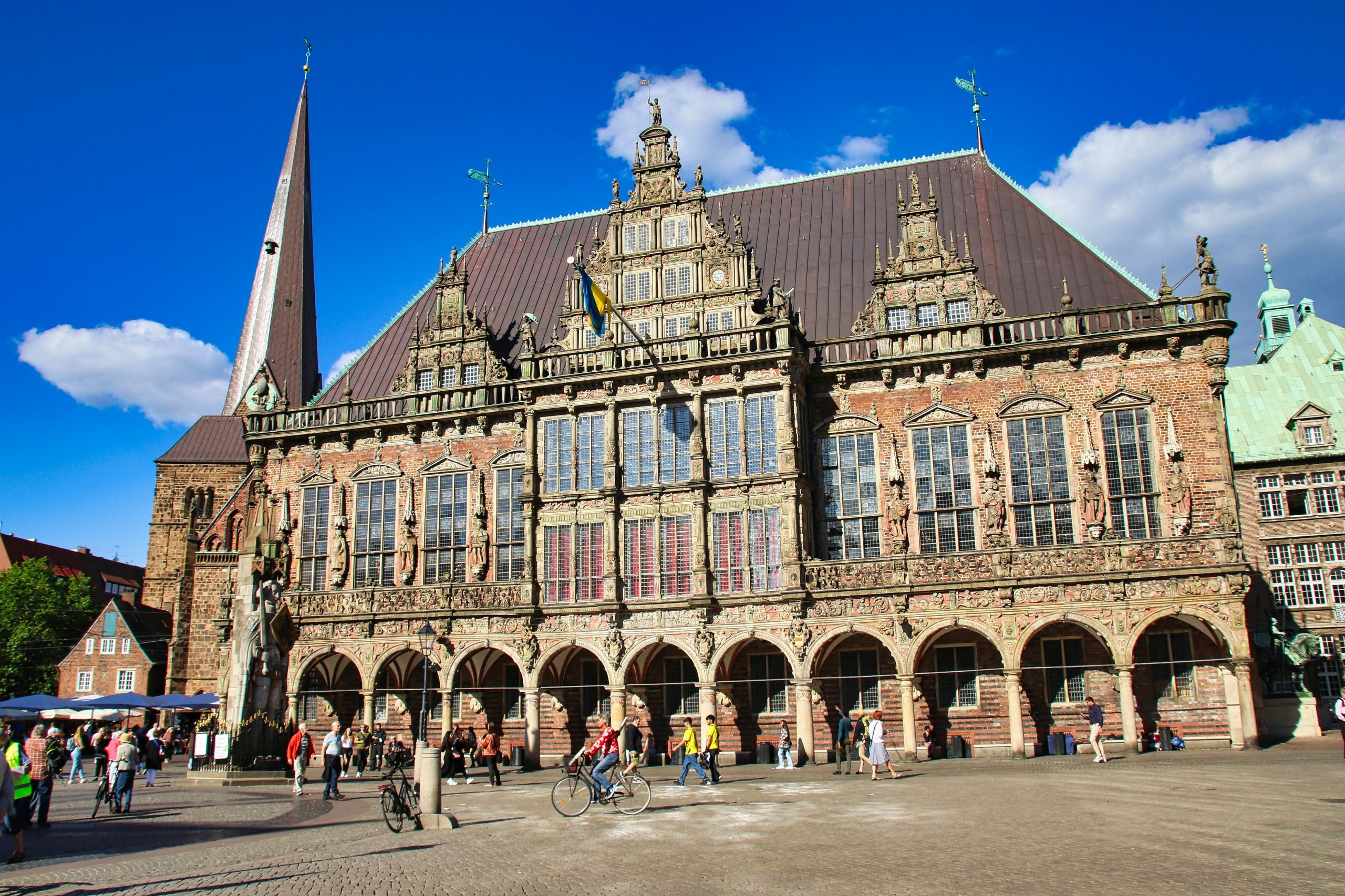
Picture it: six hours on a train, rain tapping insistently at the window, wind sharp enough to make you pull your shoulders up like a reflex. You arrive in Bremen—cold, wet, and slightly thrilled. The first day is a city tour, and suddenly you’re standing in front of a very big church (cathedral energy), a statue tied to the Bremen Town Musicians (the Brothers Grimm story that lives somewhere between folklore and childhood), and a mayor’s building that’s also a seat of government because Bremen isn’t just a city—it’s a city-state.
And there you are, sitting in the chairs where European ministers recently sat, joking with your teacher afterward: “Were you allowed to make decisions?” “Yeah.” The kind of playful answer that tells you everything: I felt important there, even for a moment.
If you’ve ever wanted to step into someone else’s normal—just for long enough to feel your own life shift slightly on its axis—this is that kind of week.
Sometimes confidence doesn’t arrive as a grand revelation. Sometimes it arrives as a small, private thought: I handled that.
Bremen, in December:
It looks like a movie you didn’t expect to walk into.
There’s something almost unfair about European Christmas markets. They don’t just decorate—they stage a feeling. Lights everywhere. A kind of cinematic glow. The student describes it simply: “It’s like in a film. Like in a Christmas film.”
And then comes the five-euro moment: strawberries on a skewer, dipped in chocolate. Pricey? Yes. Worth it? Also yes—because some experiences aren’t meant to be budget-friendly. They’re meant to be remembered.
A city can be rainy and still feel magical. A week can be cold and still warm you from the inside.
When was the last time you let yourself buy the “five-euro memory” without apologising for it?
The “best part” of travel might be… the mall?
Not the glamorous kind of travel highlight, but the real one: the commercial centre where you can taste a bit of everything. Stands with food. Tables and chairs. A little of this, a little of that. The student lights up here—because food is a universal language, even when your German isn’t.
There’s chicken drenched in barbecue sauce—so much sauce you need gloves. There’s sausage (but not meat). There’s an unfamiliar local plant that’s “like spinach but not spinach” and apparently… not good. There’s the quiet relief of discovering a new favourite sandwich combination: spreadable cheese, yellow peppers, and any meat, I’m not difficult.
Travel doesn’t always teach you history. Sometimes it teaches you what you like when you’re hungry in a foreign country. And that matters too.
Taste is a shortcut to belonging. What’s one food you associate with feeling brave?
Bikes, ice, and the comedy of being slightly too small for the world.
Bremen, the student notices, runs on bicycles. The host mother’s bike, however, is tall—so tall the student’s feet don’t reach the ground properly. Add rain, add a slippery stop, add the inevitability of falling over. Wet jeans. Then ice skating—another fall. Wetter jeans.
It’s humiliating in the moment and hilarious in retrospect, which is exactly how growing up works. You think you’re going to Germany to learn German, and instead you learn that you can survive being soggy in public and still laugh about it later.
Do you remember the last time you fell—socially, emotionally, physically—and realised it didn’t end you?
The “Climate House” and the wonder of walking through the world in one afternoon.
One of the most unexpectedly poetic scenes in the transcript is the visit to what the student calls a “temperature house”—a climate journey space with different rooms representing different places on Earth. Jungle. Desert. Poles. Darkness with tiny stars. Real animals, including a small crocodile/alligator.
It’s the kind of exhibit that reminds you: the planet is vast, and your life is one path through it. The student describes it with that perfect teenage sincerity—we saw landscapes, fish, crocodiles… and then we ate Burger King. Travel is layered like that: wonder and ordinary life stacked together like mismatched postcards.
A good day often contains both awe and something completely unglamorous. Can you let it be enough anyway?
The dungeon: fear, laughter, and the genius of the red necklace.
Then comes the “dungeon”—a haunted-house experience with actors, dark rooms, and German instructions spoken too fast. Phones forbidden. Fear real. And a brilliant accessibility detail: a red necklace you can hold up if you don’t understand the language. If you raise it, the actors won’t talk to you.
It’s a small thing, but it’s huge: a quiet permission to participate without pretending.
There’s a moment of panic: an object that moves on its own, darkness, a woman in white like a nun, the student’s raw reaction—shocked, laughing, almost swearing, alive. They raise the necklace: “No, no, don’t speak with us.” And just like that, the fear becomes manageable.
Isn’t that the dream, really? Not to never be scared—but to have a “red necklace” option when life is too fast in a language you’re still learning.
What’s your version of the red necklace—your signal for “slow down, I need a moment”?
The school difference that feels like a different universe.
If you want the part of the story that makes parents blink and students sigh dramatically, it’s this: German school culture (at least in this Bremen experience) feels freer.
- One class stays put; teachers move.
- Students can eat and drink in class—even cola.
- Bathroom breaks don’t require negotiation; you stand up and go.
- Everyone has an iPad.
- The vibe is relaxed: “No homework? No problem.”
The student is both amazed and slightly offended on behalf of French education. In France, the rules are tighter, days longer, and a Friday can run 8:00 to 18:00—an endurance event disguised as a timetable. The German school day ends around 15:00, leaving time for sports, art, life.
And the student’s exchange partner is coming to France in March—on the hardest day. The student is almost gleeful about it: she will see how hard it is to be me.
There’s something tender underneath the teasing: this trip didn’t just show another system. It gave the student language for their own experience—what’s fair, what’s heavy, what’s normal only because you’ve never seen another way.
If you stepped into someone else’s daily routine for one week, what would you stop accepting as “just how it is”?
The hidden curriculum: language, yes—but also boundaries.
Here’s the real twist: the hardest part of Bremen wasn’t German grammar. It was privacy.
Seven days. Sleeping in the same room. Being with the host partner all the time. No solo decompression after a long day. The student describes it plainly: sometimes you just want to call your mom alone. Sometimes you want to be tired without performing friendliness.
“The only time I was alone was in the bathroom,” the student says—half joking, fully serious.
And this is where the conversation becomes quietly wise. The teacher names it: boundaries. The student recognises it too: last time (Berlin), they had their own room and it was easier. This time, the constant togetherness was “very hard,” even though the host partner was kind and funny.
It’s such an adult lesson delivered through a teenage complaint: you can like someone and still need space from them. You can be grateful and still be overwhelmed. You can travel “for experience” and still count down the days until you get to your own bed.
When the host partner comes to France, she’ll have her own room. And you can almost feel the student’s relief through the screen: finally, fairness.
Where in your life are you being “nice” when what you really need is five minutes alone?
Culture is often just… the way a family buys Christmas decorations.
One of the sweetest details is how the student describes learning German traditions through ordinary moments: going to the market for Christmas decorations, noticing different flowers used in the living room, and receiving an Advent calendar—one that feels more handmade and meaningful than the commercial chocolate versions.
The student’s mother, inspired, makes an Advent calendar for the first time. That’s how culture travels: not through museums, but through small acts that stick.
And then there’s the student’s pride—quiet, luminous. They mention a presentation from last year, a text they wrote, a grade of 16/20, and how proud they felt standing up and speaking. It’s not directly Bremen, but it belongs here because it’s the same theme: I can do hard things. I did them. I’m becoming someone.
The next exchange to Spain
The conversation ends where good stories often end: not with a neat conclusion, but with the sense of a next chapter.
There’s another exchange coming—this time to the Canary Islands, possibly two or three weeks. The student is excited… and immediately requests, politely but firmly: “Please. I have my own room, please.” A boundary, now spoken out loud.
And there’s something bigger underneath the travel logistics: this student is learning how to move through the world—how to be brave in another language, how to laugh after falling, how to taste unfamiliar food, how to admit discomfort without dismissing the experience.
So here’s the invitation: if you’ve been living the same week on repeat, ask yourself what one “exchange” could look like for you. Not necessarily Germany. Not necessarily a plane ticket. Maybe it’s saying yes to a different routine, a different conversation, a different kind of discomfort—the kind that leaves you prouder on the other side.
Because the real souvenir from Bremen isn’t chocolate strawberries or a mayor’s chair story. It’s the shift inside the student’s voice when they say: I’m very proud of me.
And maybe, if you’re honest, you want that feeling too.